
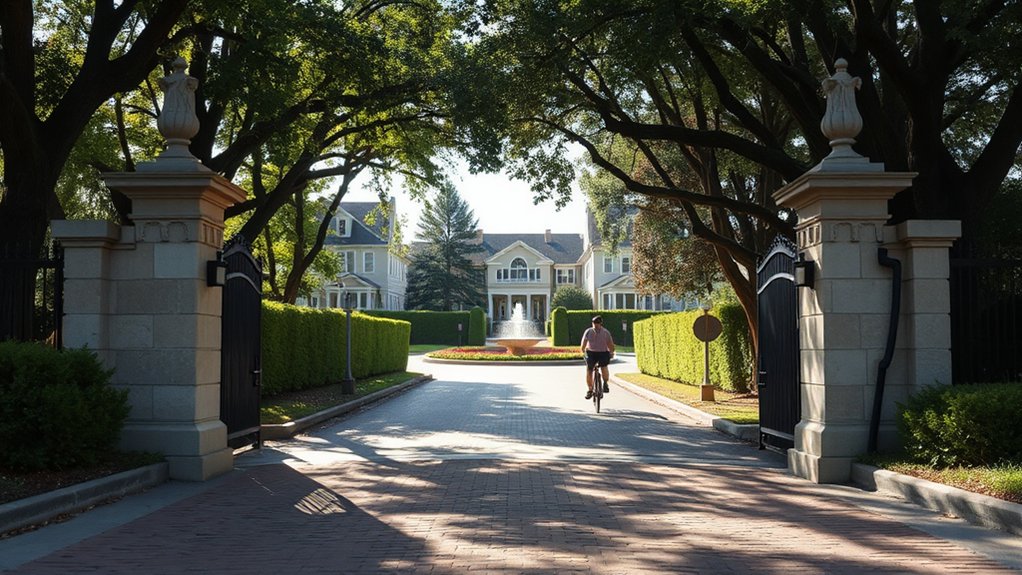

Gated communities offer safer, well-maintained streets, and a neighborly network that supports everyday life. You’ll benefit from controlled access, enhanced policing, and predictable curb appeal that protects property values. Quiet streets, walkable layouts, and reliable amenities create convenient routines for families and professionals alike. Community standards and governance foster stewardship, while sustainable design and shared spaces emphasize long-term livability. If you want to understand how these features come together, you’ll discover more about what makes this lifestyle appealing.
Key Takeaways
- Enhanced security through controlled access, fencing, and surveillance reduces crime risk and promotes peace of mind.
- Reliable property value support via well-governed budgets, reserves, and consistent maintenance of common areas and amenities.
- Well-planned amenities and social spaces foster community interaction, recreation, and a sense of belonging.
- Thoughtful design and landscaping improve curb appeal, curbside safety, and environmental sustainability.
- Proximity to essential services and conveniences (work, healthcare, retail) enhances daily life and commute efficiency.
Gated Communities: What Sets Them Apart

Gated communities are residential developments enclosed by physical barriers and governed by specific rules, creating a distinct social and physical landscape. You observe how access control shapes daily routines, minimizes casual intrusion, and fosters predictable circulation patterns.
Distinctive governance emerges through homeowners’ associations, enforced covenants, and shared amenities that align resident expectations with collective standards. You note that these arrangements influence social interactions, resident investment, and long-term stability, while also delimiting outsider access to common spaces.
Community diversity becomes contextual rather than incidental, blending families, professionals, and retirees within a shared framework of norms. Architectural styles vary deliberately, reflecting design codes and aesthetic harmony; this plurality under a cohesive overall vocabulary reinforces legibility and exclusivity.
Together, these elements differentiate gated communities from ordinary neighborhoods.
Enhanced Safety Features: What to Look For
Enhanced safety features are a core reason residents choose gated communities, and understanding what to look for helps you assess overall security and peace of mind. You should verify perimeter controls, including robust fencing, surveillance coverage, and controlled entry points, ensuring consistent monitoring and rapid response capabilities.
Assess neighborhood lighting, visibility, and maintenance, as these elements deter incidents and support clear sightlines for cruisers and residents alike.
Examine access-management practices, such as visitor screening, credentialing, and alarm integrations, to confirm a coherent security protocol across property boundaries.
Evaluate incident reporting, security staffing levels, and response times, mapping these against official performance metrics.
Luxury landscaping and community events can reflect deliberate design intent while not substituting for verifiable safeguards.
Prioritize transparent governance and regular security audits to sustain confidence.
Calmer Streets: Traffic Benefits and Walkability
Calmer Streets foster safer play spaces, reduce through-traffic exposure, and encourage deliberate pedestrian movement within the neighborhood.
You’ll see how traffic calming, walkable design, and connectivity contribute to safer, more inviting public spaces for children and residents alike.
This discussion explores how calmer streets support walkability, safer play, and cohesive, connected neighborhoods.
Calmer Streets, Safer Play
Traffic calming in gated communities can reduce vehicle speeds and improve pedestrian safety, creating calmer streets that invite children to play and neighbors to linger. You experience shorter trips and a more predictable environment, where crossings feel safer and social interactions rise. The design fosters safer play spaces, benefiting families and older residents alike.
- Reduced through-traffic exposure supports attentive supervision of children during outdoor activities.
- Measured speeds correlate with fewer conflicts, encouraging walkability without sacrificing privacy.
- Enhanced street life complements community events and, subtly, resident diversity, enriching local networks.
This combination strengthens communal trust and orderly movement, without compromising property values. You gain a safer, more cohesive locale where daily routines integrate with informal gatherings, supporting sustained engagement and shared responsibility.
Walkable, Connected Neighborhoods
Even as calm streets reduce speeds, thoughtful street design can make neighborhoods more walkable and connected, inviting residents to run errands, socialize, and travel on foot rather than by car.
You experience how pedestrian-first layouts—narrow lanes, continuous sidewalks, and protected crossings—foster frequent, low-stress trips to nearby amenities. By prioritizing short blocks and mixed-use edges, you reduce car dependency while enhancing safety, visibility, and social interaction.
Urban farming plots become accessible corners of the community, offering educational and recreational value while strengthening neighborhood identity.
You also notice how regular Community events anchor social networks, encouraging repeated foot traffic and spontaneous encounters.
Together, these elements create cohesive, resilient environments where residents prioritize wellbeing, sustainability, and shared stewardship.
Well-Maintained Public Spaces and Aesthetics
Maintaining well-kept public spaces and aesthetics enhances safety, property values, and community pride, making orderly streets, clean parks, and cohesive design cues essential components of a gated community. You observe how deliberate maintenance translates into predictable environments, where sightlines, lighting, and landscaping contribute to perceived security and desirability.
- You integrate Community landscaping principles, ensuring seasonal color, sustainable planting, and unobtrusive irrigation that supports curb appeal without excess burden.
- You curate Public art selections that reflect local heritage, foster reflection, and continuously harmonize with architectural rhythms and landscape structure.
- You enforce standardized upkeep routines, maintaining pavement, signage, and green spaces to preserve consistency, reduce clutter, and reinforce an orderly aesthetic.
Gated-Community Culture: How Neighbors Connect
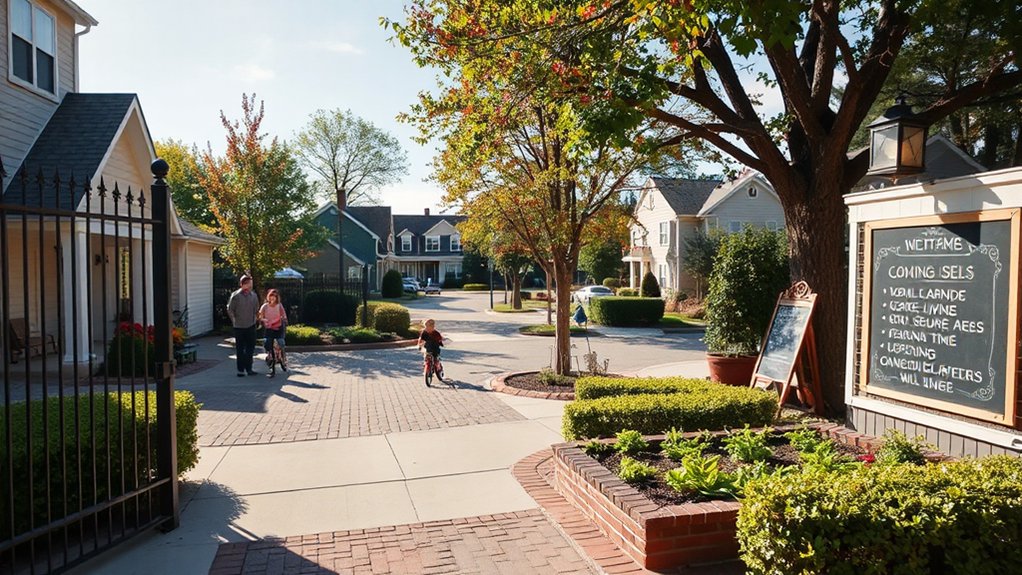
Gated-community culture centers on everyday interactions that build trust, signal shared norms, and reinforce mutual responsibility. You encounter neighbors through routine exchanges—brief greetings, borrowing a tool, or coordinating trash collection—and these moments accumulate into a cohesive social fabric.
You notice how neighborhood diversity enriches conversations, offering varied perspectives and inclusive practices that still respect common standards. You participate in informal networks that mobilize help during emergencies or seasonal tasks, reinforcing reliability and reciprocity.
Community events become intentional catalysts, channeling discretionary time into collective well-being rather than private leisure. By prioritizing open communication and respectful conduct, you contribute to a stable environment where trust strengthens social cohesion, permitting residents to connect meaningfully while preserving privacy and safety within the gated setting.
Amenities Within Reach: Pools, Parks, and More
Access to pooled amenities, parks, and shared spaces elevates daily life in a gated community by providing reliable gathering spots and opportunities for routine recreation. You experience curated environments that emphasize order, safety, and communal enjoyment, where design choices reinforce a sense of prestige through Luxury landscaping and well-maintained facilities.
Social events foster belonging while preserving privacy, enabling you to participate on your terms without leaving the neighborhood.
- Pool complex operations, fitness facilities, and shaded communal lounges
- Park trails, playgrounds, and courts that encourage efficient, purposeful recreation
- Curated social events, neighborhood dinners, and seasonal gatherings that reinforce cohesion
Property Value and Long-Term Financial Benefits
Property value in a gated community is influenced by the alignment of amenities, governance, and long-term maintenance commitments, which together create a predictable, marketable living environment.
You assess long-run benefits by comparing capital appreciation, tax considerations, and financing terms against standards in comparable markets.
Property stability arises from consistent governance practices, including budgeting transparency, reserve adequacy, and timely capital projects.
Architectural styles contribute to curb appeal and resale appeal, signaling durable desirability to prospective buyers.
Community events reinforce social cohesion and perceived value, signaling an active, measured stewardship of common assets.
You benefit from disciplined maintenance that preserves infrastructure, landscaping, and security features, reducing deterioration costs over time.
Privacy and Access: Balancing Seclusion With Openness
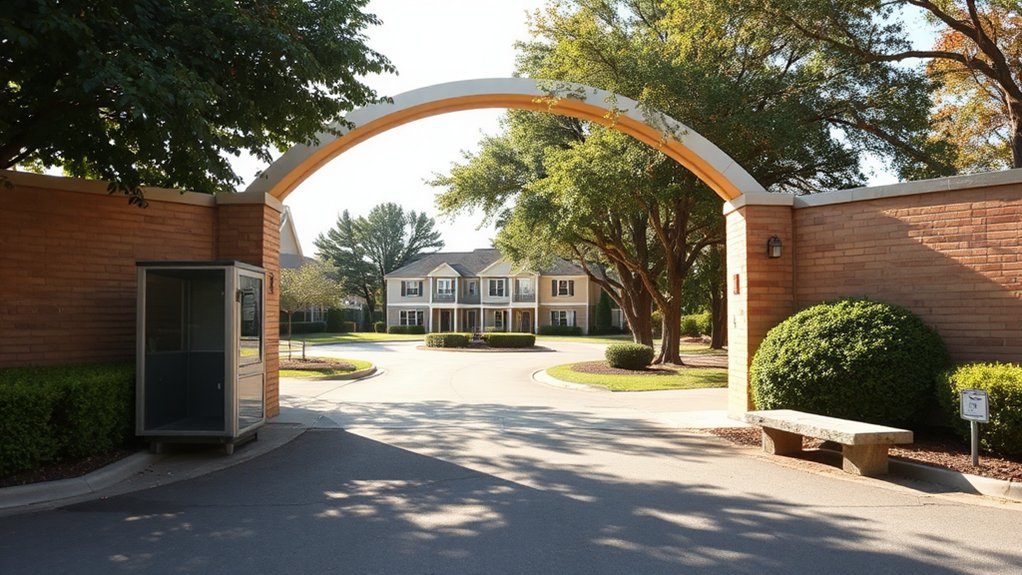
Balancing seclusion with openness requires a deliberate design of both physical and social boundaries. In this setting, you assess how privacy is achieved without isolating residents, weighing Seclusion benefits against openness challenges. The aim is transparent access controls that deter intrusions while welcoming legitimate contact with neighbors and amenities.
- Establish controlled entry points and clear surveillance standards to preserve discretion without confinement.
- Align architectural layouts with sightlines that protect personal space while enabling casual social interaction.
- Implement communication protocols that balance information sharing with confidentiality and resident consent.
A well-structured balance maintains predictable routines, supports safety, and preserves dignity. You gain choice over your level of exposure, while the community sustains cohesion, trust, and orderly access to shared resources. This equilibrium reinforces perceived value without compromising autonomy.
Family-Friendly Features and Safe Playgrounds
In family-friendly communities, safe playgrounds and well-designed play spaces are central to everyday livability, enabling children to explore and learn while parents maintain trust in supervision. You encounter thoughtfully positioned equipment, age-appropriate zones, and surface materials that reduce injury risk, all aligned with clear sightlines for vigilant guardians.
Pathways and seating foster spontaneous supervision without isolating young explorers from peers or adults, reinforcing a cohesive social fabric. Premium amenities, such as luxury landscaping, elevate surrounding aesthetics while preserving practical play value, ensuring durability amid frequent use.
Community events hosted near play areas cultivate social cohesion, offering structured opportunities for parental involvement and peer interaction. These features collectively support balanced development, safety, and reassurance, reinforcing the gated enclave’s appeal to families seeking reliable, supervised recreation.
Sustainable Design: Green Living in Gated Communities
Sustainable design in gated communities integrates green living without compromising the safety and social cohesion established around family-friendly spaces. You’ll discover how efficiency, resilience, and stewardship harmonize with secure environments, guiding everyday decisions toward smarter resource use.
By embracing smart technology and renewable energy, you gain measurable benefits in comfort, cost, and ecological impact.
- Integrate energy-efficient systems, sensors, and automated controls to optimize comfort while reducing consumption.
- Deploy renewable energy sources and storage to increase self-sufficiency, lower utility dependence, and stabilize costs.
- Design landscapes and materials that minimize maintenance, support biodiversity, and enhance air and water quality.
In this framework, green living reinforces safety, community, and long-term value without compromising the gated advantage.
How to Choose the Right Gated Community: A Practical Checklist
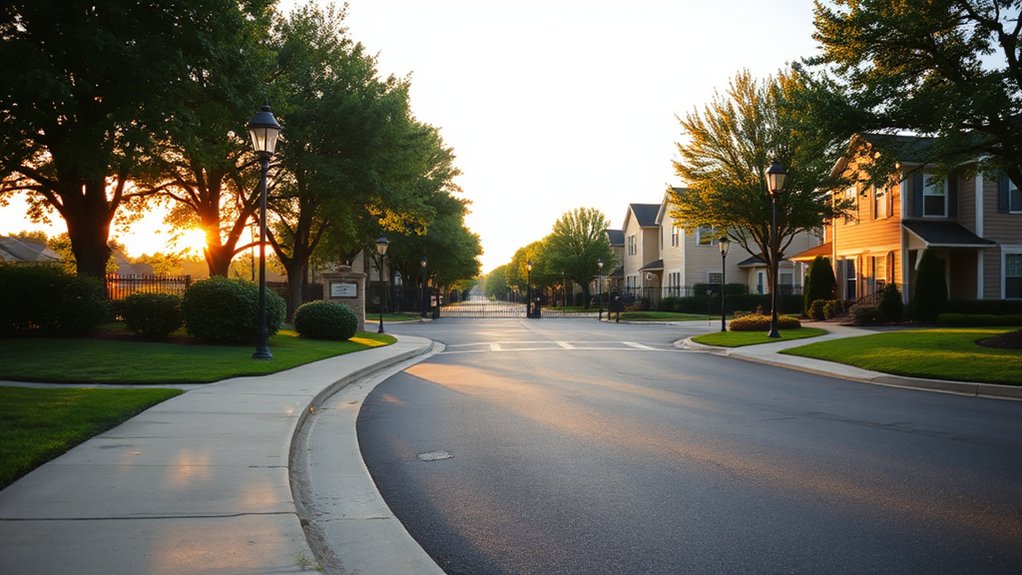
When evaluating a gated community, you should assess Access And Location to guarantee convenient commuting, services, and future value.
Consider Amenities And Security to balance lifestyle desires with safety and cost, recognizing how shared facilities can impact long-term investment.
This practical checklist foregrounds clear criteria so you can compare options efficiently and make an informed choice.
Access And Location
Where’s your ideal balance of convenience and quiet? Access and location shape daily life, guiding how you traverse to work, schools, and services while preserving tranquility inside the gates. You should assess proximity to employment hubs, healthcare facilities, and major transport links, as these determine routine efficiency and resale appeal.
In turn, you’ll consider how the site supports your preferences for privacy, views, and walkability, without sacrificing connectivity. Luxury interiors and community events are enhanced by thoughtful placement, not merely amenities.
- Evaluate commute time and route reliability from the gate to key destinations.
- Map proximity to essential services, retail, and healthcare.
- Assess planned development and access infrastructure for long-term value.
Amenities And Security
Amenities define daily quality and longevity of a gated community, so examine how security integrates with social and recreational offerings to support both peace of mind and active living.
You assess amenities through the lens of practical utility and long-term value, ensuring features align with resident needs and governance standards. Prioritize dependable access control, visible patrols, and rapid response protocols that reinforce trust without imposing inconvenience.
Consider how programmed events, fitness facilities, and communal spaces foster community involvement while maintaining safety. Landscaping aesthetics should complement security measures, improving sightlines and erosion control, reducing hazards, and enhancing curb appeal.
Evaluate the balance between private and shared spaces, noting how well security protocols integrate with social initiatives, thereby sustaining inclusive, vibrant, and well-maintained environments.
Realistic Expectations: Trade-offs to Consider
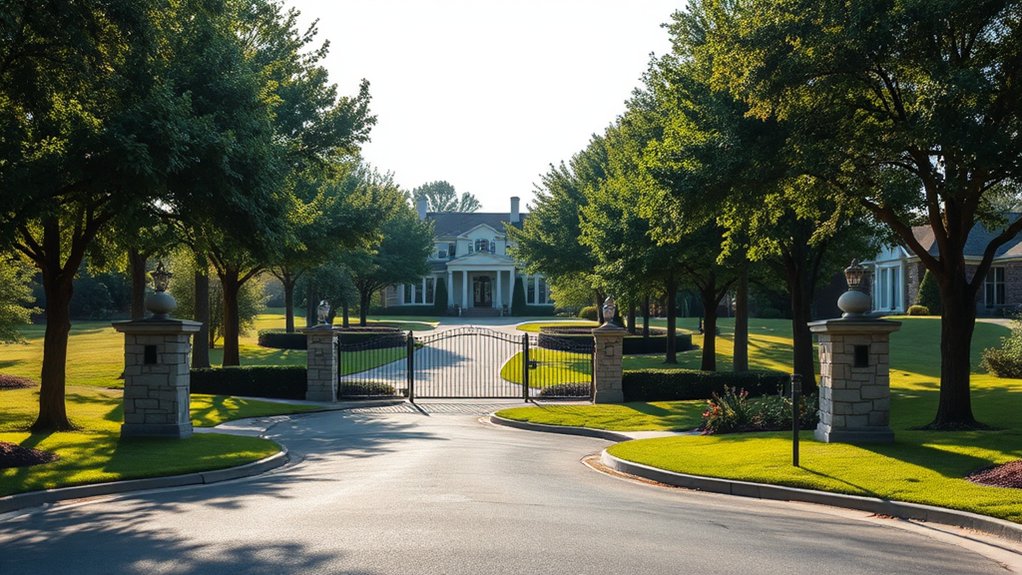
Gated communities promise security and quality of life, yet realistic expectations require weighing trade-offs that accompany enhanced controls and exclusive access. You’ll recognize that the allure of luxury branding doesn’t erase practical boundaries, or the duties of proactive property management.
1) You trade convenience for neighborhood governance, including access protocols, fee structures, and contractual rules that shape daily routines.
2) You balance elevated standards with potential limits on spontaneity, such as guest policies, zoning quirks, and shared responsibility for amenities.
3) You assess long-term costs against perceived benefits, accounting for maintenance, insurance, and resale dynamics within a gated framework.
Frequently Asked Questions
Do Gated Communities Limit Non-Resident Access to Mail Carriers?
Gated communities typically limit non-resident access to mail carriers, ensuring security. You should expect mail delivery to occur within restricted routes, with resident access required for package pickups and deliveries, often verified by building staff or secure mailrooms.
Are There Hidden Costs Beyond HOA Dues?
Yes, there can be hidden costs beyond HOA dues. You might encounter hidden fees and ongoing security costs, which can accrue for maintenance, gate maintenance, and amenities access, so review contracts carefully and budget for unexpected charges.
How Do Pets Fit Into Rules and Restrictions?
Pet policies often limit number, breed, and leashing; resident restrictions apply to where pets may roam. You’ll note that 60% of communities report stricter rules post-closure. You should review pet policies and resident restrictions before moving.
Can Guests Access Amenities Without Residents?
Guest security hinges on resident authorization; visitors must follow visitor policies, and accessCommon amenities generally require resident supervision or a valid entry pass. You should verify guest credentials, ensuring compliance while maintaining restricted, controlled access for all residents.
What Happens if I Move Before My Lease Ends?
If you move before your lease ends, you terminate the lease early, you face lease termination penalties, you handle moving logistics costs; you may owe early fees, you may owe remaining rent, you must notify promptly.
Conclusion
Are gated communities right for you? In short, they offer enhanced safety, calmer streets, well-kept spaces, and a neighborly culture that supports family life and sustainable living. You’ll weigh trade-offs like access, gate restrictions, and fees against the steady amenities and aesthetics. If you value predictability, curated surroundings, and active social ties, a gated community could align with your priorities—but set realistic expectations and perform a diligent checklist before deciding.