
In a typical UK terrace, you’ll notice how a Victorian colour palette with deep, warm tones and decorative textures can transform a narrow space. You’ll want a plan that blends heritage details with modern practicality, so your scheme feels timeless rather than curated. The challenge is balancing character with low-maintenance finishes, lighting, and smart storage—and that tension is precisely where your next design move begins. So what approach will you choose to fuse tradition with contemporary resilience?
Key Takeaways
- UK properties benefit from a blend of Victorian-Georgian elegance with modern practicality, using neutral palettes, layered textures, and updated lighting for timeless appeal.
- Rustic cottage warmth and contemporary Scandi-inspired design offer durable, low-maintenance finishes and modular layouts ideal for small or period spaces.
- Moisture-tolerant finishes, light-reflective whites, and pale neutrals maximize brightness in damp or northern light conditions common in UK homes.
- Functional storage, built-in nooks, and slim-profile, multi-functional furniture help optimize space in compact or historic interiors.
- Layered textiles, mixed materials, and cohesive pattern repetition create depth and identity across rooms while maintaining coherence.
What Makes UK Homes Truly Unique for Design
UK homes blend heritage with practicality, creating design constraints that drive distinctive choices. You’ll notice how Cultural influences shape layouts, materials, and detailing, reflecting centuries of exchange and adaptation.
In urban settings, you prioritize efficiency, multitasking spaces, and clean lines that maximize light and movement. You’ll deploy flexible furniture, sound-conscious finishes, and understated textures to counter city density.
In rural interiors, you emphasize warmth, craft, and tactile surfaces that echo the landscape and craft traditions. You’ll balance insulation, storage, and provenance, leveraging period features where appropriate while updating systems for modern living.
You’ll also compare urban versus rural needs, tailoring contrastive schemes to civic rhythm or countryside calm, ensuring cohesion across adjacent rooms.
Your design leverages restraint, precision, and context to define uniquely UK interiors.
Victorian-Inspired Palettes: Colors, Materials, and Texture
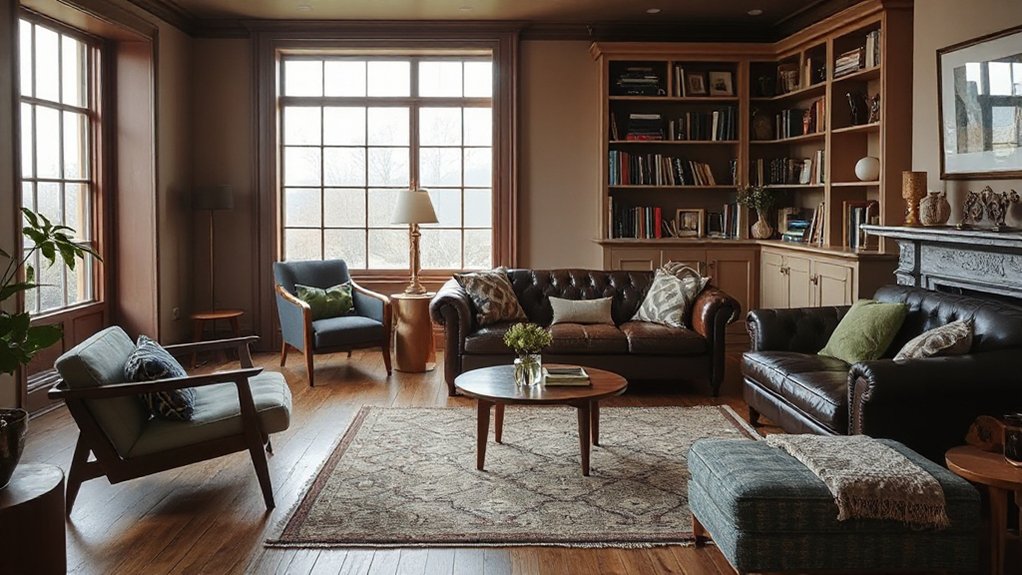
You can anchor Victorian-inspired spaces with rich tones, layered textures, and tactile materials to create depth and warmth.
Velvet upholstery, carved wood, and metal accents merge to deliver period authenticity with modern permanence.
Start by pairing deep hues with complementary textures to guide the eye and elevate the room’s character.
Rich Tones and Textures
Victorian-inspired palettes embrace rich, saturated tones and tactile textures to convey warmth and depth in UK interiors. You couple deep plum, moss, and navy with plush velvets and woven textiles to create a layered, restorative atmosphere.
Use high-contrast surfaces—glossed plaster, brass detailing, and dark timber—to heighten drama without overpowering the room. Introduce texture through hammered metals, stone, and tactile wallpapers with subtle relief.
For a modern nod, blend Art deco silhouettes with Scandinavian restraint: streamlined cases, warm wood, and geometric patterns that read as refined rather than fussy.
Palette balance matters: saturations anchor the scheme, neutrals temper it, and natural light preserves legibility. Apply careful scale and proportion to preserve clarity, ensuring the space remains cohesive and timeless.
Velvet, Wood, and Metal Accents
Velvet offers immediate warmth and tactile luxury, pairing richly with dark woods and brass for a coal‑dark, restorative backdrop.
In this subtopic, you’ll apply velvet textures as focal points and layering devices, not mere upholstery. Choose deep, saturated hues—emerald, burgundy, inky navy—and balance them with matte wood and restrained metal accents.
Velvet works with wood by absorbing light, so lean on low‑sheen finishes and strong profiles to maintain legibility.
For Metal finishes, select brushed brass or burnished nickel to echo period hardware, avoiding chrome that reads too modern.
Keep patterns minimal; let the texture do the talking.
Your aim is cohesive contrast: sumptuous fabric, sturdy timber, and refined metal that together reinforce Victorian‑inspired palettes without heaviness.
Georgian-Era Elegance, Modernized for Today
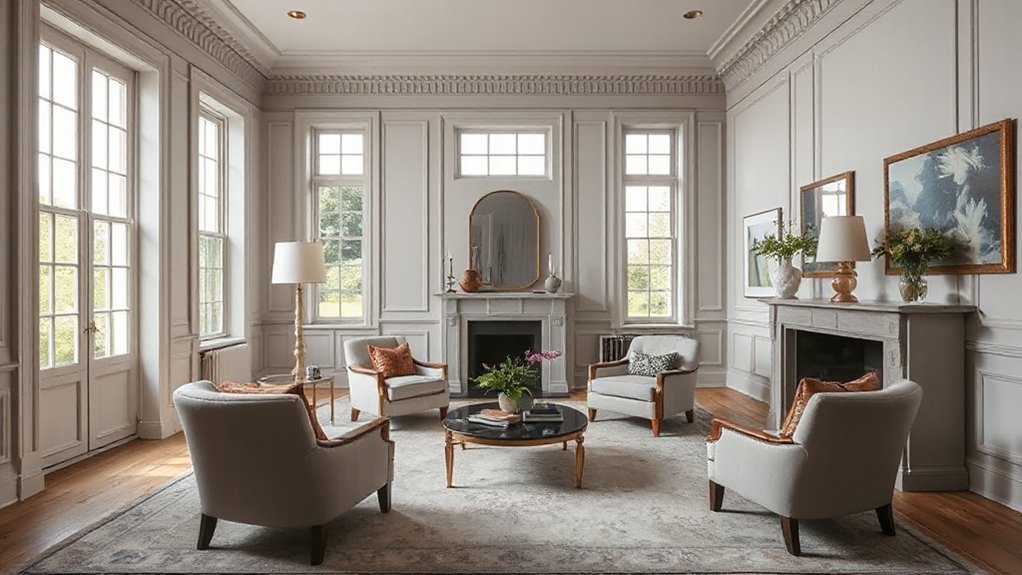
Georgian-Era Proportions Reimagined meet Modern Comforts as you balance symmetry with everyday practicality. You’ll preserve Classic Details while integrating updated workflows, lighting, and fabrics to suit today’s living.
This discussion starts by outlining how these elements align to create timeless elegance with contemporary ease.
Georgian-Era Proportions Reimagined
Georgian-era proportions still define proportionate calm in today’s interiors, but they’re reimagined for contemporary living. You’ll notice disciplined symmetry, refined alignment, and generous negative space adapted to modern layouts.
Focus on proportion over ornament, using scaled panels, fenestration, and doorways to guide flow. The result feels orderly yet welcoming, with clean lines that respect history without nostalgia overload.
When you reference period features, you anchor rooms in tradition while allowing current materials and finishes to translate the aesthetic. Emphasize verticals and horizontals to create a balanced rhythm, countering any visual heaviness with lighter tones and thoughtful light.
The historical influence remains evident in chest-height silhouettes, classical mantel cues, and proportion-driven furniture placement, delivering timeless elegance for today’s UK properties.
Modern Comforts, Classic Details
- Subtle symmetry and proportion
- Neutral palette with accent depth
- Hidden, high-function tech integrations
- Vintage revival textures in furnishings
- Clean lines meeting classic detailing
Rustic Cottage Charm With British Warmth
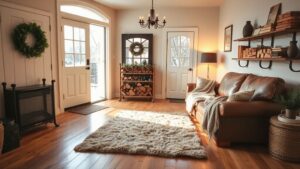
Rustic cottage charm embraces Britain’s warm, weathered character while keeping modern living effortless. You curate spaces that feel lived-in yet precise, balancing tactile textures with practical layouts. Begin with timber-framed cabinetry, stone accents, and creamy plaster walls that reflect natural light.
Introduce Wabi-Sabi-inspired imperfection through hand-carved details and subtly distressed surfaces, avoiding uniformity. Incorporate cozy seating, Nordic-inspired silhouettes, and woven textiles in muted earth tones to evoke rustic warmth without heaviness.
Layer lighting to highlight characterful features: a beamed ceiling, brick alcove, or inglenook. Accessorize with botanical prints, antique ceramics, and cookware displayed for daily use.
Ground the palette with warm whites and greiges, then punctuate with wildflower meadows-inspired florals and coastal breezes-inspired fabrics to reinforce British charm. Avoid trends that feel disposable or overly glossy.
Contemporary Low-Maintenance UK Flats and Townhouses
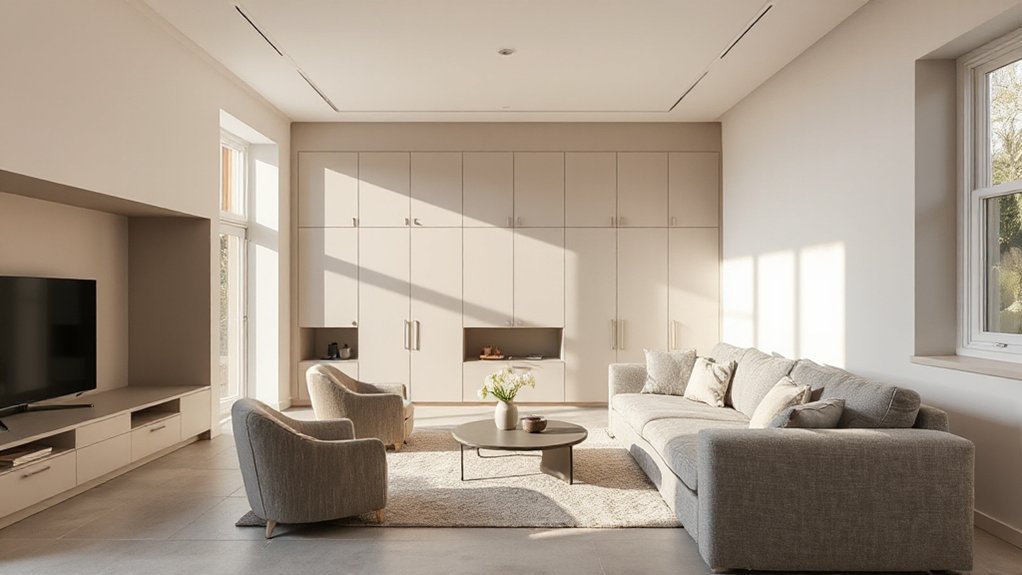
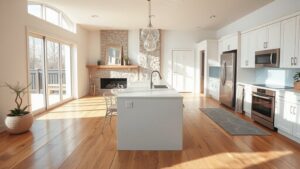
Looking for a low-maintenance approach to urban UK living? Contemporary flats and townhouses demand efficiency, durability, and clean lines. You’ll prioritize materials that resist wear, easy-to-clean surfaces, and versatile layouts that adapt to change.
Smart storage ideas keep clutter out of sight, while multipurpose furniture maximizes square footage without sacrificing style. Choose restrained palettes, tactile textures, and integrated lighting to enhance perception of space.
Your approach should favor durable, low-effort finishes and modular components you can reconfigure as needs shift. Prioritize ventilation, acoustics, and footprint-friendly electronics that blend with design.
The goal is a polished, livable environment that remains appealing with minimal upkeep and frequent use.
- Smart storage solutions that vanish from view
- Multipurpose furniture for compact spaces
- Durable, easy-clean materials
- Minimalist, coordinated palettes
- Integrated, low-maintenance tech and lighting
Scandi-Influenced Light and Practicality for UK Homes
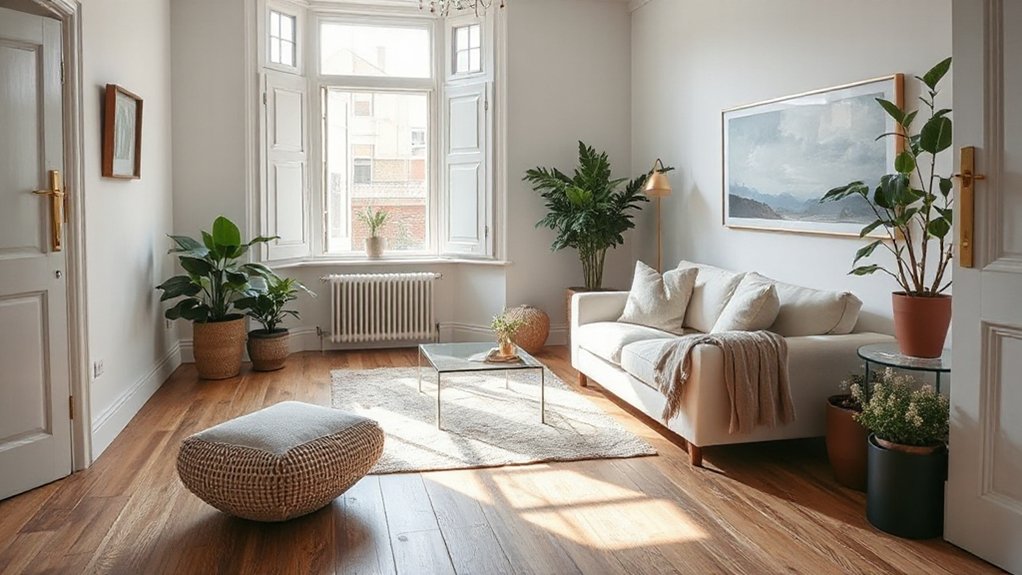
Scandi-influenced design brings light, warmth, and practicality to UK homes by pairing clean, minimalist aesthetics with tactile, durable materials. You’ll prioritize bright, airy spaces that maximize daylight, using pale woods, white walls, and soft textures to create calm interiors.
The practicality blend comes from modular storage, multi-functional furniture, and concealed wiring, keeping surfaces uncluttered without sacrificing usability. Choose quality fabrics, low-maintenance finishes, and natural fibers to maintain a breathable, durable finish that ages well in UK climates.
Emphasize calm palettes with contrast via texture—woven rugs, sheepskins, and matte ceramics. Prioritize craftsmanship and simplicity over trend-driven pieces to sustain longevity.
Scandi simplicity guides layout and flow, ensuring efficient movement and easy cleaning, while the practicality blend supports everyday resilience and comfort.
Industrial Neutrals With Damp-Resistant Finishes
Industrial neutrals fuse the warmth of earthy tones with the cool, unapologetic feel of metal and concrete, pairing well with damp-prone UK environments.
You’ll implement damp-proofing strategies that preserve finish integrity while keeping a modern, understated palette. Rely on durable, water-resistant materials and sealants that resist mould and staining, ensuring long-term stability in kitchens, bathrooms, and basements.
Your neutral color palettes should lean toward cooler greys, charcoal, and warm taupes to echo industrial textures without overwhelming light. Prioritize finishes labeled for damp or humidity resistance and verify warranty coverage.
Pair these with matte surfaces and cropped textures to reduce glare. Maintain air quality with proper ventilation to support finish longevity and occupant comfort.
- Damp proofing solutions
- Moisture- and mould-resistant materials
- Low-reflectance, neutral colors
- Matte, textured finishes
- Sealed, ventilated environments
Country House Formality Reimagined for Small Spaces
You can achieve country house formality in small spaces by prioritizing intentional scale, texture, and graceful silhouettes. Think cosy grandeur through compact layouts, layered fabrics, and refined details that read as affluent without overwhelming the room.
We’ll explore how Small-Space Country Formals, Cozy Grandeur, and Compact Homes intersect to redefine traditional elegance.
Small-Space Country Formals
- Balanced proportions keep formality approachable
- Subtle floral accents for timeless charm
- Built-in nooks maximize seating without bulk
- Light, reflective surfaces enhance space
- Durable, refined textiles reduce maintenance
Cozy Grandeur, Compact Homes
Cozy Grandeur for small London and provincial homes blends the warmth of country house formality with space-conscious design. You’ll create high-contrast accents, restrained ornament, and intelligent storage to keep rooms breathable without sacrificing gravitas.
Prioritize scale-appropriate furniture: compact sofas, streamlined chairs, and decorative legs that visually lighten each zone. Integrate cosy nooks as intimate retreats—small alcoves with tailored seating and soft, layered lighting—to maintain a sense of ceremony within limited footprints.
Use elegant drapes to anchor windows and soften acoustics, selecting fabrics with depth rather than bulk. Color remains disciplined: warm neutrals punctuated by rich timber and subtle metallics.
Invest in quality, timeless details—paneling, mouldings, and a refined fireplace—so the space feels purposeful, not cramped, while preserving Country House formality.
Minimalist Eclecticism in Period Properties
- Art deco accents with careful restraint
- Timeless materials, minimal ornament
- Tenacious focal points and quiet contrasts
- Indoor greenery as texture, not décor
- Cohesive palette across eras
Palettes for Damp, Daylight, and Northern Light
In damp, daylight-starved UK interiors, choose palettes that resist moisture while maximizing brightness and perceived space. You’ll favor cool neutrals mixed with warm accents to counteract dim conditions without sacrificing sophistication.
Damp resistant palettes lean into acrylics, vinyls, and moisture-tolerant finishes, avoiding porous surfaces that trap humidity.
For daylight enhancement, prioritize high-reflectance whites, pale neutrals, and soft metallics that bounce scarce light across rooms. Pair these with restrained, weathered timber tones to ground the scheme without dulling the sense of airiness.
Use contrast sparingly to define zones, not overwhelm them. Avoid heavy saturation; instead, employ layered tones of 60–70% light reflectance.
This approach sustains visual clarity, resists damp, and preserves a bright, expansive mood. Damp resistant palettes support durable, daylight-aware interiors. Daylight enhancement remains central.
Materials That Stand Up to UK Weather and Daily Life
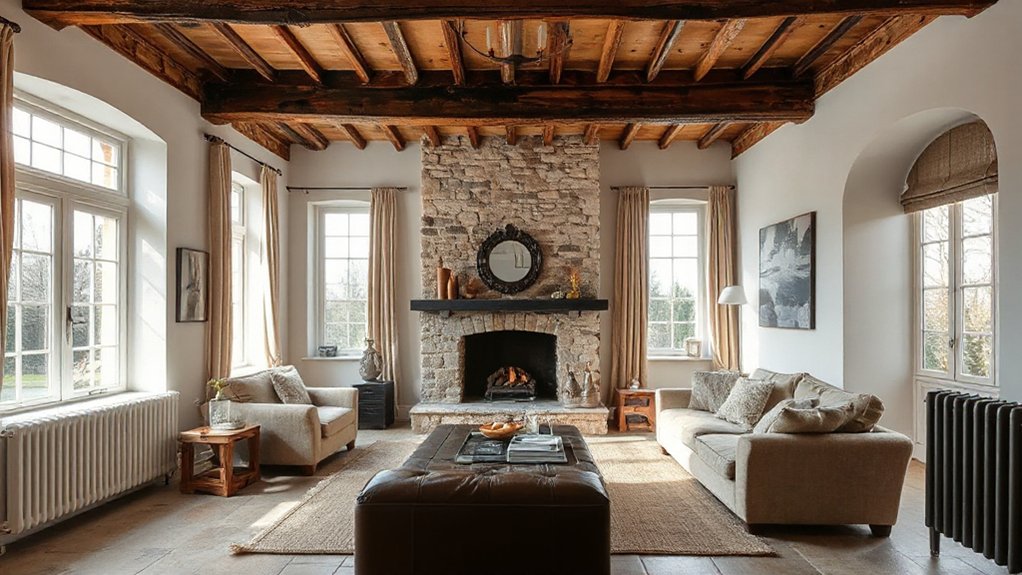
Materials that withstand UK weather and daily life require deliberate choices. You’ll select durable materials that endure rain, humidity, and temperature swings while preserving aesthetics and function over time.
- Weather-resistant surfaces such as treated timber and composite panels
- Stone, brick, or tiled flooring with appropriate seals for wet conditions
- Corrosion-resistant metals and powder-coated finishes for hardware and fixtures
- Low-maintenance, drought-tolerant landscape gardening elements
- Sustainable materials sourced responsibly for long-term performance
In practice, balance performance with style by pairing rugged textures with controlled color palettes. Prioritize waterproof membranes, proper ventilation, and ventilation-aware detailing.
Choose finishes designed for outdoor exposure and easy cleaning. Sustainable materials reduce lifecycle costs and environmental impact, aligning with landscape gardening goals while delivering enduring appeal in UK homes.
Furniture Sizing and Layout Tricks for Compact UK Rooms
Smart use of scale and placement is essential in compact UK rooms; start by selecting furniture measured to fit without crowding, prioritizing pieces that perform multiple roles.
In small spaces, think vertical gains: tall storage, wall-mounted desks, and mezzanine options if ceiling height allows.
Opt for furniture with slim profiles and rounded edges to reduce visual bulk, and choose leggy designs to create light, airy sightlines.
Plan space by zones, ensuring clear pathways and functional progressions between seating, dining, and work areas.
Place sofas away from doorways, use corner solutions, and anchor focal points with a compact coffee table.
Consider modular pieces that reconfigure for gatherings.
Space optimization relies on precise furniture placement, proportional sizing, and thoughtful scale to maximize usability without crowding.
Prioritize clarity, efficiency, and purpose.
Pattern and Texture: Layering for Warmth
Layered texture techniques blend comfort with cohesion, guiding you to mix tactile surfaces—lush fabrics, matte woods, and nuanced weaves—for instant warmth.
You’ll leverage warmth through materials by pairing insulating textiles with durable, visually rich substrates to sustain feel and function.
Patterned surface strategies then harmonize scale and contrast, ensuring texture and pattern reinforce the room’s UK-appropriate atmosphere.
Layered Texture Techniques
Texture layering is essential for creating warmth in UK interiors; start with a core palette and build depth through varied textiles, surfaces, and patterns. You’ll balance texture with scale, guaranteeing each element complements the next, not competes.
Use a textured wall as a backdrop to anchor furniture and accessories, then layer textiles to invite comfort without clutter. Focus on tactile contrast—soft wovens, crisp linens, and plush velvets—paired with matte wood and understated metals.
Maintain cohesion by echoing color across materials and avoiding over-fussiness in pattern. Aim for a curated, breathable look that retains energy. Your approach should feel intentional, not busy, and invite lingering.
- Start with a neutral base and introduce layered textiles
- Integrate texture through upholstery, throws, and cushions
- Use a textured wall as an anchoring feature
- Mix finishes for depth and warmth
- Guarantee color coherence across layers
Warmth Through Materials
Materials shape warmth as much as color does, so focus on tactile contrast and surface payoff to invite coziness. You pair textiles with solid surfaces to create layers that feel deliberate, not cluttered.
Textile textures matter: weave, nap, and handfeel register under light, inviting touch and soft reflection. You’ll build warmth by mixing matte and subtle sheen, dense weaves with lighter knits, and natural fibers with refined finishes.
Material contrasts guide perception: stone or timber against plush fabrics, ceramics against textiles, metal trims with warm woods. Keep scale in check to prevent overwhelming the room; the goal is comfort, not heaviness.
Use layered textiles to soften lines and define zones, ensuring that warmth follows from material choices as much as from color dynamics.
Patterned Surface Strategies
Patterned surfaces weave warmth through deliberate contrast and cadence. You layer texture with intention, pairing bold prints against subtle bases to create depth without visual noise. Focus on textile combinations that repeat a single motif across spaces to unify the scheme, then offset with a contrasting wall covering to define zones.
Scale matters: use larger motifs for expanses and intimate sizes for accessories to maintain balance. Keep color relationships tight—two to three hues max—so patterns reinforce rather than clash. Introduce tactile variety through woven, knotted, and brushed finishes to enrich perception of warmth.
Guarantee lighting emphasizes texture, not glare. This disciplined approach yields cohesive character, refined sophistication, and durable comfort in UK interiors.
Lighting Plans to Elevate British Interiors
Lighting plans are essential to elevate British interiors, balancing warmth, task clarity, and ambience across varied rooms. You design with intent: layer lighting to define zones, highlight textures, and support daily activities.
Start with a dimmable base so you can shift mood from morning routines to evening entertaining. Place lighting fixtures to avoid glare while ensuring even coverage—think ceiling coves, wall washes, and discreet floor lamps.
Use a mix of ambient glow and task lamps to maintain depth and contrast, not just brightness. Address scale for UK spaces, incorporating recessed fittings where ceilings are lower and tall rooms benefit from sculptural pendants.
Remember energy efficiency and controllability, pairing smart controls with traditional aesthetics to sustain timeless interiors.
Budget-Smart Upgrades With Maximum Impact
If you want a high-impact refresh on a tight budget, focus on strategic upgrades that elevate both function and feel. You’ll maximize effect by targeting core surfaces, lighting balance, and storage efficiency, delivering budget-friendly results with minimal disruption.
Implement crisp, well-planned changes that read as cohesive, not piecemeal, and emphasize durable materials and timeless finishes. Prioritize color, texture, and layout tweaks that transform perception without overhauling structure.
Choose high-contrast accents, streamlined hardware, and multipurpose furnishings to achieve impactful upgrades.
- Refresh key surfaces with durable, neutral paints and a single bold accent
- Upgrade lighting with layered, adjustable sources for mood and function
- Optimize storage via wall-mounted systems and under-bed solutions
- Replace hardware for a cohesive, modern look
- Invest in quality textiles to elevate texture and warmth
Heritage Accents Without Overdoing It
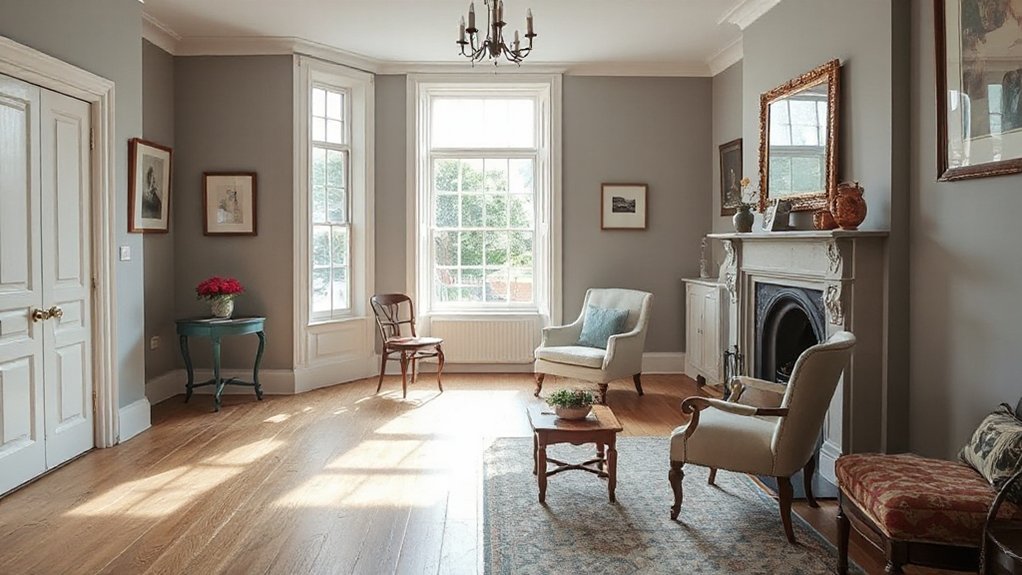
Heritage accents can elevate UK homes without overwhelming them when you apply them consciously. Subtle nods—traditionally framed art, carved wood, or period-accurate textiles—anchor rooms without shouting.
Choose a restrained palette that echoes historic schemes, then layer with modern neutrals to keep contrast crisp. Focus on one or two signature pieces per space; avoid saturating all surfaces with antiqued finishes, which invites overdoing heritage.
Prioritize authentic materials, like chunky timber, brass fixtures, or handwoven fabrics, over generic “colonial” imports that dilute character. Use heritage accents as punctuation rather than the sentence.
In living spaces, prop a stately mirror or a carefully chosen antique rug to ground the room. Maintain balance through proportion, light, and intentional repetition to preserve sophistication and clarity.
How to Mix Styles: Signature British Modernism With Classic Roots
Blending Signature British Modernism with Classic Roots requires disciplined restraint: let bold, architectural lines from modern pieces coexist with time-honored textures and forms, not compete with them. You achieve balance by selecting a restrained palette, letting materials speak, and honoring proportion over decoration.
Contemporary minimalism informs clean edges, while classic textiles add warmth. Aim for synergy: modern furniture with traditional silhouettes, or vice versa, so each piece earns its place.
- Prioritize contrast over sameness to define Modernism within a classical frame
- Use a neutral base and punch it with a singular, sophisticated accent
- Choose textiles that blend texture and pattern without overpowering
- Let architectural features remain the narrative, not masked
- Pursue Eclectic fusion through thoughtful repetition and restrained ornament
Frequently Asked Questions
What Defines the Current Best Interior Design Style in the UK?
Current best design in the UK hinges on cohesive color palettes and practical furniture arrangement, prioritizing timeless neutrals, warm accents, and flexible layouts to suit small spaces, multigenerational living, and evolving tech needs.
How Can British Homes Balance Tradition With Modern Comforts?
You balance tradition and modern comforts by weaving symbolism into spaces, embracing cultural influences and regional variations. You curate timeless silhouettes, clever tech, and warm textures, asserting authoritatively that heritage and innovation coexist, without compromising comfort or authenticity.
Which UK Textures Resist Damp and Daily Wear Best?
You should choose damp resistant materials like solid stone, treated timber, and ceramic tile, plus wear proof finishes such as matte sealants and UV-resistant coatings. You’ll benefit from drafts-proof joints, breathable membranes, and robust, low-maintenance textures throughout.
How Do Light and Space Affect UK Room Perception?
Light and space transform perception: you’ll feel brighter rooms, expanded feel, and calmer vibes. Color psychology guides mood with hue choices; lighting techniques shape depth and focus. You optimize scale, cohesion, and flow through deliberate, authoritative design choices.
What Are Budget-Friendly British Design Upgrades With Impact?
You’ll elevate your space with budget-friendly upgrades: choose eco friendly materials for surfaces and furniture, and add vintage accents for character. Prioritize durable, low-maintenance items, and blend sustainability with style to achieve meaningful, scalable impact.
Conclusion
You’re holding a key to a timeless door. Design is the lock: Victoria’s palette, Georgian restraint, cottage warmth, and modern, maintenance-smart lines all click together when you listen to the house’s heartbeat. Let heritage be the handle, not the entire frame; let daylight be the fuse, not the glare. When you blend textures, you summon a story you can live in—steady, enduring, distinctly British. Open in confidence; the room will reveal its own quiet, enduring light.