
You can improve your home’s flow on a budget by first spotting and sealing stubborn drafts, gaps, and clutter that trap air. Reorganize rooms to shorten paths, place furniture for easy movement, and use rugs to soften passages. Define zones with low-cost dividers or open shelving, and add layered lighting with dimmers for flexibility. Seasonal decluttering keeps spaces breathable, while mirrors and light wall colors visually widen rooms. Curious to learn more practical tweaks that stretch every dollar? You’ll find them here.
Key Takeaways
- Declutter and reconfigure furniture to create clear sightlines and unobstructed pathways, enhancing movement and perceived space.
- Add budget-friendly lighting layers (ambient, task, accent) with dimmers and smart controls to improve brightness and flow without major renovation.
- Use low-profile dividers, open shelving, or curtains to define zones while preserving openness and airflow.
- Employ light, neutral colors and cohesive textures to visually widen spaces and maintain a calm, continuous palette.
- Test airflow and temperature with simple methods (tissue/ribbon) and adjust thresholds/seasonal storage to reduce trapped air and drafts.
Spot Flow Blockers in Your Home
Spot flow blockers are cheap, invisible energy leaks you can fix in a weekend. You’ll notice tighter airflow and steadier temperatures once you identify gaps, doors, or clutter that trap air.
Start by inspecting thresholds and weatherstripping around doors, windows, and vents; replace worn strips and seal cracks with foam or caulk.
Reorganize rooms to minimize long, winding paths that waste pressure. Integrate pet zones and home scenting areas away from main traffic to prevent scent from pulling air through undesired routes.
Use rugs or mats to slow airflow at entryways without blocking warmth.
Finally, test airflow with a simple tissue or ribbon method to confirm improvements.
Small tweaks add up, preserving comfort while lowering energy use.
Design a Budget-Friendly Lighting Plan
Start by layering lighting to create flexibility for different tasks and moods, using a mix of ambient, task, and accent options.
Consider budget-friendly zoning that separates rooms or zones—think dimmable fixtures and smart plugs to control brightness without breaking the bank.
This practical approach keeps costs low while you tailor lighting to the space, time of day, and activities.
Layered Lighting Layers
Layered lighting is about more than brightening a room; it blends function, mood, and energy use. You design a budget-friendly plan by combining layers that work together, not in isolation, to build ambient illumination and task focus.
1) Start with a dimmable main light to set the room’s baseline without wasting energy.
2) Add task lights at desks, countertops, or reading nooks where precise visibility matters.
3) Introduce accent lighting to highlight art, textures, or architectural features.
4) Use energy-efficient fixtures and bulbs, preserving warmth and reducing operating costs.
Layered lighting lets you adjust mood for daily living while keeping a cohesive flow. This approach emphasizes ambient illumination as the foundation, with practical, budget-conscious choices that don’t sacrifice style.
Budget-Friendly Light Zoning
Designing a budget-friendly lighting plan means you’ll assign zones that match how you actually use each area, so you don’t waste light or money. Start with a simple map: identify task areas, relaxing nooks, and entryways.
Use a mix of ambient, task, and accent lighting, but keep fixtures limited and versatile. Prioritize natural lighting where possible; position lamps to enhance daylight rather than compete with it.
In dining and living zones, layer light to shift moods without increasing clutter or cost. Choose LED options and dimmers to stretch energy savings.
Color psychology matters: warmer tones feel inviting for living spaces, cooler tones support focus in kitchens or offices. Group controls to reduce switches, and test light levels at different times of day to ensure comfort and flow.
Reorganize Closets to Unlock Living Space
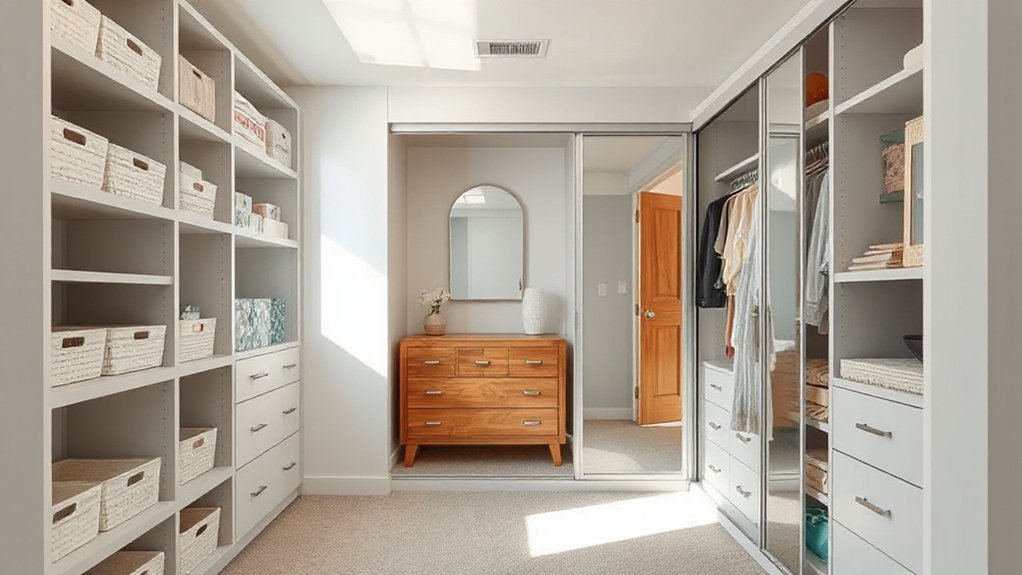
Reorganizing your closets can release surprisingly usable space, and it starts with a simple, practical plan. You’ll reshape how you store, access, and see belongings, turning cramped shelves into efficient zones for daily use. Focus on what you actually wear, keep, or return to a drawer, and remove excess items to refresh the system.
- Declutter by category, then purge items you don’t need or wear.
- Zone shelves and rods for shoes, tops, and outerwear to speed selection.
- Add slim organizers or baskets to maximize vertical space.
- Label bins and maintain a quick seasonal rotation for easy access.
Closet organization and storage optimization go hand in hand, making space feel larger without buying extras.
Plan Furniture to Invite Movement
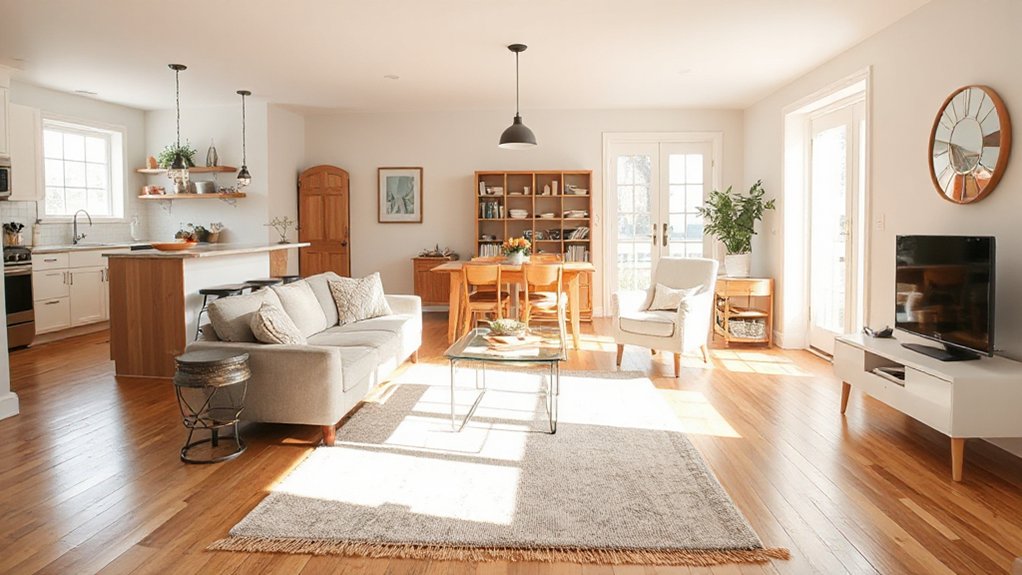
Prioritize furniture placement that creates unobstructed movement pathways, avoiding tight chokepoints. Use the space to define natural routes, using rugs and subtle height differences to cue pathways without shouting.
Choose multipurpose pieces that reduce clutter while maintaining open sightlines. Leave generous gaps around sofas, tables, and consoles so you can pass behind seating without squeezing.
Finally, test the arrangement with a quick walk-through, adjusting as needed for comfort and ease.
Define Zones With Affordable Room Dividers
One smart way to define zones on a budget is by using affordable room dividers that don’t close off space. You’ll create distinct areas while keeping sightlines open, promoting flow and light. This approach supports practical room partitioning without heavy construction, so you can rearrange as needs change.
1) Choose low-profile screens that match your decor for flexible zoning.
2) Use open shelving as a divider to store items and maintain air movement.
3) Opt for textile curtains or panels to soften edges without full enclosure.
4) Implement freestanding bookcases or half-walls to delineate zones while preserving accessibility.
Affordable zoning hinges on thoughtful placement and materials, not expense, helping spaces feel larger and more intentional.
Optimize Traffic With Door and Hallway Tweaks
To fine-tune how people move through the space, start by evaluating doorways and hallways for smooth traffic flow. You’ll look for bottlenecks, awkward turns, and clutter that slows passing. Prioritize clear sightlines and unobstructed paths; trim furniture and curb excess decorations in high-traffic zones.
Consider door swing and width, ensuring comfortable passage for carts, package deliveries, or guests. Use consistent thresholds and lighting to guide movement, and place mirrors or glass panels where corners feel tight.
For lasting impact on daily life, implement practical storage near entries to support Entryway organization, so jackets, shoes, and bags don’t pile up in hallways. Tie the look together with calming hallway color schemes that reflect light and reduce perceived congestion.
Improve Acoustics and Perceived Space on a Budget

If you want rooms to feel calmer and bigger without spending much, start by softening hard surfaces and rearranging layouts for better flow. You’ll boost Acoustic treatments and Perceived spaciousness with simple, proactive tweaks that don’t break the budget.
- Add soft textiles, rugs, and curtains to absorb sound and reduce echo.
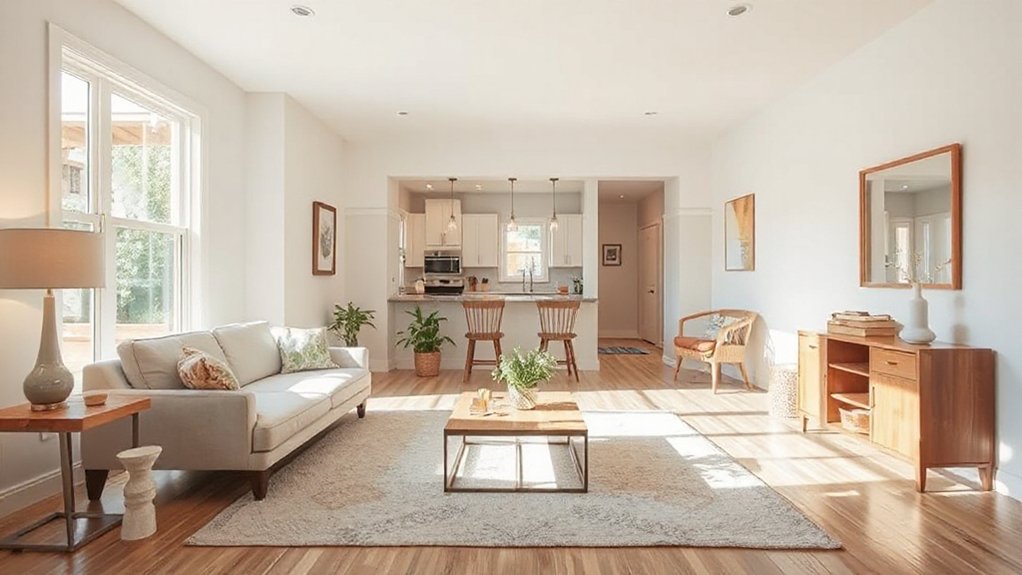
- Reposition furniture to create source-free pathways and open sightlines.
- Use lighter wall colors and mirrors to reflect light without clutter.
- Incorporate multi‑purpose panels or bookshelf fronts to dampen noise while adding function.
These steps target everyday noise without expensive equipment, delivering practical gains in calm and space.
You’ll notice clearer conversations, less fatigue, and a room that feels more expansive with thoughtful placements.
Use Tidy, Multifunctional Storage That Doesn’t Overwhelm
Tidy, multifunctional storage helps you keep spaces calm and usable without overwhelming them. Choose compact pieces that perform double duty, so every square foot counts. Look for smart storage solutions—benches with drawers, coffee tables with hidden compartments, or wall-mounted units that free floor space.
Prioritize vertical organization to reduce clutter without shrinking your living area, and opt for clear bins or labeled containers so items are easy to find. Keep a simple routine: designate a single spot for everyday essentials, rotate seasonal items, and routinely purge what you don’t use.
Hidden compartments can hide clutter from view while preserving accessibility. Avoid chunky, mismatched pieces; streamline with cohesive finishes to maintain a cohesive flow. This approach delivers practical, calm spaces that feel larger and more usable.
Color and Decor Tricks to Visually Widen Rooms
Light colors on walls create the illusion of more space, especially when you pair them with bright, reflective accents.
Place mirrors strategically to bounce light and extend the perception of width without crowding the room.
Use subtle color zoning to separate zones while keeping the overall palette airy and cohesive.
Light-Colored Wall Illusions
Light-colored walls can make a room feel instantly bigger by reflecting more light and creating a clean, airy backdrop. You’ll harness light illusions by choosing subtle tints and matte finishes that minimize glare while maximizing depth.
- Use a single, cohesive color family across adjacent rooms to extend perceived space.
- Opt for low-sheen finishes to reduce harsh reflections and keep wall surfaces calm.
- Keep walls uncluttered with minimal art and functional shelving that blend into the color palette.
- Introduce vertical accents, like tall trim or doorways, to emphasize height and wall reflections without crowding.
These tweaks create open flow and visual calm, making small rooms feel larger through light and space continuity.
Mirror-Placement Tricks
Strategically placed mirrors can instantly widen a room by bouncing natural light and creating the illusion of deeper space. You’ll maximize impact by choosing mirrors with slim frames or frameless glass to minimize visual clutter.
Place a mirror opposite a window to reflect daylight, or position it to double the view of a doorway, widening the perceived corridor. Think vertical mirrors to stretch ceilings and horizontal ones to elongate walls.
Avoid overloading walls with multiple large reflective surfaces; instead, build a cohesive pair or trio that echoes the room’s color palette.
When you hang mirrors, assure secure mounting at eye level and proper height for standing and seated perspectives.
Mirror placement matters: intentional, balanced, and aligned with existing decor creates a calmer, more expansive feel through reflective surfaces.
Strategic Color Zoning
Color zoning can visually expand a space by delineating areas with intentional hues and finishes. You’ll use color psychology to cue purpose and flow, guiding movement and perception without heavy redesign.
Below are practical zoning strategies you can apply today.
1) Pick a dominant neutral base and introduce an accent shade at key transitions to signal function.
2) Use lighter walls in high-traffic zones and deeper tones in alcoves or seating nooks to create depth.
3) Vary finishes subtly—matte walls with satin trims—so edges read as intentional boundaries rather than clutter.
4) Coordinate ceiling and floor tones to unify zones while allowing color shifts to define distinct areas.
Add Smart Switches and Dimmers for Adaptable Lighting
Adding smart switches and dimmers gives you flexible control over your lighting, letting you tailor brightness and mood for any room with a tap or voice command. This small upgrade reduces clutter and simplifies routines, since you can manage multiple fixtures from one switch or app.
Look for smart switches that work with your existing bulbs and hub, and opt for dimmers that preserve bulb life while delivering quiet, precise adjustments. Set scenes for daily flows—bright task lighting in the kitchen, soft ambience in the living room, or a bedtime fade in hallways.
With adaptable lighting, you gain energy efficiency and consistency across spaces, making your home feel more intentional and comfortable without a costly remodel.
Place Mirrors to Expand Light and Space
Mirrors do more than reflect your space—they bounce light around to feel brighter and larger. You can use mirror placement to enhance light expansion without adding fixtures or clutter.
- Position a medium mirror opposite a window to double daylight.
- Lean a tall mirror across from a doorway to widen narrow halls.
- Hang a mirrored gallery near dining or living areas to amplify ambient glow.
- Choose frames with minimal depth or simple finishes to keep lines clean.
Keep reflections purposeful: avoid showing clutter, and confirm secure mounting. Opt for mirrors with subtle bevels to soften edges while increasing perceived depth.
When you align mirrors to maximize light expansion, you create a brighter, more open feel with little investment. This practical approach maintains cohesion with your budget-friendly upgrades.
Declutter Seasonally to Preserve Year-Round Flow
Seasonal decluttering keeps your spaces fluid and adaptable, so your year-round flow stays intact without constant rearranging. You flow through closets, drawers, and shelves with a quick, purposeful rhythm: remove what you don’t use, group essentials, and store seasonal items in labeled bins.
This practice helps you identify overfull areas before they become bottlenecks, reducing visual noise and creating immediate calm. Focus on consistent routines—a brief monthly sweep paired with a seasonal purge keeps clutter clearing manageable and predictable.
Embrace seasonal storage solutions that fit your space, like under-bed boxes or stackable totes, to preserve open pathways. With deliberate sorting and labeled containers, you maintain a coherent home feel that adapts to changes without sacrificing function.
Make Small Remodels Feel Big Without the Cost
Ever wondered how to make small remodels feel expansive without draining your wallet? You can stretch space and impression with simple, deliberate choices that don’t break the budget. Focus on how you move through rooms, not just what you add.
- Optimize furniture placement to create clear sightlines and define zones without new walls.
- Choose window treatments that draw the eye upward and soften edges, increasing perceived height and airiness.
- Use light, cohesive color palettes to unify spaces and reflect natural light.
- Add inexpensive texture with throw pillows, rugs, and small decor accents to make rooms feel layered and intentional.
Build Maintenance Habits to Sustain Breathable, Connected Living
Keeping breathable, connected living sustainable isn’t a one-and-done task; it’s a routine you build. Start with simple checks: set a monthly calendar reminder to inspect filters in your ventilation systems, fans, and exhausts. Replace disposable filters ahead of peak seasons and note any peculiar smells, noises, or humidity changes.
Clean grilles and vents to maintain steady airflow, preventing dust buildup that compromises air quality. Create a straightforward maintenance log so nothing slips between tasks. Align ventilation maintenance with other routine chores—dusting, laundry, cooking—so you stay consistent.
Prioritize natural ventilation when weather allows, then supplement with mechanical support during extremes. Invest in a smart detector or monitor for real-time feedback on air quality, and adjust habits as needed to sustain breathable, connected living.
Frequently Asked Questions
How Can Small Budget Tweaks Measurably Improve Daily Flow?
Color psychology guides how you feel in spaces, so you’ll choose calming hues and clear contrasts to reduce clutter perception. Lighting enhancements brighten pathways, highlight flow, and make tasks easier, keeping you moving smoothly through daily routines.
Which Affordable Upgrades Offer the Best ROI for Space Feel?
Color psychology and smart furniture arrangement offer the best ROI, you’ll notice bigger space feel with calmer hues and tension-free layouts, so you’ll enjoy smoother flow and purposeful rooms without costly overhauls.
How Can I Prioritize Changes for High-Traffic Areas?
Prioritize high-traffic zones by evaluating flow and misery points, then test changes first in small steps. Focus on lighting enhancements and furniture rearrangement to open sightlines, reduce clutter, and improve movement without a full remodel.
What Quick Wins Balance Function and Aesthetics Affordably?
Lighting enhancements and color schemes offer quick wins; you balance function and aesthetics affordably. You’ll brighten paths, define zones, and unify rooms, using symbolism of light guiding steps. You choose practical tweaks that feel cohesive and intentional.
How Do I Track Improvements Without Overhauling Rooms?
You track improvements by noting changes you’ve made, measure impact, and log costs. Focus on decorative accents and lighting enhancements to boost perceived flow without big remodels, record dates, photos, and tiny outcomes you notice day to day. Keep it practical.
Conclusion
In a practical, practical pace, you’ll prune clutter, polish pathways, and pressure-test flow. Spotless spaces soothe, so you settle into simpler, sweeter routines. Plan lighting, partition wisely, and place mirrors with purpose, inviting light to linger. Declutter seasonally, define zones, and keep maintenance manageable, so you breathe easier at every bend. Small, steady steps stitch spaciousness into your home, sparking smoother circulation, brighter days, and a balanced, buoyant vibe you’ll happily live in—every day, effortlessly, exceptionally.