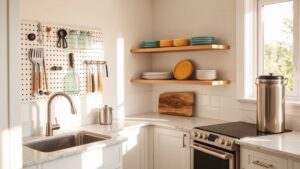
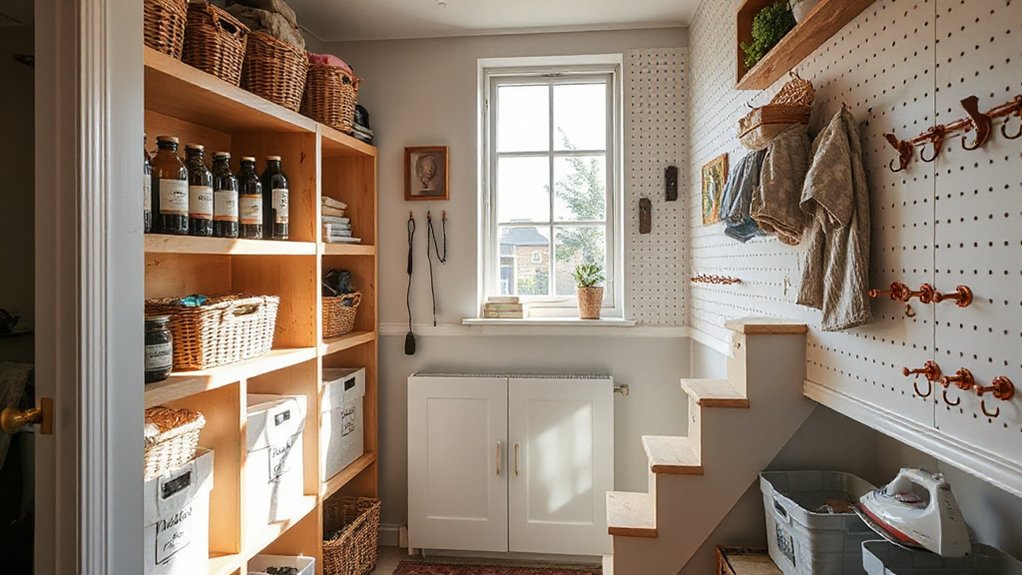

You’ll turn tight spaces into you-can-use-it zones with simple, affordable tweaks—think adjustable shelves, pegboards, and wall rails that free floor area. Start by mapping your pain points, then pick slim, durable materials like plywood or reclaimed timber to build modular setups. Add hidden compartments and multi-use furniture to keep clutter at bay. Curious what small, practical wins you can start with this weekend?
Key Takeaways
- Prioritize vertical and hidden storage to maximize wall space and keep floors clear in small UK homes.
- Incorporate multi-use and built-in furniture with hidden compartments to reduce clutter footprint.
- Use slender, modular systems (pegboards, rails, narrow shelving) for adjustable, accessible storage.
- Apply light palettes and reflective surfaces to enhance perceived space while staying budget-friendly.
- Regularly declutter and re-assess layouts to maintain a lean, efficient storage solution.
Assess Your Tiny Footprint: Define Your Storage Pain Points
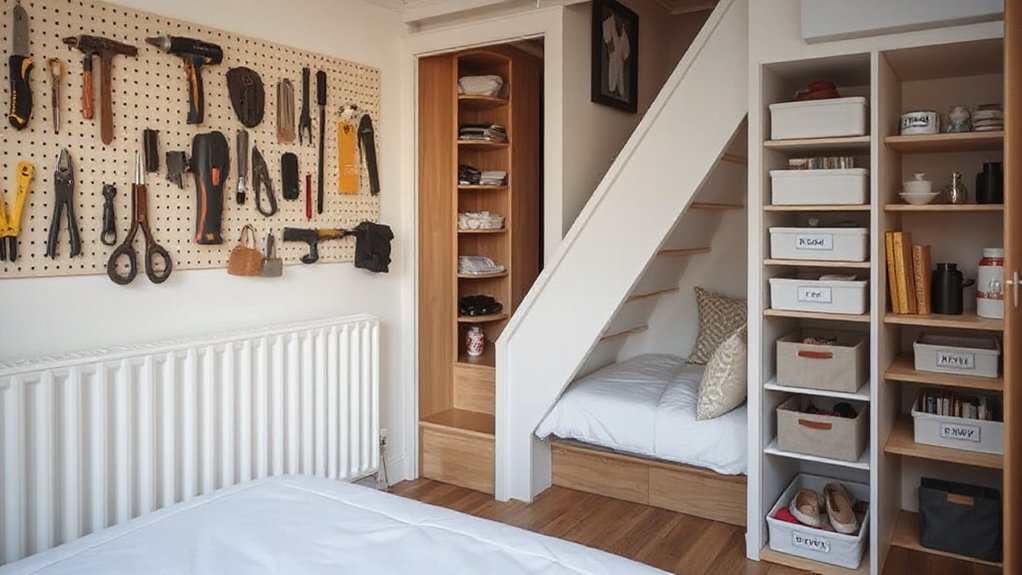
Assess your tiny footprint by pinpointing where clutter actually slows you down. You’ll map daily flows, from morning routines to evening wind-down, and spot friction points where items block pathways or steal time. Look at what you reach for first, and what ends up stacked or forgotten.
Identify spaces that tempt “creative clutter” rather than real use, like surfaces that accumulate odds and ends. Now test storage scenarios against your routines: if you can’t access essentials without clearing a dozen objects, you’ve found a pain point.
Prioritize compact closets, modular shelves, and vertical solutions that preserve floor space. Aim for visibility, accessibility, and rapid reset so your environment supports efficiency, not chaos.
UK Small-House Storage Principles to Guide Your Plan
In UK small homes, you’ll prioritize Space-Saving Principles to reclaim every square metre.
Lean on Vertical Storage Tactics to keep floors clear, and choose Multi-Use Furniture Strategies that pull double duty without crowding rooms.
Start with a simple plan that blends these ideas for a flexible, design-forward layout.
Space-Saving Principles
Space-saving comes down to prioritizing function over form. You’ll shape a plan by pairing storage innovation with compact design, so every square metre serves a purpose.
Focus on seamless integration, modular pieces, and accessible layouts that reduce friction in daily routines.
- Prioritize multi-use furniture that folds, tucks away, or expands when needed.
- Embrace built-in solutions to eliminate gaps and visual clutter.
- Choose light, neutral palettes with glass or mirrored surfaces to enhance perceived space.
- Audit items regularly, discarding what you don’t use to maintain a lean footprint.
Vertical Storage Tactics
Vertical storage isn’t just tall; it’s strategic. You optimise every wall, not just the obvious floor area, tailoring routes for reach and flow.
Start with vertical gardening to bring greenery without taking shelf space, using slim planters that cling to panels or rail systems.
Track shelving or tall, narrow units can house seasonal items, while a pegboard spine keeps tools visible and reachable.
Wall mounted lighting is your ally: place it to illuminate work zones and highlight stored goods, reducing clutter perception.
Prioritize modular components that adapt as needs shift; choose finishes that read as furniture rather than storage, preserving an airy feel.
Measure alcoves, corners, and ceiling drops, then layer storage from floor to ceiling for efficient, practical upkeep.
Multi-Use Furniture Strategies
Multi-use furniture is your quickest route to breathing room in a compact UK home. You’ll maximise square footage by choosing pieces that serve double (or triple) duties, crafted to suit tight corridors and low ceilings. Prioritise modularity, hidden storage, and slim profiles that don’t visually clutter. Keep materials cohesive to reinforce a calm, cohesive scheme; this makes rooms feel larger while still practical.
Pair these pieces with intentional lighting solutions and creative decor to add personality without sacrificing footprint. A thoughtful mix of function and style keeps your plan lean yet livable.
1) Identify high-use zones and rotate furniture seasonally for flexibility.
2) Opt ottomans and benches with internal storage to stow daily clutter.
3) Use wall-mounted or fold-down tables to free floor space.
4) Choose dual-purpose beds with drawers or under-bed cages for linens.
Maximise Entryway Nooks for Seasonal Gear
Maximise entryway nooks by grouping hooks for seasonal gear, so coats, hats, and bags grab-and-go without clutter.
Use nook-focused storage hacks like slim wall rails, labeled bins, and tiered organizers to keep frequent items reachable and visible.
Think compact, design-forward solutions that fit your space and habits, with a clear spot for every season.
Hooks For Seasonal Gear
Hooks are the simplest, most flexible solution for seasonal gear, letting you grab coats, hats, and bags at a glance. You’ll maximise entryway nooks by choosing a compact mix of hooks and slim rails, ensuring airflow and quick access.
Prioritise hooks organization with a mix of single-prong and staggered pegs to separate outerwear from accessories, and install at varying heights to suit kids and adults. Keep seasonal gear visible, not buried in baskets, for fast swaps as the weather shifts.
- Install a small rail above a bench for daily coats
- Use triple-prong hooks for hats and bags in one zone
- Group by season with labeled, slim hangers
- Add a shallow shelf for tiny accessories and gloves
Nook-Cocused Storage Hacks
Nook-focused storage hacks turn tight entryways into efficient command centers for seasonal gear. You’ll optimise vertical space with wall-mounted cubbies and slim open shelves, keeping bulky bins off the floor.
Use labeled, stackable tubs for hats, gloves, and scarves, and pair them with clear fronts so you spot what you need at a glance. A shallow bench with cubby storage doubles as a staging area for daily wear and a place to drop bags.
Incorporate a compact pegboard for seasonal accessories—scarves, face masks, or small hardware—so everything stays reachable yet tidy. Choose Nook decor that blends with wall tones, and curate a cohesive storage aesthetics scheme with coordinated baskets and labels.
This keeps entryways practical, stylish, and user-friendly.
Slim Entryway Solutions
Slim entryways demand precision: you can maximize every inch with compact, purpose-built storage that tucks seasonal gear out of sight yet within easy reach. Use vertical stacking to free floor space and keep routine items accessible by design.
Choose shallow shelves and a slim bench to create a drop zone for coats, bags, and accessories. Pair entrance mats with a small shoe rack to define zones and reduce clutter, then add hooks at waist height for quick grab-and-go items.
Opt for modular pieces that can adapt as seasons change.
- Install a narrow shoe rack under a bench for footwear and seasonal footwear shifts.
- Add wall-mounted hooks at varying heights for coats, bags, and hats.
- Use a slim, tall cabinet for tucked-away accessories.
- Place a dedicated mat-friendly tray for keys and mail.
Under-Stair Storage That Actually Works in Small Homes
Under-stair storage can be a smart, overlooked solution in small homes. You’ll transform wasted space into practical storage without sacrificing floor area or style.
Start with a clean plan: measure available height, depth, and the accessibility of the space under your stairs. Favor pull-out drawers or hinged compartments that glide smoothly and stay balanced when loaded.
Use uniform, shallow bins for quick categorization—seasonal gear, books, or shoes—so you never hunt for items. Prioritize open shelving for frequently used items and designate a hidden zone for less-used bits.
For a design-forward touch, integrate a slim seating nook or a compact desk within the same footprint, aligning finishes with your room’s palette. This is under stair design aimed at storage optimization.
Wall-Mounted Systems to Free Floor Space
Wall-mounted systems can dramatically free floor space by shifting storage to the wall where it’s most accessible. You’ll create instant, tidy zones without crowding rooms, using surfaces you already have. Here’s how to apply practical, design-forward choices that feel intentional rather than cluttered.
1) Install decorative shelving at varied heights to display essentials and art, pairing function with Creative wall art for personal flair.
2) Use wall-mounted hooks and rails near entryways for bags, coats, and headphones, keeping floors clear.
3) Create a micro-workstation with a slim wall desk and pegboard combo for daily tasks and tools.
4) Add translucent or open-front bins on shelves to maintain visibility and airflow, reducing visual noise.
Built-In Wardrobes: Slim Profiles and Clever Re-Sizing
Built-in wardrobes can extend the slim, wall-friendly approach you’ve started with, turning tight spaces into flexible storage without crowding the room. You’ll gain width without sacrificing floor area by using built-in wardrobes with slim profiles that hug walls and maximize depth efficiency.
Prioritize interior organization: shallow hanging rails, tall sections, and adjustable shelves to adapt as needs shift. Choose doors that taper or run full-height, minimizing visual bulk; mirrors or glass fronts can help light bounce and feel airy.
Re-sizing matters: measure available height and depth, then specify modular components to fit awkward alcoves or chimney stacks. Stick to neutral finishes for cohesion, and add subtle hardware for tactile satisfaction.
Built-in wardrobes deliver neat, scalable storage without redefining your room’s footprint.
Multi-Use Furniture That Hides Clutter in Plain Sight
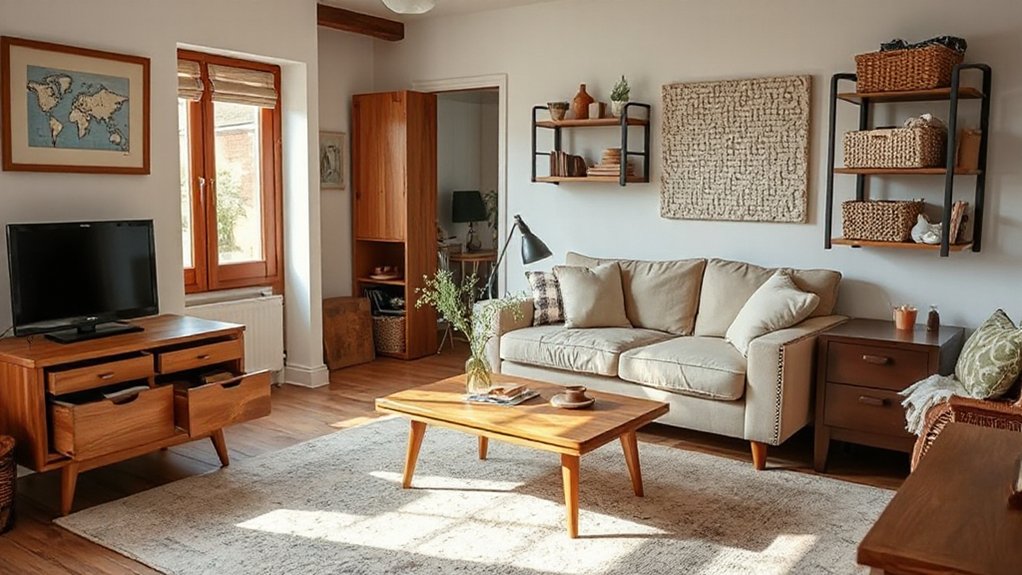
Think beyond flat surfaces and choose furniture that hides clutter without sacrificing style. Consider hidden storage seating for daily laundry days, a dual-purpose console that serves as a landing strip and a stash spot, and tidy multitask surfaces that keep tools and trays within arm’s reach yet out of sight.
You’ll gain cleaner sightlines and smarter organization cues that don’t scream “storage.”
Hidden Storage Seating
- Choose ottomans with lift-up lids to store blankets, remotes, and magazines.
- Opt for benches with hollow cores or drawers for shoes, toys, or seasonal gear.
- Pick coffee tables with hidden compartments for chargers, cables, and controllers.
- Consider ottoman-seating combos with removable covers for easy laundering and quick updates.
These seating solutions maximize small-space efficiency, maintain clean sightlines, and add texture or colour.
Prioritize durable interiors, soft-close hinges, and easy-to-clean fabrics.
Hidden storage keeps clutter out of sight and out of mind, reinforcing calm, practical design.
Dual-Purpose Console
Hidden storage isn’t limited to seating—consider a dual-purpose console that blends display, charging, and hidden compartments in one streamlined piece. You’ll maximize narrow entryways by selecting a slim silhouette with a shallow top for decor and a hidden drawer or two for everyday essentials.
Opt for a model with built-in charging ports and cable management to reduce clutter on the surface. Choose neutral finishes that pair with most schemes, and add a tray for keys and mail to keep immediate tasks contained.
For entryway organization, prioritize accessibility: keep everyday items within arm’s reach, but tucked away when not in use.
In closets, use the console’s compartments to support closet decluttering—store seasonal accessories, and shift rarely used items to higher shelves.
Tidy Multitask Surfaces
- Use concealed compartments for cords
- Opt for lift-top or sliding surfaces
- Integrate wireless charging zones
- Choose shallow, high-load trays
Budget-Friendly Materials for Small UK Homes
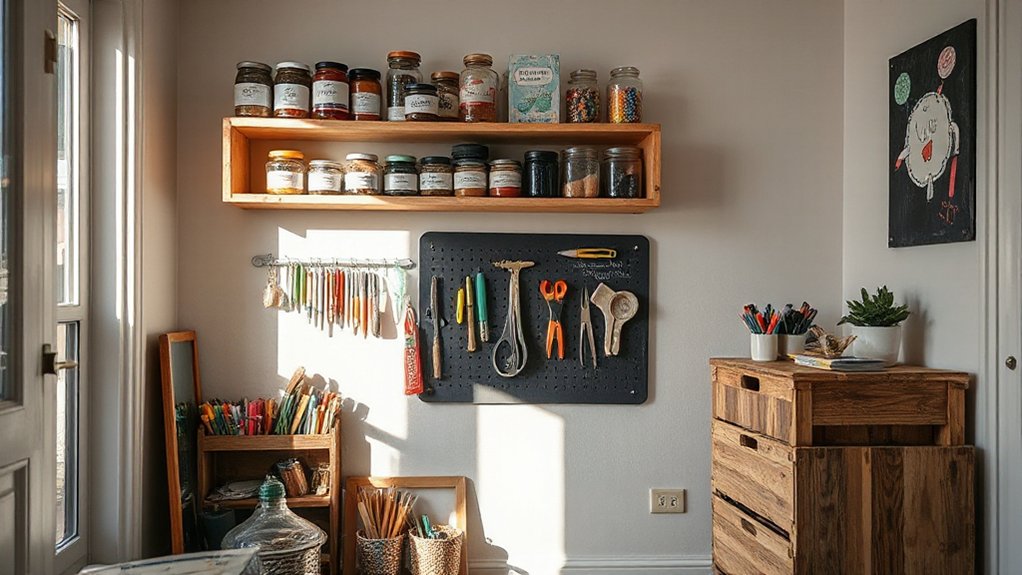
There are plenty of budget-friendly materials that suit small UK homes without sacrificing style or durability. You’ll want options that balance cost, longevity, and aesthetics, so start with plywood and MDF for lightweight shelving that’s easy to cut and adjust.
Choose high-quality laminates or tempered glass for a sleek, low-maintenance surface. Reclaimed timber delivers warmth and character without breaking the bank, while plastic composites can resist wear in high-traffic zones.
Consider metal framing with perforated panels for modular storage that flexes with your space. Look for affordable materials that don’t compromise eco-friendly options; certified plywood, low-VOC paints, and responsibly sourced textiles keep your footprint small.
Prioritize multifunction pieces, simple hardware, and clean edges to maximise perceived space efficiently.
Weekend DIY: Doors, Pegs, and Rails to Save Space
If you’re tightening up a tight UK space this weekend, doors, pegs, and rails can transform storage without expanding the footprint. You’ll gain surface area and visibility with smart door hardware and mounted rails, keeping clutter off floors.
Use pegboard accessories to tailor the wall, color, and texture to your space, not the other way around. Focus on simple, sturdy mounting, and choose multipurpose hooks that pull double duty for coats, bags, and tools.
The goal is quick swaps and low effort, with high impact.
- Install a wall-mounted rail system behind the door for slim, accessible storage
- Use pegboard accessories to create adjustable zones for tools and accessories
- Add a towel/linen rail on the interior door for space-saving storage
- Choose durable door hardware that tolerates daily use and weight
Organize by Zone: Kitchen, Living, and Bedrooms in Micro Homes
Organizing a micro home by zone makes every square inch count, with kitchen, living, and bedrooms each getting dedicated, scalable solutions.
In the kitchen, group like tasks—prep, cook, clean—and place tools near their use, using wall rails or magnetic strips to free counter space. Store garden tools overhead in a compact cabinet with hooks, and keep a foldaway workstation for quick meals.
In the living area, create a media-and-pleasure zone with modular storage that doubles as seating, so you reduce furniture footprint while increasing function.
In bedrooms, designate a dressing and rest zone, using vertical organizers and under-bed boxes for seasonal items.
Prioritize bathroom essentials in a single, accessible cart, so quick routines stay streamlined and calm.
Consistency across zones maintains order and ease.
Frequently Asked Questions
How Can I Measure My Space Accurately for Storage?
First, you measure precisely using measurement tools, noting walls, alcoves, and door swings. Then plan your Furniture layout to maximize space, reference clear dimensions, and record every measurement for future tweaks and built-in storage.
What Are the Best Uk-Approved Space-Saving Hacks?
Space-saving hacks you’ll actually use: try UK-approved furniture hacks and practical decluttering tips that fit tight rooms. You’ll reclaim areas, maximize every inch, and love the clutter-free flow—it’s nearly a superpower for small spaces.
Which Stairs Offer Hidden-Increase Storage Options?
Hidden compartments in certain staircases and staircase drawers offer clever storage. You should seek models with integrated drawers or lift-up treads, ensuring smooth operation, sturdy support, and secure clasps for practical, design-forward space optimization.
How Do I Choose Durable, Small-Uk-Suitable Materials?
Choose materials with high material durability, verify UK material standards, and prioritize moisture resistance and weight. Compare finishes, joints, and sourcing. You’ll protect longevity, stay compliant, and design compact, practical storage that stands up to daily UK use.
What Quick Wins Improve Daily Organization Fast?
Start by tackling clutter reduction: assign dedicated drop zones, label boxes, and keep surfaces clear. Focus on time management with quick wins—set 10-minute tidy blocks, use vertical storage, and implement a simple daily reset to stay aligned.
Conclusion
You’ve got the blueprint to reclaim every inch. Think of storage as a living creature: flexible, evolving, and quiet in the corners you forget. With vertical rails, wall nooks, and multi‑use furniture, space stops shouting and starts guiding you. Keep it lean, reuse what you have, and declutter on a schedule. Small homes, big function—execute with simple, sturdy materials, adjust as you go, and let your design breathe like a well‑kept cupboard that reveals its best kept secrets.