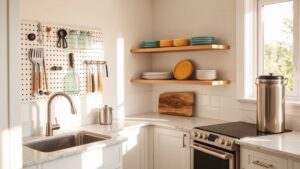
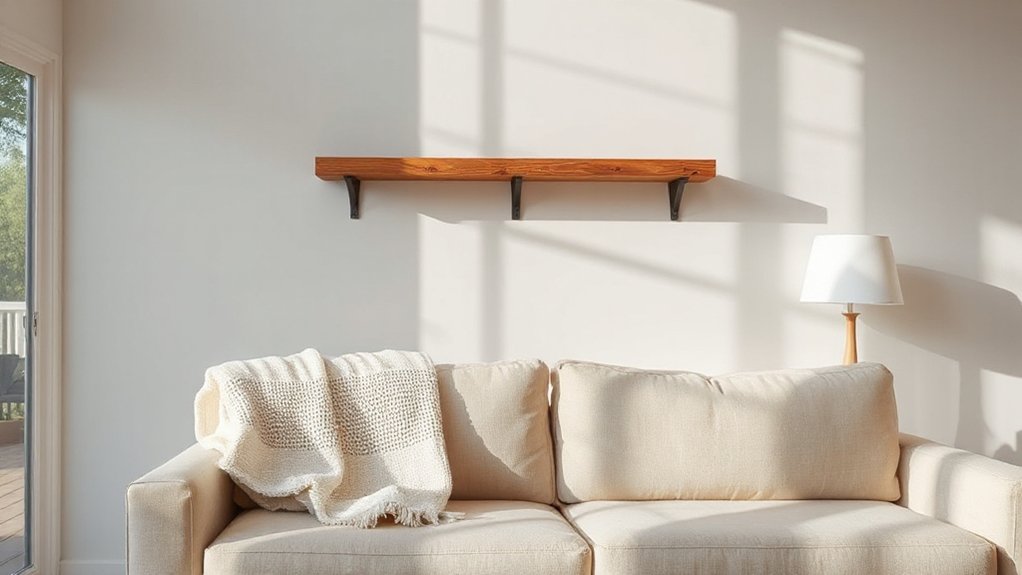

You can elevate your space with beginner-friendly upgrades that deliver big impact with minimal effort. Start with quick wins—swap a dated fixture, update hardware, and layer lighting for ambiance. A single feature wall in a cohesive color palette can redefine the room, while smart storage clears clutter in days. Simple furniture tweaks and curated decor rounds out the transformation, all without a heavy budget. Ready to see how these practical steps come together, and what to tackle first?
Key Takeaways
- Start with a weekend-ready refresh: simple, high-impact upgrades like color harmony, layered lighting, and new hardware.
- Use a focused 2–3 color palette and test swatches under different lighting for consistent results.
- Declutter quickly with labeled zones and stackable, airtight storage to transform spaces fast.
- Refresh furniture with new covers or hardware, matching finishes for cohesive look and improved feel.
- Add quick decor touches: art alignment, layered textiles, and plants to elevate ambiance with minimal effort.
Start With a Weekend-Ready Refresh: Quick Wins You Can Do Now
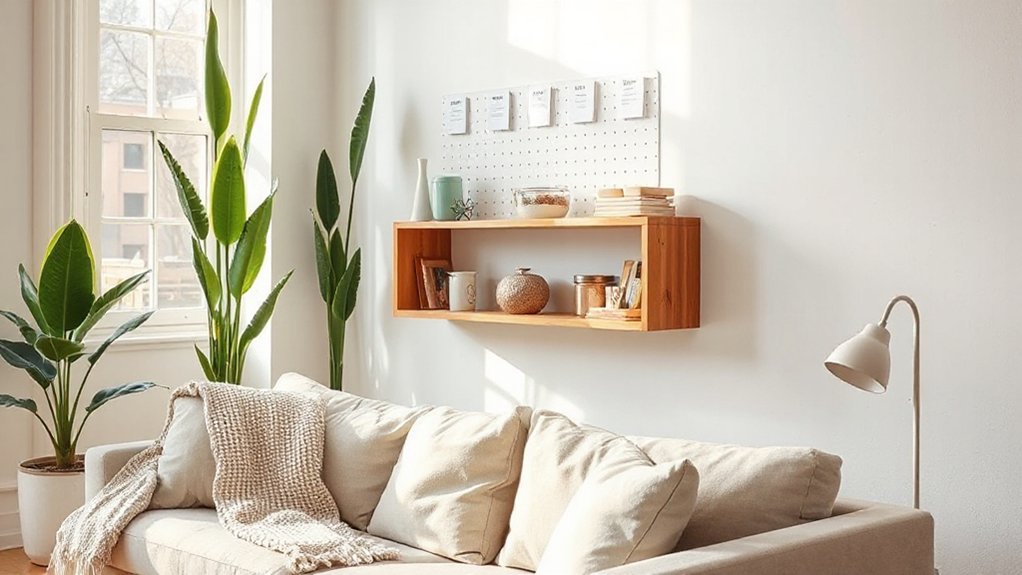
If you’re planning a quick, weekend-ready refresh, start with simple, high-impact upgrades that don’t require a full teardown. You’ll gain immediate impact by tightening core elements first.
Focus on color schemes to normalize perception and create harmony across spaces; choose a cohesive palette anchored by a neutral base and one or two accent tones.
Lighting enhancements should be your next priority: swap outdated fixtures, add layered lighting, and boost brightness with efficiency in mind. Use dimmers to modulate mood and function, ensuring task areas stay focused while ambient light supports flow.
Prioritize hardware and finishes that reflect quality without overhauling structures.
Document measurements, schedules, and budget to prevent scope creep. Quick, precise changes reduce disruption while delivering measurable, cohesive improvements.
Paint Tips That Make a Big Impact in Little Time
Paint can dramatically alter space perception in hours, not days. You’ll start with a focused palette, choosing 2–3 hues that align with color psychology goals: calmer tones for bedrooms, brighter accents for work areas.
Apply a primer on surfaces with uneven porosity to guarantee uniform color and reduce coats. Prioritize paint finishes by function: matte hides imperfections in living spaces; satin is durable for kitchens and baths; semi-gloss suits trim and doors for easy cleaning.
Test swatches under room lighting at different times of day to confirm depth and consistency. Use a single-coat approach only if manufacturer guidance permits; otherwise, two coats yield consistency.
Work in small sections, maintaining a wet edge to avoid lap marks and ensuring even coverage and color fidelity.
Smart Storage Swaps to Declutter in a Day
Small changes in how you store items can yield big decluttering results in a day. You’ll approach smart storage swaps with a methodical mindset, prioritizing closet organization and shelf optimization.
Begin by auditing everyday items you actually use, removing duplicates, and tagging infrequently touched gear for later rotation.
Implement clearly defined zones: daily, weekly, and seasonal access, using labeled bins and uniform hangers to maximize space and visibility.
Opt for stackable containers with airtight seals for seasonal garments, and add slim, adjustable shelving to accommodate variable item heights.
Install door-mounted organizers for small accessories to free drawer space.
Finally, align storage modules with your existing layout to minimize friction, ensuring quick retrieval and sustained tidiness without compromising accessibility.
Simple Furniture Tweaks That Look New
Simple furniture tweaks can make your space feel refreshed without a full remodel. You’ll approach upgrades with a methodical mindset, prioritizing durability and visual cohesion.
Begin with upholstery updates to revitalize seating without new frames; choose covers or fresh foam that fit existing dimensions and ergonomics, then test for flattening and support.
Next, implement hardware replacements to alter function and appearance—swap pulls, hinges, and feet to modern, quieter variants that withstand daily use. Maintain consistency by matching metal finishes and wood tones across pieces.
Apply precise measurements, confirm screw sizes, and predrill where needed to avoid grain tearout. Avoid overloading surfaces; balance colors, textures, and lines for a unified look.
Conclude with a quick stability check and a sit-test to verify comfort and alignment.
Small Decor Wins You Can Complete This Weekend
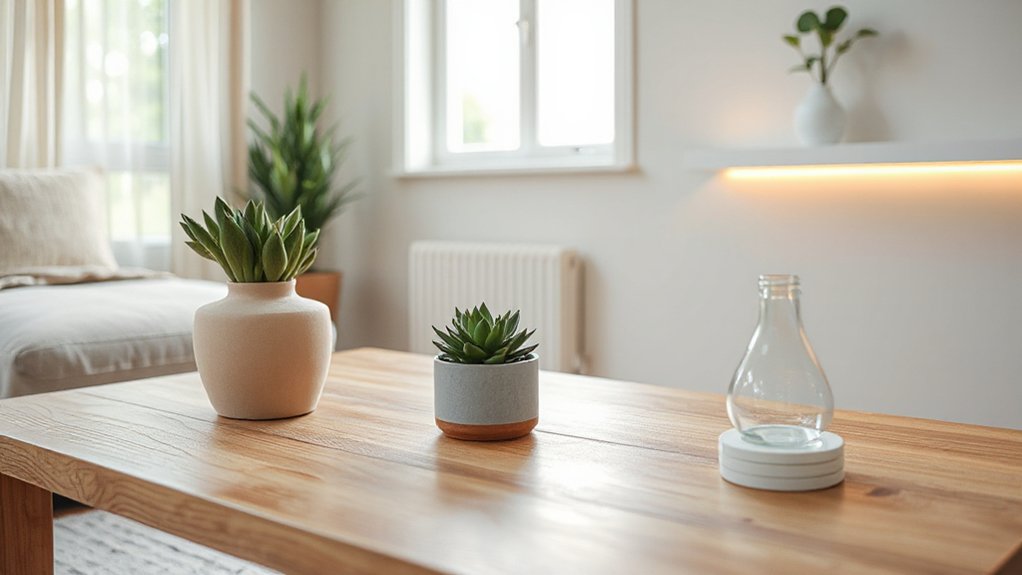
Weekend-ready decor wins don’t require tools beyond a few hours and a clear plan. You’ll implement small, high-impact changes that elevate space without overhauling layouts. Focus on wall art placement, plant grouping, and texture contrasts to maximize perceived depth.
This approach uses quick decisions, precise measurements, and repeatable patterns to guarantee consistency across rooms. You’ll balance color, scale, and negative space to avoid clutter while maintaining a cohesive look.
By the end, you’ll have a refreshed environment that reads as intentional, not rushed.
- Optimize wall art: rotate frames, align centers, and anchor with a cohesive profile.
- Group indoor plants in varied heights for visual interest and air quality benefits.
- Layer textiles: a throw or rug to anchor color without overwhelming.
- Edge updates: switch switches, switch plates, and lighting finishes to unify tone.
Frequently Asked Questions
How Do I Choose Paint Finishes for High-Traffic Rooms?
For high-traffic rooms, choose an enamel or satin paint sheen for easier cleaning and durability. Consider durability considerations like scuff resistance, washability, and stain resistance; avoid flat finishes. You’ll get washable, resilient surfaces that resist wear over time.
What Tools Are Essential for a Weekend DIY Project?
A power drill and tape measure are essential for a weekend DIY project. You’ll drill pilot holes, drive fasteners, and verify dimensions accurately. Guarantee bit selection matches material, set depth stops, and secure work with clamps for precision.
Can I Repaint Existing Furniture Without Sanding?
Yes, you can repaint without sanding, but prepare surfaces with light cleaning and primer. For best results, guarantee dust-free, steady Paint application, use a quality bonding primer, and document Furniture prep steps to optimize adhesion and durability.
How Can I Safely Install Lightweight Shelving Quickly?
Install lightweight shelving quickly by selecting proper anchors and studs, then follow safety precautions: wear goggles, use a level, and test weight limits. Choose tool selection carefully—impact driver or drill, correct bits, and set anchors securely for safety.
What Budget-Friendly Decor Tips Work for Renters?
Decorate on a budget by using decorative wall decals and temporary wallpaper options; they’re renter-friendly, removable, and low-commitment. You’ll achieve distinctiveness with precise placement, consistent color palettes, and surface prep to prevent peeling and damage.
Conclusion
In just a weekend, you can elevate your space with these beginner-friendly upgrades. Start with a quick refresh, then seal the deal with smart storage and subtle decor tweaks. Use cohesive color accents and layered lighting to unify the room. Keep tools simple, measurements precise, and steps repeatable. You’ll finish with a transformed environment that feels larger, brighter, and more intentional—almost magically so. This approach is the single most transformative DIY you’ll tackle this season. You’ll thank yourself a million times.