

Exploring financing isn’t one-size-fits-all—you should consider a spectrum from conventional loans to government-backed options and non-traditional paths. Start with fixed-rate or adjustable-rate mortgages to match your timeline, then compare down payment strategies, PMI costs, and ongoing expenses like taxes and insurance. Explore FHA, VA, and USDA for lower upfront requirements, plus non-traditional routes such as seller financing or lease-to-own if needed. A clear plan helps you optimize total cost and future equity—details that await you ahead.
Key Takeaways
- Compare conventional, FHA/VA/USDA, and non-traditional financing to find the best fit for down payment, credit, and occupancy goals.
- Assess total cost of ownership, including interest, points, PMI, taxes, insurance, and potential escrow changes.
- Explore down payment strategies and assistance programs to reduce upfront costs and potential grants or forgivable loans.
- Plan for contingencies with a clear budget, timeline, and lender-verified pre-approval to navigate market shifts.
- Use scenario modeling across loan terms (15-, 20-, 30-year) to optimize payments and long-term equity growth.
Foundational Financing Options Every Homebuyer Should Know

Understanding the basics of financing options is essential for smart homebuying. You’ll begin by recognizing foundational routes that align with typical budgets and timelines.
Pay attention to fixed-rate mortgages, which offer predictable payments and stability as you plan long-term ownership. Adjustable-rate options might suit shorter horizons, but they require vigilance for rate shifts.
Consider down payment strategies that minimize upfront costs without sacrificing equity, including gift funds or down payment assistance programs where eligible.
You’ll also weigh private mortgage insurance when your down payment sits below conventional thresholds, balancing monthly costs against loan approval strength.
Factor in ancillary protections such as property insurance and budgeting for potential home renovations that preserve value.
These base options establish a solid framework for prudent financing decisions.
Conventional Loans: Features, Requirements, and Pros/Cons
Conventional loans are the backbone of most mortgage programs, offering solid terms, broad availability, and flexible options to fit a range of finances.
You’ll typically face fixed-rate or adjustable-rate paths, with down payments varying by loan type and creditworthiness.
Key features include predictable payment schedules, competitive interest rates, and usually higher loan limits than some government-backed products.
Requirements focus on credit history, income stability, and capable debt management, with appraisal and loan-to-value metrics guiding approval.
Pros include strong resale appeal, faster processing, and simpler servicing, while cons can involve stricter underwriting and private mortgage insurance when your equity is low.
For some, loan consolidation can streamline monthly costs, but weigh total interest as you compare scenarios.
Always simulate scenarios to optimize payment clarity.
FHA, VA, and USDA Loans: Eligibility and Best-Use Cases
FHA, VA, and USDA loans broaden your options beyond conventional financing, but eligibility rules and best-use cases vary by program. You’ll assess basic qualifications—credit and income standards, down payment requirements, and property eligibility—to determine which option fits your situation.
In practice, you’ll match each program to scenarios like first-time buyers, lower down payments, or rural and eligible veteran purchases.
Eligibility Basics
Are FHA, VA, and USDA loans the right fit for you, and if so, which one best matches your situation? Each program targets different borrowers and property types, with distinct eligibility criteria.
FHA loans typically require lower down payments and credit scores, but incur mortgage insurance premiums.
VA loans offer strong benefits for eligible veterans and active-duty service members, often with no down payment or PMI, though funding fees may apply.
USDA loans support rural and eligible suburban homes, sometimes with no down payment, backed by income and location limits.
Your eligibility hinges on factors like credit history, income, and occupancy plans.
Consider how home equity and potential mortgage refinancing options influence your long-term costs and flexibility.
Use this framework to compare options before committing.
Best Use Scenarios
When determining the best use scenarios for FHA, VA, and USDA loans, you should match each program’s strengths to your situation: lower down payments and flexible credit (FHA), favorable terms for eligible service members (VA), or zero-down options for eligible rural and certain suburban homes (USDA).
Each program serves distinct goals. If you’re aiming for lower upfront costs and easier credit standards, FHA supports purchases and select Home renovation projects within its limits.
For honorably discharged or active-duty service members, VA offers competitive rates and no down payment with limited mortgage insurance.
USDA excels with zero down for qualifying rural and fringe-suburban homes, paired with predictable costs.
Consider how Home renovation and property flipping fit within program constraints and eligibility to maximize value.
Fixed-Rate vs Adjustable-Rate Mortgages: Which Fits Your Timeline
Fixed-rate mortgages give you predictable payments, while adjustable-rate options tie your rate to the market and can shift over time.
Understanding how rate structure affects total cost helps you align with your timeline and goals.
We’ll explore Fixed-Rate Basics, Rate Structure Impacts, and Timeline Alignment to compare which fits your plan.
Fixed-Rate Basics
A fixed-rate mortgage keeps the interest rate constant for the life of the loan, making your monthly payments predictable and easier to budget. You’ll benefit from stability when planning long-term finances, even as market rates shift.
This contrasts with variable options that can change over time. In practice, you weigh your timeline against the certainty of payments and the overall cost.
- Understand that interest rates influence overall affordability and monthly budgeting.
- Compare loan types to see how term length affects total interest paid.
- Consider your short- vs. long-term plans to decide if stability matters more than initial flexibility.
- Assess lender offerings to identify the best fixed-rate option for your situation.
Rate Structure Impacts
For many homebuyers, the right rate structure hinges on how your timeline lines up with rate movements. A fixed-rate loan offers a stable payment structure, preserving your monthly budget even if rates rise. It suits longer horizons when you want predictability and simplicity in planning.
By contrast, an adjustable-rate mortgage can start with a lower initial payment and potentially shifts as market rates change, which may benefit shorter timeframes or when you anticipate moving or refinancing before adjustments reset.
Consider how long you expect to retain the loan and your comfort with uncertainty. Evaluate the timing of rate shifts against your cash flow and overall debt picture.
Timeline Alignment
Choosing the right mortgage comes down to timing: if you expect to stay in the home or keep the loan long enough, a fixed-rate mortgage provides steady payments and protects you from future rate volatility.
If you anticipate moving or refinancing within a shorter period, an adjustable-rate mortgage can start with lower payments and adjust as rates change.
- Evaluate your timeline against fixed-rate certainty and ARMs’ potential rate shifts.
- Consider future plans like home improvement projects that may require budget flexibility and neighborhood safety stability.
- Align payment duration with anticipated residency length to avoid penalties or refinancing spikes.
- Compare total costs over years, factoring in inflation, closing costs, and payoff strategies.
Down Payment Strategies That Work for Your Budget
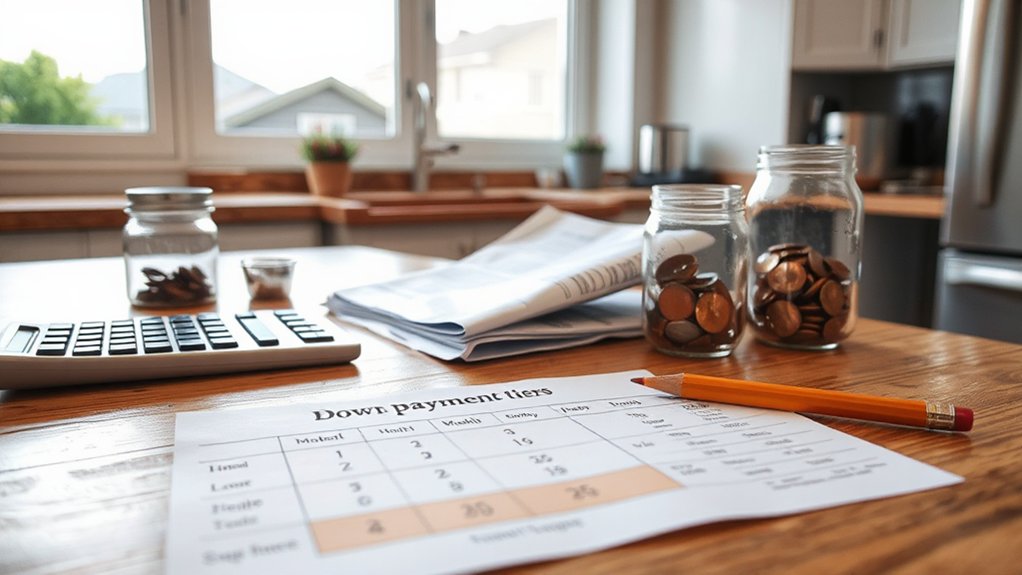
Securing the right down payment doesn’t have to derail your budget; with practical strategies, you can build the necessary funds without sacrificing your daily needs. Start with a clear plan: set a realistic timeline, automate savings, and trim nonessential expenses. Separate a dedicated savings goal into weekly contributions, so progress stays measurable.
Leverage Home equity thoughtfully—review loan terms you might qualify for and consider earmarking a portion of equity gains toward the down payment if you’re consolidating debt or refinancing.
Get Loan preapproval early to gauge affordability and lock in favorable rates, which helps refine your savings target.
Prioritize high-impact actions, like increasing income through side work or employer programs, while maintaining emergency funds.
Consistency and discipline translate to a smoother path to your ideal down payment.
Down Payment Assistance Programs: Grants, Forgivable Loans, and Credits
Down payment assistance programs can be a smart bridge to homeownership, offering grants, forgivable loans, and tax credits that reduce upfront costs or monthly payments. You’ll gain flexibility to allocate funds toward essential needs like home renovation or short-term cash flow for upkeep, while preserving future equity.
Although rules vary by program, many require income limits, occupancy, and owner-occupied status. Research eligibility early, and line up documentation to speed approvals. Use the benefits to stabilize monthly housing costs and improve property management readiness.
Understand repayment terms, especially forgivable options that convert to gifts if you stay long enough. Seek reputable guidance to avoid scams and align assistance with your long-term goals.
- Grants vs. loans: compare costs and forgiveness terms
- Rider requirements: occupancy, income, and timeline
- Coordination with renovations and repairs budgets
- Finding trusted lenders and program details for home renovation planning
First-Time Buyer Incentives You Might Be Missing
As a first-time buyer, you might be eligible for grants, down payment assistance, and tax credits that can substantially reduce your upfront costs and overall loan burden.
We’ll outline who qualifies, how to apply, and what to expect from programs that fall under Grants For First-Time Buyers, Down Payment Assistance, and Tax Credits Overview.
This quick primer sets the foundation for smarter, more affordable financing options as you start your homebuying journey.
Grants For First-Time Buyers
Are you missing out on grants that can ease the path to homeownership? Grants for first-time buyers can offset costs beyond the purchase price, making milestones more affordable. You’ll want to assess eligibility, timelines, and required documentation early, so you don’t miss deadlines.
Keep in mind that grants often pair with other programs, so plan strategically around your neighborhood selection and potential home renovation needs. Understanding regional variations helps you target options that align with your goals and budget.
This approach guarantees you maximize support without overcommitting to a single path. Stay organized, verify income limits, and track grant cycles to optimize your chances.
1) Identify eligible programs by area
2) Align grants with planned home renovation
3) Compare compensation terms and requirements
4) Coordinate with local housing authorities and lenders
Down Payment Assistance
Considering how to cover the upfront costs can make or break your homebuying timeline, and down payment assistance (DPA) programs are often the missing piece. You’ll find several DPA options tied to local and state housing authorities, nonprofit lenders, and employer-sponsored programs, each with eligibility rules and loan terms that can reduce out-of-pocket expenses.
DPA can come as a grant, a silent second mortgage, or a forgivable loan, sometimes layered with other assistance like closing-cost credits. Verify program caps, recapture conditions, and income limits to avoid surprises.
Use DPA strategically to preserve liquidity for essential needs, such as home renovation or establishing rental investment plans. Leverage these funds to accelerate your market entry while maintaining financial resilience throughout ownership.
Tax Credits Overview
Tax credits can considerably trim your upfront costs and ongoing expenses as a first-time buyer. You’ll want to know which incentives truly fit your situation, since benefits vary by program and location. Some credits reduce the tax you owe, while others directly offset purchase-related costs.
Track eligibility windows, income caps, and required documentation to avoid missed opportunities. You’ll also want to factor long-term impacts on Home equity and property taxes, as credits can influence your overall financial trajectory.
Prioritize programs that align with your timeline and mortgage strategy, and consult a tax professional for precise guidance.
- First-time homebuyer tax credits that reduce owed taxes
- Credits tied to energy efficiency improvements
- State and local programs with partial refunds or rebates
- Lender-assisted or grant-based incentives attached to specific properties
Non-Traditional Funding Paths for Specific Situations

Non-traditional funding paths can open homeownership when conventional loans aren’t a fit, especially for borrowers with unique income, credit profiles, or timing needs. You’ll explore options that pair flexibility with discipline, allowing a path forward when standard underwriting won’t approve.
Creative financing can involve seller financing, lease-to-own arrangements, community development programs, or contract-for-deed structures, each with clear terms and risk awareness. You assess eligibility, required documentation, and exit strategies before committing.
Niche funding often hinges on a targeted lender niche, local grants, or specialized programs that align with your situation and property type. You maintain transparency, negotiate favorable terms, and verify regulatory compliance to protect yourself.
With thoughtful selection, you align funding with your timeline, budget, and long-term ownership goals.
Mortgage Insurance, PMI, and Other Ongoing Costs to Budget
Even when you qualify for a loan, ongoing costs beyond the principal and interest can considerably affect your monthly budget. You’ll want to account for mortgage insurance or PMI, property taxes, homeowners insurance, and maintenance reserves. These items can change year to year and impact affordability long after closing. Planning now helps you avoid surprises and protects your home equity.
- Mortgage insurance or PMI costs, including how they phase out or change with loan refinancing or equity gains.
- Annual property taxes and homeowners insurance, and how escrow accounts can stabilize monthly payments.
- Maintenance and repair reserves to cover routine upkeep and unexpected fixes.
- Fees tied to loan refinancing, total cost of ownership, and how refinancing can alter monthly outlays.
How to Compare Lenders: Quotes, Terms, and Total Cost of Ownership
When you compare lenders, start with the big picture: the total cost of ownership over the life of the loan. Focus on first quotes, then verify terms, and finally calculate the all-in cost.
Compare interest rates, points, and annual percentage rate, not just the monthly payment. Look closely at closing costs, origination fees, prepayment penalties, and the lender’s reliability.
Ask each lender for a loan estimate and use a simple calculator to model scenarios across 15-, 20-, and 30-year terms.
Consider how home equity affects choices, and weigh whether refinancing options could lower long-term costs.
Remember to translate quotes into real numbers, especially when future appreciation or rate changes occur. A disciplined comparison protects you from surprise fees and improves your financing confidence.
A Practical Step-by-Step Path to Your Homebuying Timeline

After you’ve gathered quotes and assessed total costs, you’re ready to map out a practical homebuying timeline. You’ll align milestones with financial readiness, while accounting for Home equity growth and Property taxes. Set clear deadlines for pre-approval, home search, offer, and closing, then back each with a realistic budget and contingencies. Track milestones to stay on schedule and avoid delays caused by market shifts or lender conditions.
Communicate with your agent and lender to refresh timelines if rates change, purchase agreements expire, or appraisals adjust estimates. Prioritize steps that protect equity, like negotiating repairs and ensuring earnest money is secure. Stay disciplined, review progress weekly, and adjust targets as your financial picture evolves.
1) Pre-approval and budget alignment
2) House hunt with contingency planning
3) Offer, inspection, and appraisal windows
4) Finalize loan, title, and closing details
Frequently Asked Questions
How Does Credit Score Impact Loan Approval Timing?
Credit history directly affects loan eligibility and speeds up or slows down approval. A strong score streamlines underwriting, while a weak score often triggers additional documentation and longer timelines, so you’ll want to monitor, fix issues, and document improvements.
Can I Use a Gift for Closing Costs?
Yes, you can use gift funds for closing costs, but you must document the donor and source. Many loan programs allow closing assistance and gift funds, yet lenders require a gift letter and proper verification for eligibility.
What Occurs if I Lose Employment During Closing?
If you experience employment loss during closing, lenders typically pause underwriting and may require updated documents; you must demonstrate financial stability through savings or income to proceed, or consider renegotiating terms or extending closing timelines.
Are There Tax Benefits for Homebuyer Credits?
Yes, you can reduce liabilities with tax deductions and Homebuyer incentives, though specifics depend on your situation. You’ll want to track eligible costs, claim credits, and consult a tax pro to optimize deductions and maximize benefits.
How Often Do Mortgage Rates Change After Locking?
Sure, rates don’t change after you lock. Irony aside, they actually can: interest rate fluctuations occur until lock in periods end, so you monitor, renew or re-lock as market moves, aligning your payment with current conditions.
Conclusion
If you’re gearing up to buy, stay proactive: lock in a plan that blends a solid down payment with a mortgage type that fits your timeline. In fact, buyers who compare at least three lenders save an average of 0.25–0.5 percentage points on rate quotes. Track all costs—closing, taxes, insurance—so you see the true total cost of ownership. With disciplined budgeting and guidance, your path from pre-approval to closing becomes predictable and sound.