


A recent survey shows homeowners prioritize practical upgrades that cut bills and boost curb appeal. You’re likely weighing insulation, smart thermostats, and weatherproofing against cosmetic updates and storage fixes. The question isn’t just what to do, but which sequence delivers the most impact without blowing the budget. There’s a clear path to high ROI—if you navigate planning rules, ROI estimates, and project pacing correctly. Ready to map your lean upgrade plan?
Key Takeaways
- Smart home upgrades for energy savings and security top UK homeowners’ search, including smart thermostats and integrated lighting systems.
- High-impact energy efficiency improvements like attic/wall insulation and sealing drafts to cut bills.
- Kitchen refresh ideas: affordable lighting, open shelving, and easy-to-clean backsplashes for instant impact.
- Exterior upgrades that boost curb appeal and durability, such as weatherproof cladding and timber window/door improvements.
- Budget-friendly decluttering and decor updates (paint, textiles, and mirrors) to transform spaces without full remodels.
What UK Homeowners Want From Upgrade Projects

Many UK homeowners foreground practicality when planning upgrades: they want projects that add real value, improve energy efficiency, and deliver durable results with minimal disruption.
You’re prioritising tangible benefits, not trendiness, so you weigh return on investment, reliability, and ease of maintenance.
In this mindset, Home automation features prominently: smart controls that cut energy use, enhance security, and simplify routines without overcomplication.
You also seek garden landscaping that extends living space, boosts curb appeal, and withstands our climate with low ongoing upkeep.
When evaluating options, you demand accurate costs, clear timelines, and proven performance.
You favour products with warranties and ready support.
Your focus remains practical yet forward-looking, balancing upfront spend against long-term savings and quality of life improvements.
How to Spot High-Impact, Low-Cost Improvements
Spot high-impact, low-cost improvements by prioritizing quick, visible wins that you can implement this weekend. Focus on budget-smart space makeovers—think decluttering, fresh paint, hardware upgrades, and lighting tweaks that transform rooms without breaking the bank.
I’ll guide you to spot these opportunities quickly so you maximize value with minimal disruption.
Low-Cost, High-Impact Tips
To spot high-impact, low-cost improvements, start with a quick audit of your daily use and spaces that feel dated or inefficient. You’ll identify where small changes deliver big gains, then prioritise based on effect and ease.
Begin with lighting: swap to warm LEDs, add task lamps, and guarantee even coverage to shrink energy use and improve mood.
Tidy storage zones to reclaim surfaces and reduce clutter, which instantly elevates interiors and reduces perceived costs.
In garden spaces, prune aggressively, refresh borders with mulch, and replace faded containers rather than full rewrites.
For interior decor, rotate focal points, refresh cushions, and mirror placement to brighten rooms without buying big-ticket items.
These moves deliver tangible impact, minimal disruption, and clear ROI.
Quick, Visible Renovation Wins
Start with a quick, practical audit to identify visible, high-impact fixes you can tackle in a weekend. You’ll prioritize flaws that transform space perception: lighting, color, and texture first, then quick finishes.
Focus on door and cabinet hardware, dramatic mirror placement, and door repaint to refresh the flow without major disruption. Clean grout, seal floors, and brighten corners with task lighting to sharpen contrast and feel of size.
Plan a simple garden landscaping upgrade—trim overgrowth, add mulch, and lay a border to deliver instant curb appeal.
In interiors, swap compact cushions or throws for a cohesive palette, and refresh art or photos for a curated look.
These moves deliver high impact at low cost, aligning with interior decor goals while retaining momentum.
Budget-Smart Space Makeovers
Ever wondered how to pull off dramatic updates without blowing the budget? You can spot high-impact, low-cost improvements by focusing on finish over footprint, lighting, and control. Small tweaks yield big feel changes, especially when you tie in practical tech and curb appeal like garden landscaping and a smart thermostat.
Prioritize rooms with high visibility and circulation, then swap textiles, hardware, and paint for an instant upgrade. Replace bulky furnishings with multifunctional pieces to free space without sacrificing storage. Use mirrors to expand narrow areas and install energy-smart features to cut ongoing costs.
- Refresh paint and hardware for instant lift
- Reimagine layout to improve flow
- Add efficient lighting and reflective surfaces
- Integrate garden landscaping for cohesion
- Install a smart thermostat for effortless control
Deep Energy Savings: Insulation and Sealing Upgrades
Improving insulation efficiency, sealing up drafts, and reducing thermal bridges are core steps for meaningful energy savings.
You’ll see gains when you combine higher-performance materials with targeted air sealing and strategic junction details.
Start by evaluating where heat leaks occur, then prioritize insulation upgrades, air sealing, and bridge mitigation to maximize comfort and cost effectiveness.
Insulation Efficiency Boosts
Are you getting the most from your home’s walls, attic, and seals? You can sharpen insulation efficiency with focused upgrades that pay off in comfort and bills. Think high-performance materials, properly installed batts, and air-permeability controls that minimize cold bridges. Smart layering reduces heat loss and keeps rooms even year-round.
- Upgrade to dense-packed or blown-in insulation for consistent coverage
- Seal gaps at conduits, joists, and around dampers to prevent drafts
- Add reflective or radiant barriers in attics where applicable
- Optimize ventilation to balance moisture and heat retention
- Select finishes and paint color choices that don’t trap heat or moisture
For long-term impact, pair insulation upgrades with garden landscaping and architectural choices that support energy performance.
Air Sealing Tactics
Air sealing is where the biggest energy gains come from: identifying and closing gaps, cracks, and leaks that siphon heated air and draw in cold outside air. You’ll tighten your home by targeting the most impactful points: around doors and windows, attic hatches, plumbing penetrations, electrical outlets, and where wiring enters walls.
Use a combination of caulk, expanding foam, and weatherstripping to create continuous barriers, focusing on perimeter junctions and service penetrations. Plan a systematic approach, starting from the attic and moving downward, to prevent heat loss paths from forming anew.
Monitor results with simple checks—feel for drafts, compare thermostat readings, and, if needed, re-seal high-leak zones. Remember: air leakage reduction is a cornerstone of efficiency; seal gaps, and gains follow.
Thermal Bridge Reduction
Thermal bridges are the thin, stubborn lines where heat sails past your insulation via structural elements, fasteners, or framing that interrupt a continuous layer. You’ll reduce heat loss by pinpointing these gaps and upgrading details where framing meets walls, floors, and roofs.
Focus on reducing Thermal bridges and insulation gaps with targeted solutions that keep connections tight without creating new leaks.
- Seal joints at junctions between different materials
- Use insulating inserts and continuous insulation where feasible
- Treat penetrations through walls and roofs with proper gaskets
- Install airtight membranes behind cabinetry and fixtures
- Bridge gaps with foam and mineral wool where framing concentrates heat loss
Smart Storage Ideas to Declutter Small Spaces

Maximize every inch of your space with smart storage that serves you, not the other way around. You’ll gain efficiency by prioritising modular, flexible systems that adapt to daily needs.
Start with a baseline plan: map high-traffic areas, then categorize items by frequency of use. Use vertical space—tall shelving, wall-mounted bins, and magnetic strips—to keep surfaces clear.
Opt for double-duty pieces, like ottomans with hidden storage or bed frames with drawers, to reduce clutter without sacrificing style.
For basement organization, install durable, water-resistant units and label zones so you know where everything belongs.
In closets, implement a streamlined approach: uniform hangers, color-coded shelves, and door-mounted organizers.
Consistency beats excess; you’ll maintain order with minimal effort and feel more spacious instantly.
Weatherproofing Exteriors for Curb Appeal and Comfort
Good weatherproofing protects both curb appeal and daily comfort, letting your smart storage ideas keep interiors tidy while exteriors stay resilient. You’ll safeguard fascia, seals, and surfaces with targeted upgrades that stop drafts and water intrusion, boosting longevity and value. Focus on practical steps you can implement this season.
- Roof maintenance: inspect shingles, flashing, and vents for damage
- Gutter cleaning: remove debris to prevent overflow and water damage
- Sealants: refresh door and window perimeters for tight fits
- Painting and cladding: refresh textures to deter weather wear
- Drainage: ensure grading directs water away from the façade
With these actions, you reduce repairs, improve comfort, and enhance curb appeal for UK homes.
Budget-Friendly Kitchen Refresh Ideas That Pay Back
What small changes deliver big returns in a kitchen makeover? You can refresh on a budget by focusing on surfaces, lighting, and layout tweaks that maximize utility.
Start with a paint refresh in a fresh, neutral tone to dramatically alter perceived space without a full remodel. Swap dated hardware for brushed metal or matte black pulls to update cabinets instantly.
Consider open shelving sparingly to display glassware and introduce vintage charm without bulk.
Improve lighting with under-cabinet LEDs and a brighter ceiling fixture to enhance task efficiency.
Upgrade a backsplash with easy-to-clean tiles or a peel-and-stick option for a quick win.
If you’ve got outdoor-connected spaces, weave garden design cues into colors and textures to harmonize the home.
Bath Updates That Boost Value Without a Full Renovation

You can boost bath value without a full reno by starting with quick tile upgrades that refresh the space. Add soaking bath accessories for a spa-like feel, and choose bright lighting to make the room read larger and cleaner.
We’ll explore how these targeted changes, plus smart layout tweaks, create noticeable impact with minimal disruption.
Quick Tile Upgrades
- Pick large-format tiles to reduce grout lines
- Contrast grout for a bold, modern edge
- Install a sleek, water-resistant trim for polish
- Pair with luxury fixtures to elevate detail
- Integrate smart appliances in control areas for efficiency
These moves keep costs lean while delivering a boutique feel. You’ll notice cleaner lines, brighter light, and a more cohesive look that pairs well with luxury fixtures and smart appliances.
Quick updates, lasting impression, higher perceived value.
Soaking Bath Accessories
Prioritize quality materials—ceramic, brass, or brushed nickel—so finishes resist humidity and look refined over time. Focus on functional upgrades: a weighted shower curtain, matched towel bars, and a slim bath tray that organizes essentials without crowding space.
Keep lines clean and avoid clutter to preserve spa-like serenity. Balance form with function: choose accessories that fit your tub’s dimensions and your existing fixtures.
This targeted approach heightens perceived value, enhances daily comfort, and reinforces a polished, resale-friendly Bath decor without disruption.
Brighten With Lighting
- Vintage fixtures for personality
- Modern decor for balance
- Dimmable LEDs for flexibility
- Mirror lighting for depth
- Layered layout reduces shadows
Sustainable Materials That Fit UK Climates and Budgets
What sustainable materials best balance UK climates and budgets? You’ll prioritise durability, low maintenance, and embodied energy, choosing options that perform across seasonal swings.
For walls and insulation, consider mineral wool or high‑performance cellulose blends; they resist damp and moderate heat flow, delivering comfort without skyrocketing bills.
In floors and finishes, opt for recycled or rapidly renewable options like cork tiles or linoleum, paired with low‑VOC coatings to preserve indoor air quality.
Cladding can include composite or responsibly sourced timber alternatives that resist weather and reduce upkeep.
For roofing, explore recycled metal or high‑density fibre cement that lasts decades with minimal warping.
In every choice, verify local availability, lifecycle costs, and recycling options to guarantee sustainability aligns with UK climates and budgets. sustainable materials, UK climates.
Timber Windows and Doors for Value and Durability
Timber windows and doors offer strong value and durability, helping you cut maintenance costs over time. They perform well in UK climates when properly treated and installed, protecting your home from the elements.
With the right design and timber species, you’ll gain lasting performance and improved door and window efficiency.
Timber Windows Value
Timber windows offer a strong value proposition when durability and long-term performance matter. You get a material that ages gracefully, with tight joints and robust frames that resist warping when properly dressed and sealed.
For value, think lifecycle costs: higher upfront spend but lower maintenance over time and improved heat retention.
- Vintage charm enhances curb appeal and property resale
- Timber craftsmanship delivers precise fit and longevity
- Reputable finishing protects against weather and moisture
- Recycled or sustainably sourced options reduce environmental impact
- Energy efficiency supports lower heating bills and comfort
Choose quality timber, correctly installed hinges, and durable coatings, and you’ll enjoy consistent performance. Your investment pays back through comfort, character, and reduced future repairs, making timber windows a prudent, value-driven choice.
Durability For Homes
Timber offers natural strength, but lasting performance comes from scalable maintenance rhythms: periodic seals, quick repairs, and timely repainting. Look for engineered timber options with reinforced cores and quality joinery to minimize twist and bowing over time.
Secure hardware matters: choose robust hinges, multi-point locking, and reinforced sills to bolster home security without compromising aesthetics.
For value, combine timber with effective ventilation and draft-proofing to reduce energy loss. Garden landscaping nearby can reduce exposure to moisture and debris, preserving finishes and extending life.
Climate Performance Doors
Because climate variation tests windows more than ever, climate-performance doors use engineered timber cores, moisture-resistant laminates, and precision-gun joinery to maintain shape and seal.
- Weather patterns demand doors that resist swelling and warping without performance loss
- Engineered cores deliver strength while limiting risks from humidity
- Moisture-resistant laminates shield surfaces from weather exposure
- Precision-gun joinery ensures airtight seals and long-term stability
- Material durability translates into steady energy efficiency and curb appeal
You’ll notice tighter seals, lower maintenance, and consistent performance across seasons. Choosing climate-performance doors minimizes expansion gaps and draft intrusion, protecting interior comfort and records of value.
This approach aligns with durable timber aesthetics while delivering practical, lasting comfort for homes exposed to fluctuating temperatures and precipitation.
DIY Vs Pro: Where to Save and Where to Invest

When deciding between DIY and hiring a pro, the right split hinges on risk, cost, and time. You should reserve DIY for clearly defined, low-risk tasks you can complete to standard, such as surface preparation or basic painting, where mistakes won’t derail structure or safety.
For larger or technically demanding jobs, call in a pro to avoid costly rework and hidden hazards. Assess DIY pitfalls openly: timing overruns, subpar finishes, and incomplete warranties can erode savings fast.
For projects with measurable impact, treat as an investment, not a cost; insist on clear scopes, milestones, and fixed-price arrangements. Prioritize investment strategies that deliver durable results—quality materials, proper ventilation, and adequate insulation.
Save on tasks that don’t compromise long-term performance, and invest where professional skill yields reliable, compliant outcomes.
Smart Home Tech on a Sensible Budget
Smart home tech can boost comfort and efficiency without breaking the bank, if you select devices and setups that deliver real value. You’ll gain practical control, simple routines, and scalable upgrades that fit UK budgets and spaces. Focus on reliability, privacy, and ease of use to avoid wasted purchases. Pair core systems with a few well-chosen accessories to blend with gardening trends and interior decor.
- Start with a central hub you actually use daily
- Pick voice assistants that work with your existing devices
- Invest in smart plugs and sensors for automation first
- Choose energy-saving thermostats and smart meters
- Make certain of compatibility with garden irrigation or smart planters
This approach keeps costs sensible while boosting comfort, efficiency, and style.
Lighting Upgrades That Transform a Room on a Budget
Start with budget-friendly lighting options that brighten a space without breaking the bank, like LEDs, dimmable fixtures, and quality task lighting.
Use layered lighting techniques—ambient, task, and accent—to add depth and focus, so you can change the room’s feel without a full redo.
Consider smart bulb mood enhancements to tweak color and intensity on demand, elevating atmosphere while staying mindful of cost.
Budget-Friendly Lighting Options
If you’re upgrading on a budget, start with lighting that creates ambiance and brightness without breaking the bank. You’ll gain immediate impact by choosing affordable options that pair well with your existing scheme. Focus on efficiency, controllability, and style to maximize value.
- Opt for LED retrofit bulbs in familiar fixtures to cut running costs.
- Use dimmable fittings to modulate mood and light levels.
- Incorporate floor and table lamps for flexible focal points.
- Embrace vintage fixtures to add character without a hefty price tag.
- Employ DIY decor accents like lampshades and cable covers for a personalized finish.
A smart layering approach keeps rooms cohesive, while practical choices preserve budget and performance.
Layered Lighting Techniques
Layered lighting adds depth and flexibility to any room without costing a fortune. You design with three layers: ambient illumination for general brightness, task lighting where you read or cook, and accent lighting to highlight textures or art.
Start with a dimmable ceiling light to set the mood and maintain crisp visibility. Add a floor or table lamp at eye level to soften shadows without glare. Under-cabinet LEDs brighten work surfaces while staying energy-efficient.
Use warm-colour bulbs for comfort and cooler tones for focus zones, aligning with room function. Confirm switches and outlets are accessible, enabling quick scene changes.
Layered lighting elevates perception of space, improves functionality, and delivers ambience on a budget, making every corner feel purposeful and inviting.
Smart Bulb Mood Enhancements
Smart bulbs redefine mood with simple, budget-friendly tweaks. You can transform spaces by tweaking color, brightness, and timing, creating distinct atmospheres without breaking the bank.
As an expert, you’ll prioritize practical setups over aesthetics alone, ensuring functionality aligns with mood lighting goals. Use warm whites for relaxation, cool whites for focus, and subtle hues to guide *progressions* between activities.
Control via app or voice to synchronize tasks, movies, or meals, maximizing impact with minimal effort. Consistency across fixtures strengthens the effect, so map scenes to zones like living rooms and bedrooms.
- Set scenes for activities (relax, work, entertain)
- Schedule gradual changes to ease progressions
- Pair with dimmers for depth
- Test color temperatures and brightness levels
- Choose energy-efficient smart bulbs for long-term savings
Outdoor Spaces That Boost Year-Round Usability
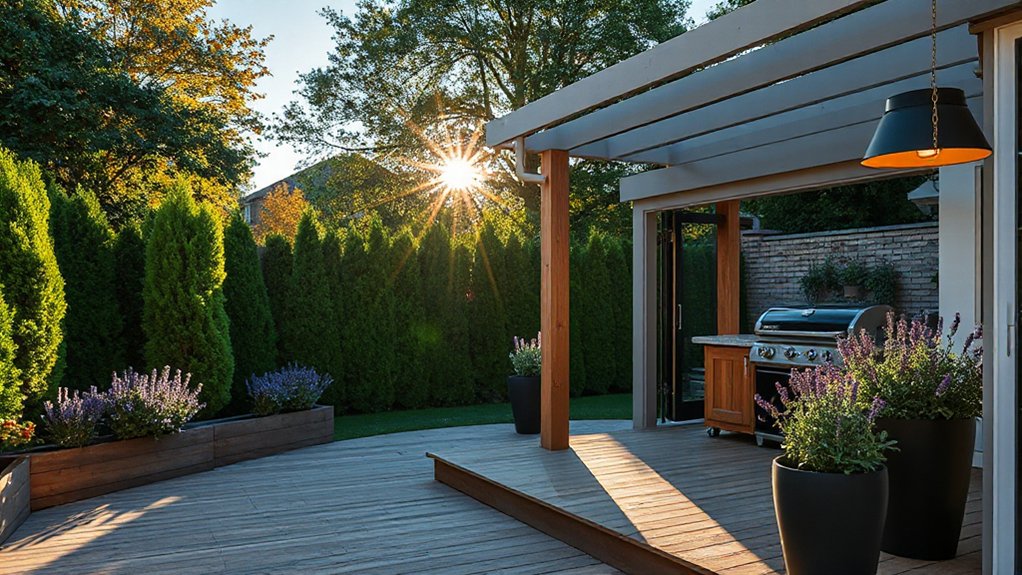
Outdoor spaces that stay usable year-round start with smart design choices: sturdy, weather-ready materials, efficient heating and shading, and adaptable seating that works in all seasons. You’ll prioritize modular options, so furniture reconfigures for sun, shade, or rain without hassle.
Garden furniture should resist UK damp while preserving comfort; choose cushions with quick-dry fillings and removable covers. Integrate robust outdoor lighting to extend usability after dark, focusing on layered lighting for safety, ambiance, and task needs.
Heating solutions matter too: infrared panels or patio heaters paired with programmable controls maximize efficiency and comfort. Shade strategies—louvered canopies or retractable sails—keep heat manageable.
Finally, guarantee seamless indoor-outdoor flow: align finishes, weatherproof storage, and simple maintenance routines for year-round enjoyment.
Moisture Control and Mould Prevention for the UK Climate
Moisture control is essential for UK climates, where dampness and condensation can undermine comfort and durability in outdoor spaces. You’ll stop mould before it spreads by proactive humidity control and proper ventilation.
Focus on keeping indoor humidity around 40–60% to deter mould growth, especially in kitchens and bathrooms. Regularly inspect seals, windows, and lofts, and treat any condensation hotspots promptly.
Use extractor fans during showers and cooking, and consider a humidity monitor for real-time feedback. Practical improvements make a difference without upheaval.
- Monitor humidity levels and adjust ventilation
- Improve loft and wall insulation to reduce condensation
- Seal gaps around windows and doors
- Install quality extractor fans in moisture-prone rooms
- Use mould-preventing cleaners on affected areas
Quick Wins: Small Fixes That Cut Bills Fast
You can keep damp problems in check while trimming expenses with simple, high-impact fixes. Quick wins drift from big projects to practical tweaks that pay back fast.
Start with drafts: seal gaps around doors and windows, then add radiator reflective panels to boost heat retention.
Prioritise insulation in lofts and pipes to slash energy loss without major overhauls.
Replace inefficient lighting with LEDs and install smart thermostats to fine-tune usage.
Gentle, targeted changes to garden landscaping can improve drainage and reduce damp risk along walls, protecting structure while lowering bills.
Consider interior color schemes that reflect light and reduce lighting needs, raising perceived warmth without extra watts.
These compact actions keep costs down and comfort up, with measurable returns.
How to Estimate ROI for UK Property Markets
Estimating ROI in the UK property markets requires a disciplined, data-driven approach. You’ll align costs, rents, and resale values with market indicators to gauge true profitability. Track historical trends and current market fluctuations to forecast performance and avoid over-optimism.
Use transparent benchmarks, compare similar assets, and stress-test scenarios for shifts in interest rates or demand.
- Define baseline costs: purchase, refurb, carrying, and disposal.
- Input realistic rent trajectories and occupancy rates.
- Apply cap rate and cash-on-cash calculations for quick screens.
- Compare regional momentum and time-to-sell data.
- Validate projections against historical trends and recent market fluctuations to confirm resilience.
This disciplined method keeps ROI estimates credible and actionable, even amid volatility.
Planning Rules and Building Regs: a Practical Guide
Planning permissions and building regulations shape every UK project from conception to completion, so aligning design choices with regulatory requirements from the outset saves time, costs, and risk.
You’ll start by identifying which alterations need planning consent and which fall under permitted development. Check local authority policies, as rules differ by borough and dwelling type.
For renovations, guarantee structural changes, electrical, and plumbing work meet current Building Regs, with competent professionals certifying workmanship. Document changes, keep receipts, and obtain compliance certificates to avoid later penalties.
When planning home decor or garden improvements, consider potential restrictions on fences, extensions, and drainage.
Use a practical checklist: confirm permitted variations, schedule inspections, and align budgets. Following clear steps reduces friction, keeps projects on track, and supports smart, compliant gardening tips and interior enhancements.
Choosing a Project Sequence: What to Tackle First
A solid project sequence starts with a clear priorities map: identify which areas influence structure, safety, and utility first, then tackle cosmetic updates.
You’ll maximize impact by sequencing work so critical systems are addressed before aesthetics. Priorities:
- Assess structural and safety needs
- Complete essential utility upgrades
- Plan room-by-room implementation
- Align garden landscaping with long-term access
- Integrate interior decor decisions to support function
This approach keeps disruption predictable and budget-aware, guiding decisions on materials, trades, and timing.
You’ll benefit from staging tasks to avoid rework and to maintain momentum. Keep scope tight, define clear milestones, and revisit the plan as you progress.
Crafting a Lean Upgrade Plan for Your Home
To craft a lean upgrade plan for your home, start with a tight scope that prioritizes impact over scope creep. Define a single, measurable objective for each upgrade, then map dependencies and costs to a clear timeline.
Prioritize high-return improvements you can defend with data: energy savings, comfort, and resale value. Limit options to essential features and resist feature creep by anchoring decisions to budget floors and ceilings.
Use a phased approach: choose core upgrades first, then expand only if benefits materialize. Align projects with existing systems; where possible, leverage Home automation for efficiency and monitoring.
Consider garden landscaping as a strategic exterior upgrade that enhances curb appeal and microclimate.
Keep reviews quarterly, adjust scope as evidence dictates, and maintain tight cost control throughout.
Frequently Asked Questions
How Long Does a Typical UK Home Improvement Project Take?
A typical UK home improvement project lasts weeks to a few months, depending on scope and trades. You’ll pace it with a clear schedule, maintain DIY safety, and apply budgeting tips to prevent delays and cost overruns.
What Is the Average Return on Investment for UK Upgrades?
You’re steering a ship—your UK upgrade’s average ROI hovers around 60% to 75%, you’ll see cost recovery when you plan wisely, maximizing renovation benefits. You’ll keep value afloat while trimming risk with careful budgeting.
Do I Need Planning Permission for Common UK Improvements?
Yes, you generally need planning permission for notable changes, but many common improvements fall under permitted development. Check permit requirements for your project and guarantee compliance with Building regulations; when in doubt, consult your local planning authority.
Which Projects Are Most Cost-Effective in Winter Climates?
Insulation upgrades and window replacements are your most cost-effective winter projects. You’ll cut heat loss, lower bills, and improve comfort quickly, especially when paired with drafts sealing and efficient glazing. Act now, measure performance, and compare solid warranties.
How Do I Choose a Reliable Tradesperson in the UK?
You choose a reliable tradesperson by checking trade certifications and reading customer reviews; verify qualifications, insurance, and warranties, request detailed quotes, compare portfolios, and contact past clients to confirm punctuality, workmanship, and post-project support.
Conclusion
You’ve seen what UK homeowners demand: high impact, low fuss upgrades that pay back fast. Start with airtight insulation, smart sealing, and a smart thermostat to slash bills, then layer in decluttering and smart storage to free space. Weatherproof exteriors for comfort and curb appeal, then plan ROI and compliance in one streamlined path. Tackle projects in a logical sequence, and you’ll transform efficiency and value—faster than you think, possibly the most transformative upgrade of your lifetime.