
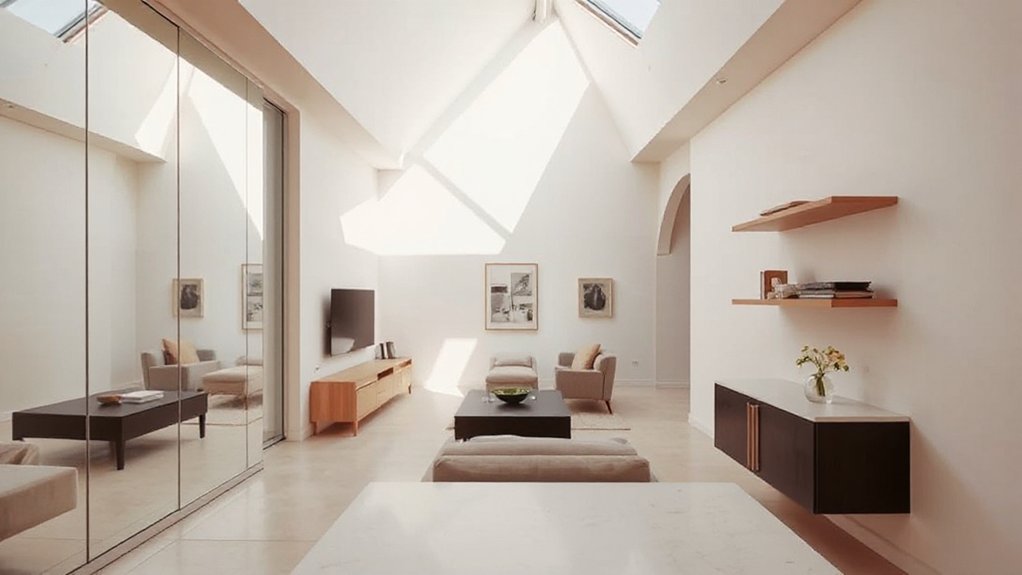

Small rooms feel huge by doing less, not more, with mirrors that double light rather than clutter your space. You’ll place tall, vertical mirrors opposite windows to extend depth and bounce brightness around, then stagger frames to add breadth without crowding. Pair these moves with bold accents and smart lighting to amplify the illusion, while avoiding obvious missteps. Ready to transform a cramped footprint into an open, stylish moment you’ll notice every day.
Key Takeaways
- Use mirrors to double light and depth, instantly making small rooms feel larger.
- Place tall mirrors opposite windows to maximize daylight and brightness.
- Combine multiple slim mirrors in staggered arrangements to imply greater breadth.
- Choose vertical, wall-to-wall, or leaning mirrors to elongate ceilings and expand views.
- Keep frames cohesive and clutter-free to prevent visual noise and maintain calm openness.
Make Tiny Rooms Feel Bigger With Mirrors
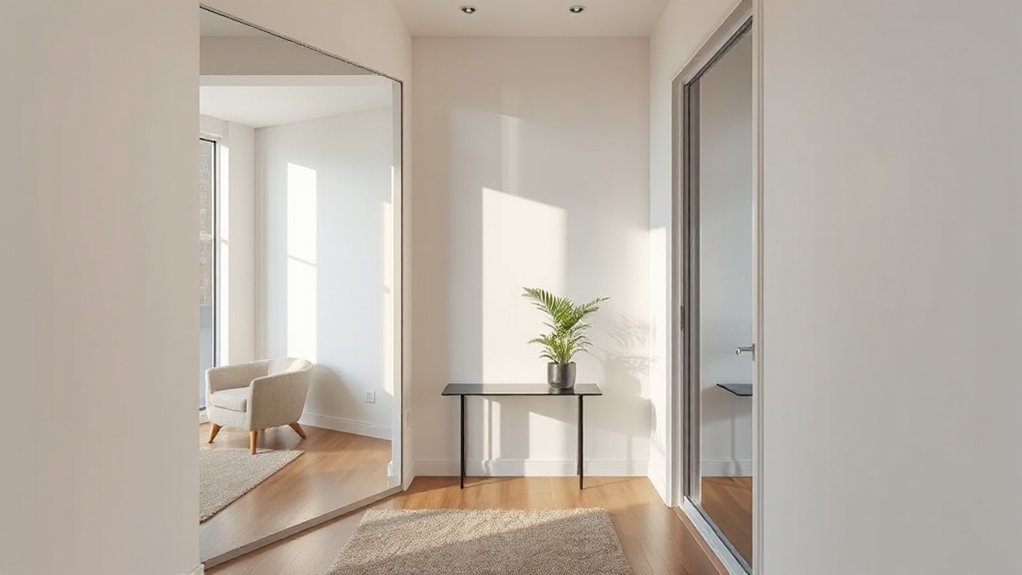
Mirrors instantly enlarge a cramped space by doubling light and depth. You harness this with purpose: place a tall mirror opposite a window to bounce daylight, creating a brighter, longer feel.
Frame choice matters; opt for artistic mirror frames that pull attention and give personality without overwhelming the room. Choose vintage mirror styles to echo character, not clutter, ensuring a cohesive aesthetic.
Keep edges clean and reflections uncluttered by avoiding busy wall art nearby. Install at eye level for immediate impact, then stretch perception with multiple mirrors in a staggered arrangement to imply breadth.
Maintain balance by coordinating frame finishes with hardware and textiles. Your goal: a streamlined, confident look that makes the space feel larger, livelier, and more purposeful.
Choose Mirror Types for Each Small Space
Pick the right mirror type for each space, and watch your rooms transform.
For tight nooks, choose vertical or tall formats to elongate ceilings.
For seating zones, opt for wall-to-wall mirrors to expand the horizon.
Consider space-specific options—leaning, framed, or modular mirrors—to balance light, scale, and style across every corner.
Mirror Type Selections
Choosing the right mirror type for each small space can dramatically change how rooms feel and function. You’ll pick formats that maximize light, depth, and flow, not just decoration.
For entryways, choose a tall, narrow mirror to stretch ceilings and invite movement. For bathrooms, opt for wall-mounted or recessed designs to save space while reflecting brightness.
In living areas, consider hinged or frameless panels to create flexible reflections without crowding walls.
When selecting, weigh weight, mounting options, and finish against existing surfaces. Decorative frame styles can elevate mood without clutter, while frameless choices keep lines clean and airy.
Remember Mirror maintenance tips, like gentle cleaning and secure fastenings, to preserve clarity and balance over time. Your space benefits from deliberate, strategic mirror type selections.
Space-Specific Mirrors
To tailor your small spaces, match mirror types to function and flow.
In tight entryways, choose a tall, mounted mirror to elongate the hall and reflect light from wall mounted decor.
For compact kitchens, opt for a shallow, framed piece that expands ceilings without crowding counters, and position it to bounce task lighting across the surface.
In baths, a large mirror with crisp edges amplifies space and complements decorative accents while keeping moisture at bay.
In living nooks, lean or wall-mounted mirrors create depth without consuming floor area, guiding the eye toward artwork and seating.
For bedrooms, a full-length or wall-recessed option adds habitability and calm, enhancing both wall mounted decor and decorative accents.
Place Mirrors to Light Up and Expand Your Room
Mirrors brighten a compact room and make it feel larger by bouncing light around. You place mirrors strategically to maximize glow, not glare, and you watch the space instantly loosen.
Position tall or full-length pieces opposite windows to double daylight without adding clutter. Think gallery-style in your wall art and reflect a tidy, intentional furniture arrangement rather than mismatched decor.
Align mirror edges with furniture so reflections feel deliberate, not accidental. Use a single prominent mirror to anchor a seating area, or create a pair to frame a doorway and extend the view.
Keep frames slim and cohesive to avoid visual noise. In small rooms, precision matters; every reflection should amplify openness, function, and calm, signaling that less really is more.
Pair Mirrors With Color and Lighting for Depth
Pairing mirrors with color and lighting adds depth without crowding a small space. You fuse reflective surfaces with bold hues or subtle neutrals to create perpetual dimension, not clutter.
Use wall art thoughtfully to direct attention and echo your palette, extending the mirror’s reach without duplicating focal points. Choose lighting that molds shadows and highlights—soft ambers for coziness, cool whites for clarity—so reflections feel like intentional design rather than echoes.
Place mirrors opposite windows or near lamps to multiply natural and artificial light, intensifying perceived space.
Mind furniture arrangement: keep the path clear, align seating to reflect openness, and balance weight with symmetrical or deliberate asymmetric layouts. The result is a cohesive, airy vibe that reads large, not crowded.
Avoid Common Mirror Pitfalls in Small Rooms
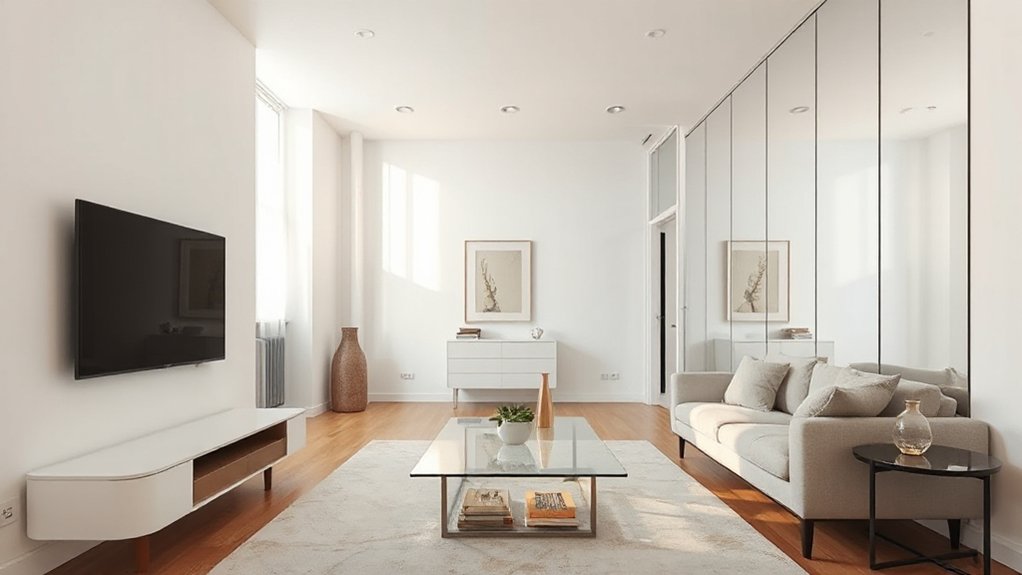
To avoid common mirror pitfalls, start with Reflective Placement Rules that keep sightlines balanced and light evenly distributed.
Think through Frame Window Choices to frame views cleanly and avoid cluttered reflections that shrink the space.
You can elevate the room by pairing smart placements with restrained framing for a calm, expansive feel.
Reflective Placement Rules
In small rooms, placement rules for reflections matter more than size, because the wrong mirror position can shrink space or create visual chaos. You’ll maximize perception by aligning mirrors with sightlines toward doors, windows, or open corners, not toward cluttered walls.
Place tall pieces vertically to stretch ceilings, and hang at eye level for natural balance. Avoid angles that reflect corners, bags, or appliances; instead, mirror surfaces should open the room, not trap it.
Consider multiple smaller mirrors rather than one oversized piece to diffuse light evenly. Decorative frame styles frame the effect, not distract from it, so pick subtle, cohesive detailing.
Maintain clarity with Regular Mirror maintenance tips, keeping surfaces spotless to preserve precise reflections. Your space feels larger, calmer, and more intentional.
Frame Window Choices
When choosing frame window mirrors for small rooms, opt for slim profiles and cohesive finishes that blend with the wall rather than shout for attention. Choose frames in neutral tones or same-material families as your trim to maintain a seamless look.
Avoid heavy embellishments, which slice through openness and steal light. Frame choice should respect sightlines: place mirrors where they reflect natural light without doubling glare.
As you select window treatments, favor minimal hardware and simple valances or none at all, so you don’t crowd the view. Keep reflections intentional: position mirrors to double windows or brighten corners.
With careful frame decisions, you maximize natural light, enhance perceived space, and keep the room’s energy calm and cohesive. This deliberate approach yields a brighter, more expansive feel.
Quick, Budget-Friendly Mirror Updates for Tiny Rooms
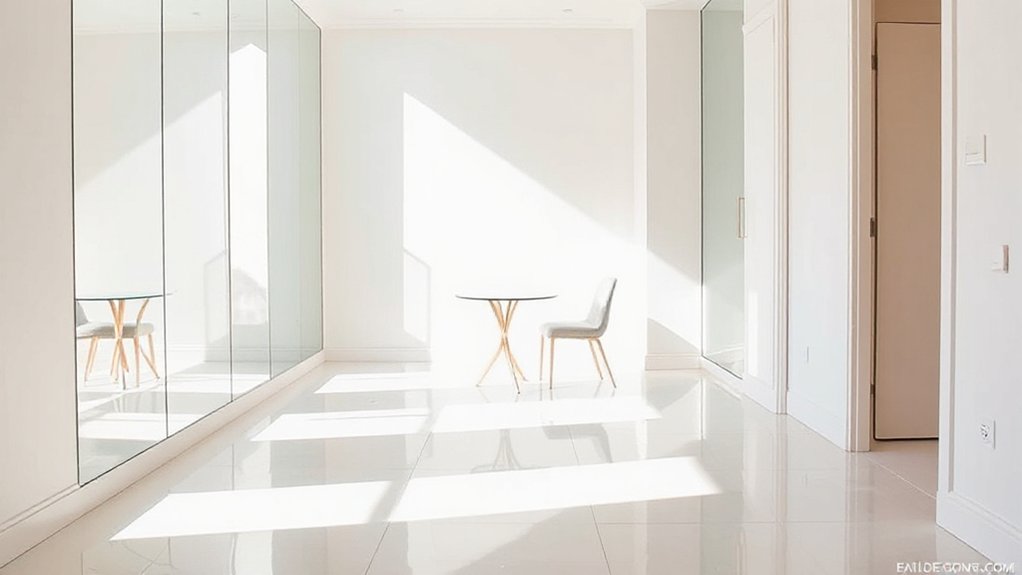
If you’re aiming to brighten a tiny space without breaking the bank, start with a quick mirror swap that makes walls feel larger. Choose wall mounted decor that doubles as light reflectors, not clutter.
Opt for a concise arrangement: one large mirror centered opposite a window, or a trio of slim, vertically stacked panels to elongate ceilings. Consider vintage mirror styles for character, but keep frames simple and unobtrusive to avoid heaviness.
Leaning mirrors work in narrow nooks, while corner mounts maximize floor space. Prioritize scale—avoid oversized frames that crowd walls.
Clear, clean glass boosts brightness; add a subtle warm tint only if your lighting needs it. Finish with minimal surrounding decor so the mirror’s reflection becomes the room’s focal point.
Frequently Asked Questions
Do Mirrors Actually Make a Room Feel Taller or Just Brighter?
Mirrors can do both: they visually lengthen a room and brighten it. You maximize this with strategic mirror placement and favorable lighting effects, reflecting natural and artificial light to amplify height and perceived space, improving atmosphere and openness.
Can Oversized Mirrors Work in Ultra-Small Spaces?
Yes, oversized mirrors can work in ultra-small spaces. About 70% of designers say scale matters most. You’ll boost depth with smart Decor placement and varied Mirror styles, creating cohesion, light, and a surprisingly roomy feel.
Which Wall Is Best for Mounting a Tall Mirror?
Placing a tall mirror on the far wall creates depth; choose Wall placement that faces light for bounce. Keep Mirror height at eye level, slightly above, to maximize spaciousness and reflect architectural details with confidence and clarity.
Do Frameless Mirrors Look Cheaper in Small Rooms?
Yes, frameless mirrors can look cheaper in small rooms, but you elevate them with decorative frame styles and smart mirror placement tips. Choose minimalist frames, balance with lighting, and position high to maximize openness and reflectivity.
How Do You Prevent Glare From Windows and Mirrors?
Yes—you prevent glare by using lighting control and window treatments. You’ll position fixtures thoughtfully, avoid direct reflections, and choose layered shades or dark curtains to maintain view while curbing glare in bright rooms.
Conclusion
You’ll walk into a room that breathes like it’s grown tall and wide. Mirrors multiply light, turning corners into canyons of brightness, and your eye sees depth where there was none. With careful placement and a playful frame, tiny spaces feel expansive, almost daring. You’ll glow with the sense that space isn’t scarce, just cleverly curved. Let reflections lead the way, and your small room will whisper: more with less, spacious in spirit, dramatic in effect.