
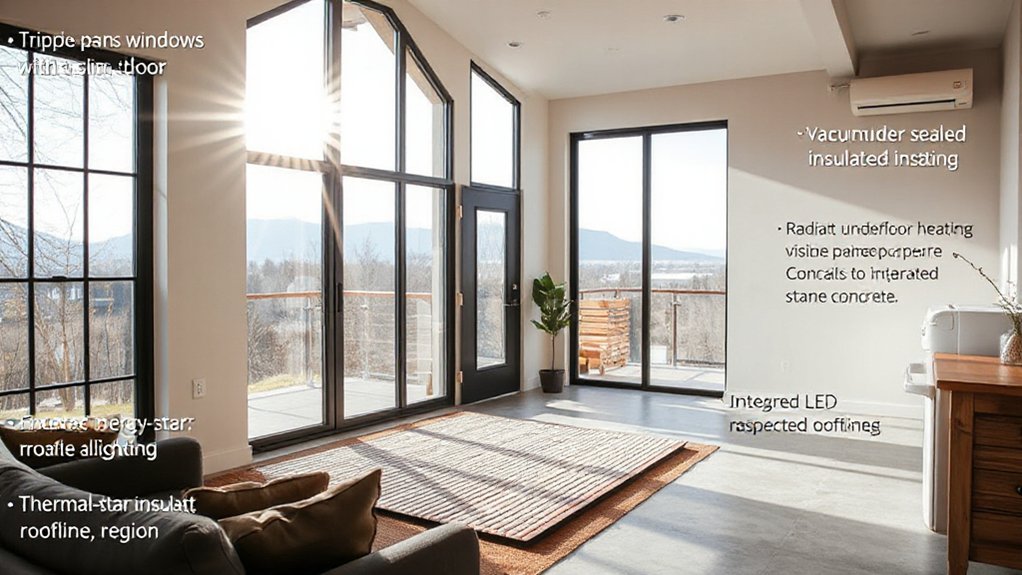

To boost energy efficiency, start with a quick home energy audit to spot the biggest wins and set a clear action plan. Seal drafts around doors, windows, and attic hatches, then upgrade insulation in walls, attic, and floors where it helps most. Choose efficient windows and doors with low U-values, and pair smart thermostats with high‑efficiency HVAC. Add LED lighting and smart controls to slice bills fast. Ready to uncover steps that fit your design and budget?
Key Takeaways
- Conduct a home energy audit to identify hotspots and prioritize high-impact, cost-effective fixes.
- Seal gaps and weatherproof doors, windows, and attic accesses to reduce drafts and improve comfort.
- Upgrade insulation in walls, attics, and floors to lower heat transfer and steady indoor temperatures.
- Improve windows with double/triple glazing, low-emissivity coatings, and proper installation for better U-values.
- Optimize HVAC with smart thermostats, zoning, regular maintenance, and duct sealing/insulation for efficient operation.
What Energy Efficiency Really Means for Your Home
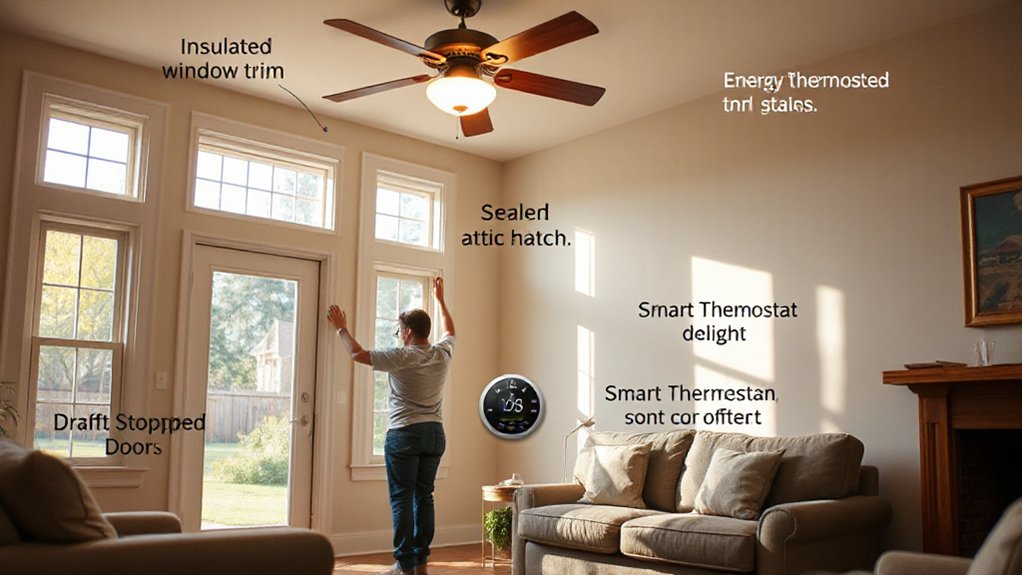
Understanding energy efficiency means focusing on how your home uses energy today and how to use it smarter tomorrow. You measure impact by practical, design-minded choices that reduce waste without sacrificing comfort.
Think of efficiency as a system, not a single fix: insulation, air sealing, and efficient equipment work together to lower bills and environmental footprint.
You’ll benefit from smart controls and clear benchmarks, so you can compare options with confidence.
Consider how home automation can coordinate heating, cooling, and lighting for peak performance without overworking systems.
Look toward renewable energy as a long-term strategy, balancing upfront costs with ongoing savings and resilience.
Do a Quick Home Energy Audit: Your Weekend Checklist
A quick weekend energy audit needs a focused plan: start with a fast, practical survey of your home’s energy hotspots, then tackle fixes in order of impact. You’ll map what visibly wastes energy, check insulation gaps, and note equipment in heavy use.
Use smart meters to read real-time consumption and identify outliers, then log results for comparison. Inspect lighting and electronics habits, prioritizing tasks that deliver immediate returns, like thermostat tweaks and appliance efficiency.
Record approximate costs and payback windows, so your effort stays purpose-driven. Pursue fixes that scale across seasons, not just today.
When you finish, you’ll have a clear action list aligned with Renewable incentives, maximizing value without overspending. This weekend approach establishes a design-minded, authority-backed path to ongoing energy improvement.
Seal and Weatherproof to Stop Drafts and Save Watts
Sealing and weatherproofing are the low-hanging wins that cut drafts and drop your energy bills fast. You’ll tighten gaps, improve comfort, and make every watt count without massive renovations.
Plan with purpose: target doors, windows, and attic access first, then seal remaining leaks around pipes and outlets. Use simple, effective materials and measurements to keep your design-minded space tidy.
Keep in mind indoor plants and energy labels as reference points for airflow balance and efficiency goals.
1) Inspect gaps around windows and doors, apply weatherstripping, and install door sweeps for a clean, finished look.
2) Seal gaps at electrical outlets and plumbing penetrations with foam or gasket-backed plates, then add caulk where needed.
3) Add foam or weatherproof sealant to attic hatches and mail gaps, aligning with energy-label guidance for performance.
Insulation Upgrades: Where It Helps Most (Walls, Attic, Floors)
Walls form your primary thermal barrier, so upgrading insulation there stops heat loss at the source.
In the attic, air sealing boosts performance by preventing warm air from sneaking upward and out through joints and gaps.
Floors matter too, especially over unconditioned spaces, where proper insulation keeps comfort steady and energy use predictable.
Walls: Thermal Barrier
Insulating walls is a smart move because the barrier between your living space and the outdoors drives comfort, energy bills, and long-term value. A solid thermal barrier reduces heat transfer, keeps rooms even, and supports tighter envelope performance. Wall insulation matters most when you want consistent temps without overworking your HVAC system. You’ll feel steadier comfort from season to season, with fewer drafts and quieter operation.
1) Choose dense, moisture-resistant options that fit your climate to maximize wall insulation effectiveness.
2) Seal gaps around outlets, cables, and penetrations before adding insulation to prevent convection paths.
3) Consider advanced insulation like continuous exterior sheathing or high-R cavity fills for a true thermal barrier.
Thermal barrier gains translate into lower bills, better humidity control, and lasting design integrity.
Attic: Air Sealing Benefits
Attic air sealing stops warm and cool air from sneaking through gaps, making insulation work harder for you elsewhere. When you seal drafts, you cut heat loss in winter and heat gain in summer, boosting comfort without cranking the furnace or AC.
Target tuckpoints, joist spaces, and penetrations around wiring and fixtures with proper sealants and expandable foam. Then add continuous air barriers at attic access points.
A tight attic pairs well with high-performance insulation upgrades, lowering energy bills and improving indoor air quality.
Plan for solar shading and rainwater harvesting as integrated efficiency moves—shading reduces attic heat load, while water strategies support overall home performance.
Implement methodically, document results, and prioritize durable materials for long-term savings.
Windows and Doors That Stay Draft-Free: Frames, Glass, and U-Values
Choosing the right frame matters for both look and performance, so you’ll compare frame material options for durability, air sealing, and maintenance.
Then you’ll evaluate glass performance metrics to balance light, visibility, and heat control, not just price.
Finally, you’ll set clear U-value benchmarks to guide upgrades that meaningfully cut drafts and energy loss.
Frame Material Options
Frame material matters because it directly affects draft resistance, durability, and long-term energy costs. You’ll weigh how frame choices influence insulation, maintenance, and overall comfort, while keeping an eye on sustainability and value.
1) Wood with modern treatments: excellent aesthetics, solid insulation, and potential for long life when properly finished. Supports Frame durability when well cared for but may require more maintenance. Material sustainability varies by source and finish.
2) Vinyl or PVC: low maintenance, good thermal performance, often cost-effective. Resists moisture but can suffer from fading or warping in extreme conditions.
3) Aluminum with thermal breaks: strong, slim sightlines, highly durable, but typically needs higher insulation measures unless engineered with core insulators.
Choose frames that align with your design, climate, and budget for lasting efficiency.
Glass Performance Metrics
Focus on clarity: U value ratings reveal the rate of heat transfer, guiding you toward assemblies that minimize drafts without sacrificing daylight. You’ll assess glass type, coatings, and insulating gas fills to optimize performance for your climate and home design.
Prioritize consistent performance across seasons, not just peak numbers. Use reputable testing results and label information to compare products.
Informed choices here reduce energy waste, lower utility bills, and support long-term durability. Remember, small gains in glass performance compound into meaningful comfort. Glass performance matters. U value ratings guide your selections.
U-Value Benchmarks
Measured benchmarks for U-values guide you to practical, draft-free performance across windows and doors. You’ll use U value benchmarks to compare frames, glass, and seals, then target lower thermal transmittance for real comfort and energy savings. Think in terms of system performance, not individual parts, so your design decisions deliver continuous drafts-free operation and predictable bills.
1) Target overall U-values for assemblies that suit your climate, prioritizing low thermal transmittance through frames and glazing.
2) Favor double- or triple-glazed units with low-emissivity coatings and gas fills to reduce heat loss without sacrificing daylight.
3) Evaluate installation details, ensuring tight joints and proper flashing, so measured U-values translate to durable, draft-free performance.
HVAC Efficiency: Smart Thermostats and Efficient Furnaces/Boilers
Could smarter controls truly trim your energy bill? Yes, and you’ll feel the difference fast when you pair smart thermostats with an efficient furnace or boiler. A well-calibrated system, run with precise input, minimizes overshoot and keeps comfort steady without waste.
Prioritize high-efficiency models and verify your unit is sized correctly for your home, since mismatches defeat savings. Regular furnace maintenance remains essential: clean filters, inspect burners, and verify seals so your system doesn’t work harder than needed.
Install your thermostat where it accurately reflects living conditions, avoiding heat sources or drafts that skew readings and force compensating cycles. Focus on reliable, controllable operation, then let the system sustain comfort with intelligent scheduling and responsive performance.
Smart Thermostats: Zoning, Schedules, and Comfort Savings
Smart thermostats release real comfort and energy savings by enabling precise zoning, intuitive schedules, and responsive control. You’ll feel the difference when rooms heat or cool only where you need it, plus you gain predictable bills through smart zoning and adaptive responses.
Focus on human comfort without waste, using temperature scheduling that fits your daily rhythm.
- Set smart zoning to optimize comfort in living spaces while reducing HVAC workload.
- Create temperature scheduling that mirrors your routine, lowering energy use during empty hours.
- Rely on responsive control to adjust automatically for weather changes and occupancy.
Improve Ducts and Ventilation Without Losing Heat
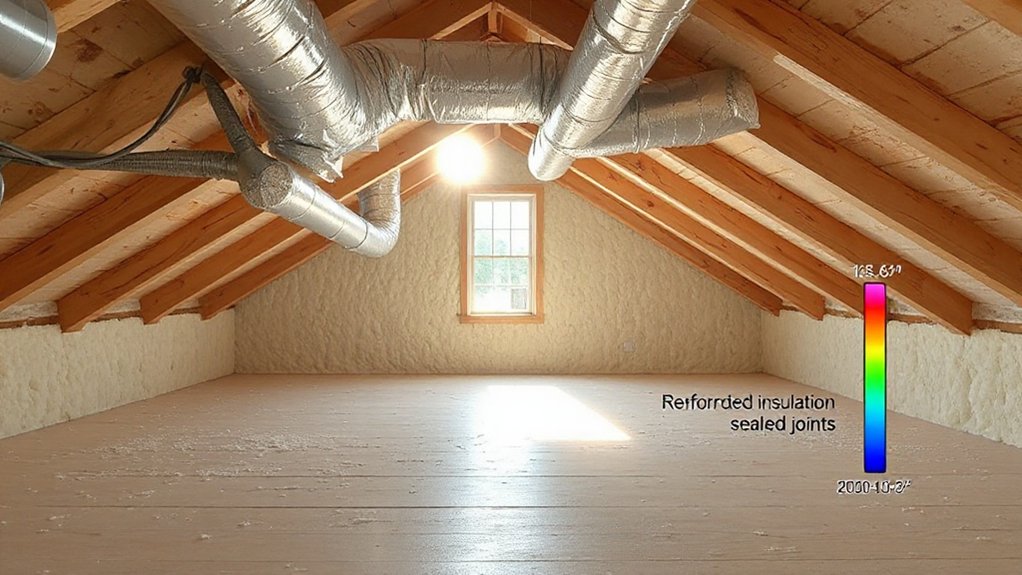
Improving ducts and ventilation without losing heat means focusing on efficient air paths and seal integrity that keep heated air moving where it should. You’ll minimize losses by tightening joints, seams, and casing interfaces with high-quality duct tape or mastic and by avoiding crushed or kinked runs.
Prioritize proper duct insulation in unconditioned spaces to reduce thermal transfer, especially on supply and return lines. Use appropriately sized ducts to maintain airflow and reduce pressure drops that waste energy.
Install or upgrade ventilation fans with controllable speeds and smart interlocks to prevent over-venting. Then, balance the system so room pressures stay stable.
Commit to durable materials, accessible inspection, and regular filters to sustain efficiency and comfort without added heat loss.
Lighting Makeover: Switch to LEDs and Smart Controls
Switching to LED lighting and smart controls is one of the fastest, most cost-effective ways to boost home efficiency and set a modern, comfortable ambiance. You’ll reduce energy use while improving light quality, thanks to better color rendering and dimmable options. Focus on Lighting design and fixture placement to maximize coverage without waste.
- Evaluate room function and place fixtures to support task lighting, ambient glow, and accent angles, while using dimmers to fine-tune mood.
- Grouped controls and smart sensors optimize operation, turning lights off automatically when you leave and adjusting with occupancy patterns.
- Choose color temperatures by room—cooler for workspaces, warmer for living areas—and coordinate fixtures to maintain a cohesive look and improved daylight alignment.
Water Heating: Tank vs. Tankless and Insulation Upgrades
If you’re evaluating water heating options, tankless systems offer noticeable efficiency gains by heating on demand instead of keeping a tank hot.
Consider how insulation upgrades reduce heat loss and cut standby energy, making any system perform more reliably.
We’ll compare the real-world efficiency improvements from tankless tech against solid insulation upgrades to help you design a smarter, more efficient setup.
Tankless Efficiency Gains
Is a tankless water heater worth the upgrade for energy efficiency? Yes—when you’re aiming to trim energy use without sacrificing comfort. Tankless systems heat on demand, reducing standby losses, and they fit tight spaces with a sleek, modern look. You’ll gain control over your hot water by adopting smart controls and monitoring usage, which sharpens efficiency. Consider renewable options like solar-assisted models to lower operating costs further.
- On-demand only: you heat water as needed, cutting wasted energy.
- Space-saving design: compact footprint leaves room for other upgrades.
- Integrated smart controls: schedule, monitor, and optimize performance.
Note: Avoids insulation topics here; focus stays on tankless efficiency gains and how they support smart, renewable-forward setups.
Insulation Upgrade Benefits
Insulation upgrades for water heating pay off by reducing heat loss, boosting overall efficiency whether you’re pairing with a tank or a tankless system. You’ll see steady savings by minimizing standby heat loss and stabilizing water temperature, which lowers your energy bill and rounds out a smarter system.
When upgrading, target the tank or pipes with high-value insulation and seal gaps around access panels to prevent drafts. Pairing insulation with solar panels can maximize overall efficiency, capturing free heat during sunny days and reducing heater reliance.
Consider smart sensors to monitor temperature, usage, and leaks—they help you adjust settings proactively. Design-forward choices, like tight-lattice insulation sleeves and clean pipe runs, keep maintenance intuitive and performance reliable over time.
Energy-Smart Appliances: What to Look for When Replacing
When you’re replacing appliances, look for energy-smart features that deliver real savings day in and day out. You’ll want models with high efficiency ratings, compact standby power, and clear energy-use data you can actually act on. Prioritize proven tech that reinforces your home’s comfort without overworking systems.
1) Choose Smart thermostats that learn your schedule and optimize heating and cooling, tying into overall efficiency goals.
2) Look for Energy Star labels, inverter compressors, and variable-speed motors that adjust performance to demand rather than run at full tilt.
3) Plan around insulation upgrades by pairing appliances with well-sealed ducts and accessible service access, reducing heat gain and loss while keeping usage predictable.
Solar Readiness and Passive Design: Simple Moves That Save
You’ll map your home’s solar shape to maximize light, heat gain, and future add-ons, starting with simple, well-placed decisions.
By prioritizing passive warmth wins, you’ll reduce reliance on active systems and keep comfort steady year-round.
Use clear, design-minded steps to align with solar readiness and harness those practical, low-cost gains.
Solar Shape Strategies
Ever wondered how small layout choices can shape your home’s energy bills? Solar Shape Strategies focus your rooftop, walls, and interior planning to harvest sun efficiently and store it smartly. You’ll design with intent, aligning apertures and shading to minimize cooling loads while maximizing solar yield.
By mapping sun angles across seasons, you guide where solar panel arrays tuck in without compromising living space. Pair this with compact energy storage solutions to smooth peaks and cut reliance on the grid.
The result is a responsive, efficient home adaptable to weather and utility rates.
- Align windows and shading devices to sun paths for steady daylight and cooling balance
- Position a solar panel array where it thrives seasonally, not just aesthetically
- Integrate energy storage to balance generation with consumption
Passive Warmth Wins
You can carry the momentum from optimizing solar layouts into everyday design by prioritizing passive strategies that trap and distribute heat without extra energy. Passive warmth matters because it stabilizes indoor temperatures with minimal effort.
Use sun-facing windows with clear glazing and well-placed overhangs to capture winter light while reducing glare in summer. Embrace thermal mass—brick, concrete, or tile—behind insulated walls to even out diurnal swings.
Draft-proof doors and add airtight insulation at penetrations to preserve heat gains. Plan room layouts that group living spaces around the sunniest zones, and orient furniture to enhance warmth diffusion.
These moves boost thermal comfort without gadgets, proving that thoughtful design can deliver steady comfort and lower energy use. Passive warmth shapes efficient, livable spaces with lasting impact.
Kitchen and Laundry Efficiency: Seals, Cold Cycles, and Peak Loads
Smart kitchen and laundry routines hinge on three concrete levers: seals, cold cycles, and peak loads. You’ll tighten performance by focusing on tight seals, efficient cycles, and mindful scheduling, so you waste less energy while maintaining comfort. Smart thermostats and cold cycles are your partners in discipline, delivering comfort without surrendering efficiency.
- Inspect doors and lids for gaps; replace weatherstripping or gaskets to cut phantom losses.
- Run cold cycles for chores whenever possible, pairing with cold-water detergents and full loads to maximize efficiency.
- Stage loads around off-peak hours and use smart controls to shift peak loads to cheaper, greener windows.
These moves shape a leaner, design-conscious kitchen and laundry that respect your energy budget and daily routines.
Weekend Projects That Pay Back Fast
If you’re chasing quick wins on energy with minimal disruption, weekend projects that pay back fast are your best bet. You’ll prioritize easy, high-impact tasks you can finish in a weekend and still see results.
Start with smart home integration basics, like programmable thermostats and smart plugs, to tighten control over heating and cooling without a retrofit.
Outdoor landscaping can lower energy needs by shading windows and mitigating heat gain, boosting comfort with minimal effort.
Next, seal gaps around doors and windows, upgrade lighting to LEDs, and align blinds to curb heat loss or gain.
Choose projects that scale, so you gain momentum and measurable savings quickly.
Focus on practical, design-minded tweaks that improve comfort, efficiency, and curb appeal in equal measure.
Budgeting for Efficiency: Quick Wins and Long-Term Investments
Budgeting for efficiency isn’t about chasing every gadget, but about balancing quick wins with smart, long-term investments. You’ll optimize value by pairing immediate comfort with durable savings, using clear, measurable goals and a plan you can follow year to year.
Smart budgeting means prioritizing projects with the fastest payback and reliable performance, while investment planning keeps you aligned with broader lifestyle and home-ownership targets. Approach this with discipline, not impulse, and document expected energy gains to validate decisions.
- Prioritize low-cost, high-impact upgrades that deliver measurable reductions
- Schedule larger improvements for off-peak seasons to maximize returns
- Track savings to refine future investments and sustain momentum
Materials and Tools for Durability and ROI
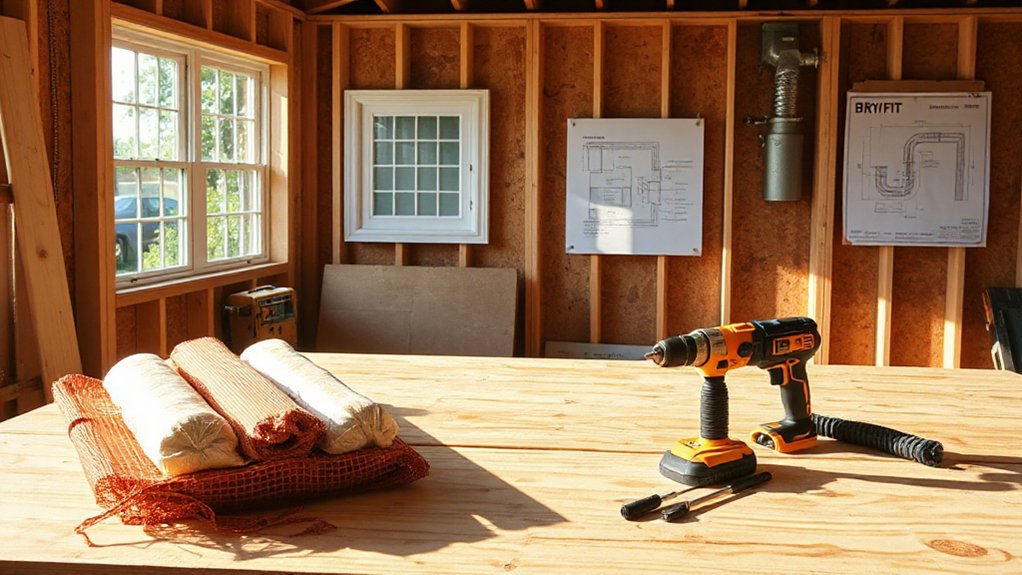
Choosing the right materials and tools is the backbone of durable, ROI-focused home improvements. You’ll prioritize high-quality substrates, insulation, and finishes that resist wear while delivering steady energy savings.
Select materials with proven thermal performance and long lifespans, balanced by cost per year of use. Tools should be reliable, designed for precision, and supported by supplier data and standards.
Favor assemblies that maximize continuity and reduce air leaks, such as continuous insulation and airtight membranes. When evaluating options, consider lifecycle costs, not just sticker price.
Look for Smart meters to monitor performance and justify upgrades. Investigate Renewable incentives to improve payback periods and motivate efficient choices.
The right pairing of materials and tools elevates durability, comfort, and measurable ROI over time.
Before You Start: A Practical Pre-Project Energy Savings Checklist
Ever wondered where to start when planning energy-focused improvements? Your pre-project phase sets the pace, so keep it tight, data-driven, and design-minded. You’ll identify high-impact wins, establish a baseline, and align goals with home decor and gardening tips that support efficiency.
Use this checklist to stay practical, not speculative.
1) Conduct a quick energy audit and note top offenders—air leaks, insulation gaps, and inefficient lighting.
2) Prioritize fixes with the best ROI, focusing on envelope upgrades and smart controls that blend with aesthetics.
3) Plan a testing phase after each change to verify savings and adjust designs without losing style or function.
Frequently Asked Questions
How Long Does a Home Energy Retrofit Take?
A retrofit can take weeks to months, depending on scope. You’ll finalize retrofit scheduling and project planning first, then coordinate trades, inspections, and deliveries. You’ll stay flexible, monitor milestones, and adjust timelines to maximize efficiency and quality.
What Is the Typical Return on Investment?
You’ll typically see a solid return on investment, often 60–80% over time. Energy savings compound with a favorable cost analysis, and you’ll passively lock in long-term value as your efficiency upgrades pay for themselves.
Can I DIY Major Energy Upgrades Safely?
Like steering a ship’s hull, you can DIY safety, but skip major upgrades unless licensed. You shouldn’t tackle major upgrades yourself; consult pros for electrical, structural, or HVAC work to protect you and your home.
Which Upgrades Save the Most Money Fast?
Upfront, you’ll save fastest with smart thermostats and solar panels. You’ll reduce bills quickly as you optimize temps and generate power, scaling efficiency month by month. Prioritize installation, monitor usage, and leverage incentives for maximum impact.
Do Incentives or Rebates Apply to Retrofits?
Yes, incentives can apply to retrofits through utility programs and tax credits. You’ll leverage utility programs to cover upgrades, and tax credits to reduce out-of-pocket costs, making strategic retrofits more affordable and your home more efficient.
Conclusion
A practical takeaway: small, strategic improvements compound fast. In fact, sealing drafts and adding insulation can cut heating energy use by up to 15–25% in many homes, with attic upgrades delivering the strongest ROI. You don’t need perfect walls to start—crawl before you walk. Tackle quick wins this weekend, then plan longer-term investments that fit your budget and design goals. By staying methodical and measurements-driven, you’ll see steadier comfort and lower bills sooner than you think.