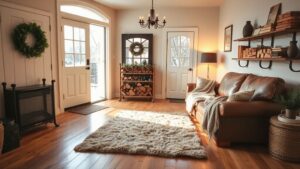
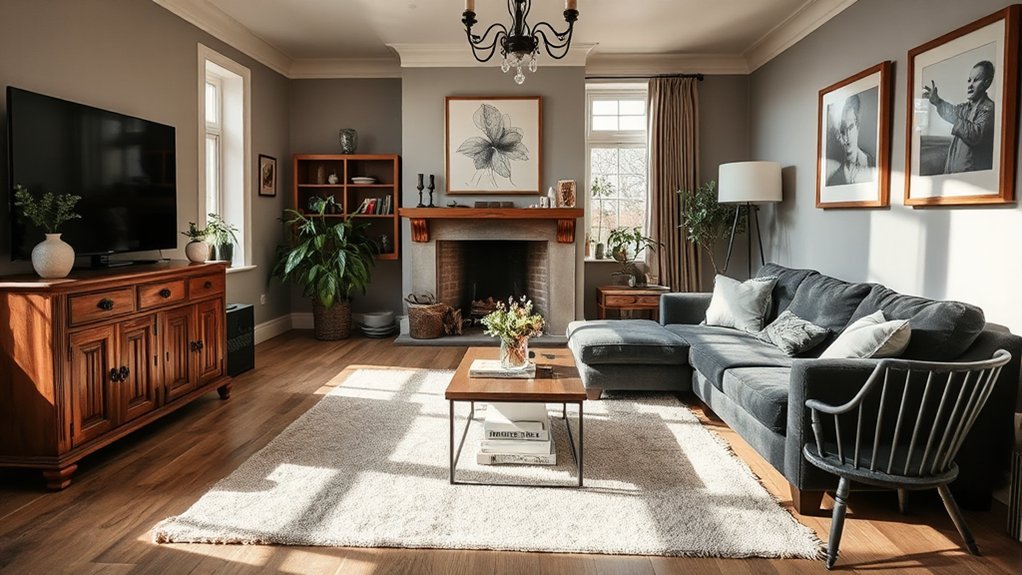

To modernize a traditional UK living room, preserve its character while adding warmth and clarity. Start by evaluating what to keep—panelled walls, fireplaces, mouldings—and refresh worn elements with subtle updates. Build a cohesive palette of warm neutrals with amber and terracotta accents, then layer lighting (ambient, task, accent) with dimmable, warm fixtures. Choose timeless furniture with balanced silhouettes, anchor seating around a focal point, and conceal technology. Maintain cohesion with discreet hardware and unified surfaces; more practical tips await.
Key Takeaways
- Preserve era charm while updating with subtle, functional changes: refresh fabrics and hardware, maintain symmetry, and document modifications for a timeless feel.
- Integrate discreet technology and modern comforts without cluttering lines: concealed cabling, low-profile mounts, centralized controls.
- Use a cohesive, warm palette anchored by neutrals and vintage textures to connect architectural details.
- Layer lighting (ambient, task, accent) with dimmable, warm fixtures and intuitive controls to create mood and clarity.
- Choose timeless furniture and smart layouts: proportioned pieces, clear sightlines, and rugs or textiles to soften edges and define zones.
Assessing Traditional Charm: What to Preserve and Refresh
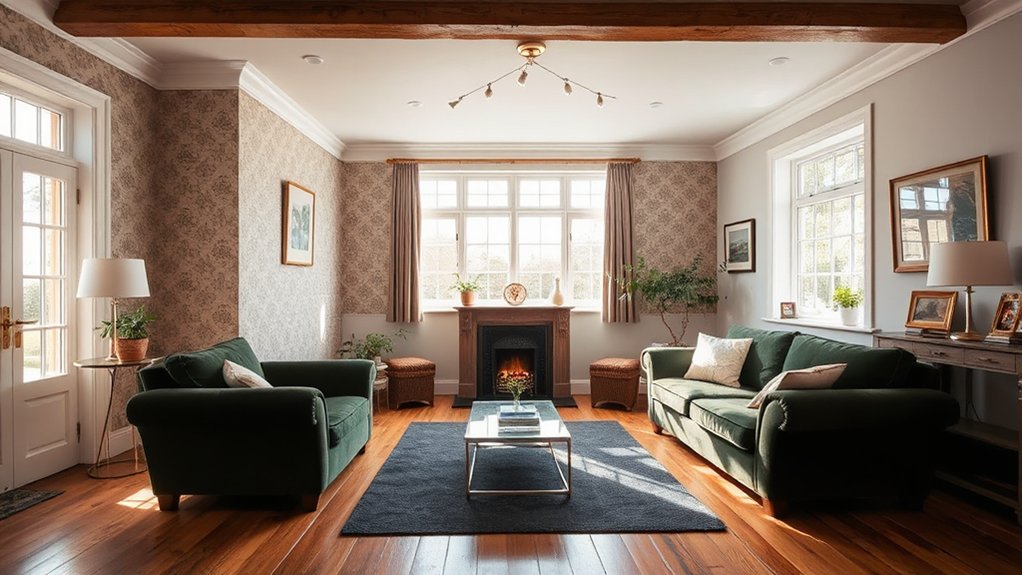
Evaluating traditional charm starts with a clear inventory of what defines the room’s character. You identify core features—panelled walls, cornices, fireplaces—and grade their current condition and visual impact. Prioritize elements that anchor tone: solid timber, classic silhouettes, and proportionate scale.
Preserve authenticity where materials and workmanship are intact, and refresh where wear erodes cohesion. When it comes to aesthetics, consider vintage patterns in textiles or wallpapers and period accessories like brass lamps or ceramic urns.
Use small, deliberate updates to avoid overburdening the space: replace faded curtains, reupholster with restrained fabrics, and reframe artwork to enhance balance. Document changes, test lighting, and maintain symmetry where appropriate to sustain a refined, timeless feel without sacrificing comfort.
Create a Cohesive Color Palette for Modern Warmth
To build a cohesive color palette for modern warmth, start with a confident, restrained foundation of neutral base tones and then layer in warm accents that tie the room together.
Begin with a cool-leaning off-white, warm taupe, or soft greige as your unifying ground.
Introduce accents in amber, terracotta, or charcoal to create depth without shouting.
Tie these choices to architectural details—panel mouldings, brick fireplaces, or timber beams—so color responds to structure.
Select Vintage textiles for a layered texture that reinforces the palette without overpowering it.
Use a consistent saturation level across walls, textiles, and furnishings to prevent chromatic chaos.
Apply natural materials—wood, stone, linen—to reinforce warmth.
Maintain balance by matching one bold hue to a repeat elsewhere for cohesion.
Layered Lighting for Mood and Function: Where to Begin
Start with layered lighting principles as your toolkit: warm ambient light for general balance, task lighting for focused activities, and accent lighting to sculpt depth and guide mood.
Map these layers to zones in your living room, aligning brightness, color temperature, and dimming to support each activity.
Use practical mood zoning by pairing a central ceiling fixture with table or floor lamps and subtle wall wash; adjust controls to shift smoothly from bright daytime tasks to cozy evening moments.
Layered Lighting Principles
Layered lighting starts with identifying three core layers—ambient, task, and accent—and then layering them deliberately to support both mood and function. You apply a baseline ambient layer, then add targeted task lighting for reading or hobbies, and finish with accent pieces to highlight architectural features.
- Choose dimmable ceiling or wall wash for soft, even illumination.
- Place task lights at eye level along seating and work surfaces.
- Use adjustable accents to sculpt shadows and reveal textures.
- Integrate vintage textiles and antique hardware as part of the lighting theme.
Keep controls intuitive, and mix finishes for cohesion. This approach respects traditional charm while enabling modern practicality. Your living room gains depth, warmth, and clarity without clutter.
Practical Mood Zoning
If you want mood and function to coexist in your living room, begin with a practical zoning plan that matches activities to lighting zones. Map zones for reading, TV, entertaining, and relaxing, then assign layers: ambient, task, and accent. Use dimmable LEDs for broad control and a warm color temperature to stay inviting.
In the reading nook, add a desk lamp or wall sconce with a directional shade. In the seating area, mix table lamps and low ambient fixtures to soften contrasts. Introduce vintage textiles and classic upholstery to anchor mood without compromising clarity.
Use contrasts in brightness rather than quantity to define zones, and keep outlets accessible for lamps. Maintain a cohesive palette to guarantee transitions feel intentional and refined. Regularly reassess layout as needs evolve.
Furniture With Timeless Silhouette and Appropriate Scale
You should prioritize furniture with a timeless silhouette and scale that feels balanced in your room.
Aim for seating and pieces proportioned to your space, ensuring chairs, sofas, and tables read as a cohesive, enduring mix.
Focus on clean lines and comfortable proportions that adapt to varying layouts and uses.
Timeless Silhouette Scale
Timeless silhouette and proper scale anchor a living room’s furniture, ensuring pieces look intentional rather than ornamental. You’ll balance shapes so tall pieces don’t overwhelm low ceilings, and small chairs don’t disappear beside sofas.
Aim for cohesive line continuity from vintage textiles to classic architecture, anchoring the room in a unified feel. Prioritize proportionate depths and widths so circulation remains effortless.
Maintain clear sightlines and avoid clutter that muddies the silhouette.
- Choose furniture with restrained profiles that echo historic forms
- Pair vintage textiles with solid, modern frames for contrast
- Place larger pieces away from focal points to preserve balance
- Align legs and arms to a common axis for a streamlined look
Proportioned Seating Elements
Prioritize clean lines and modest arm heights to keep sightlines open and traffic unobstructed. For a traditional UK space, mix two to three seating pieces with careful spacing, ensuring each piece fits the floor area without crowding.
Integrate vintage textiles on cushions or throws to unify styles without overpowering. Consider antique lighting to illuminate seating without glare, using lamps that mirror the furniture’s silhouette.
Keep the overall palette cohesive, letting proportion rule bold accents and architectural features.
Texture Strategies to Soften Architectural Features
Texture is key for softening sharp architectural features without hiding them; by layering tactile surfaces, you balance form with warmth. You’ll apply texture strategically to maintain character while improving comfort and acoustics.
- Choose vintage textiles to introduce patina without overpowering structural lines
- Use decorative moldings sparingly to frame rather than conceal architectural features
- Opt for subtle weaves and bumped textures on upholstery for depth
- Layer rugs and throws to diffuse glare and create inviting zones
Keep color restrained and cohesive to preserve the room’s silhouette. Prioritize material quality over quantity, ensuring soft finishes don’t clash with crisp surfaces.
Test textures in lighting to confirm they tame glare and highlight details. Remember, the goal is tactility that invites touch while preserving the space’s architectural integrity.
Flooring That Respects Character and Modern Practicality
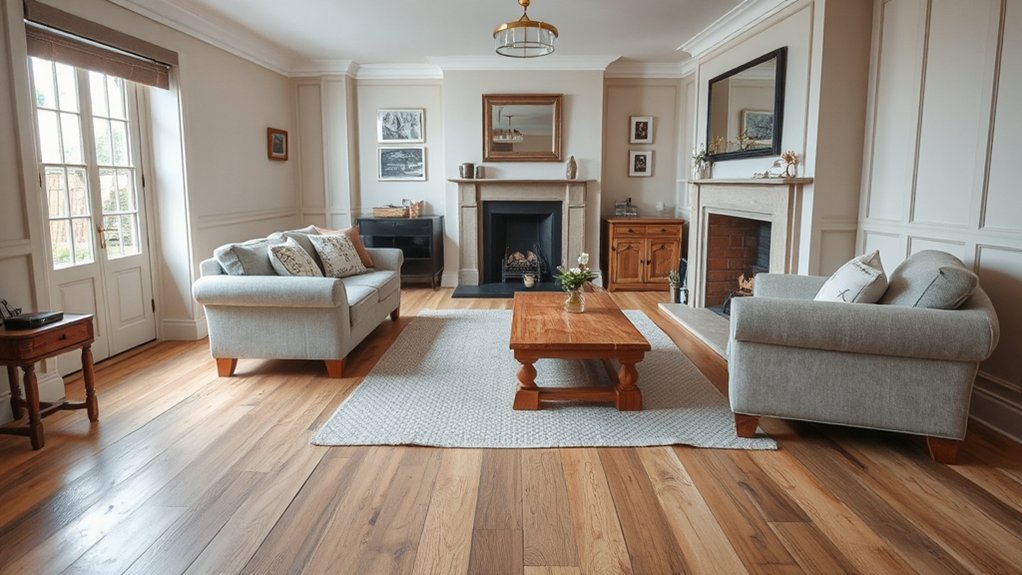
A flooring choice should honor the room’s character while delivering modern practicality. You’ll balance authenticity with durability by selecting materials that age well and suit heavy‑traffic zones.
Opt for natural wood with a subtle grain for warmth, or engineered alternatives that resist daily wear while echoing traditional tones. If you prefer stone, choose a honed finish to reduce glare and maintenance.
In high-use areas, consider protective layers like felt underlays and high‑quality varnishes that resist scratches without obscuring patina.
Tie the floor to the room’s aesthetic with Vintage textiles and Classic artwork as accents—authentic fabrics and prints elevate the surface without overpowering it.
Use consistent color palettes to unify progressions between spaces and retain an understated, timeless appeal.
Seating Layouts That Improve Flow and Conversation
Start with seating flow principles: arrange sofas and chairs to face common sightlines and create natural sightlines between hosts and guests.
Use conversation-friendly arrangements, like a soft U or shallow V, that keep people within speaking distance without blocking pathways.
Apply space optimisation tactics to reclaim traffic routes and guarantee each seat has a clear purpose and comfortable reach.
Seating Flow Principles
Seating flow hinges on how people move and interact within the room, so arrange chairs and sofas to create clear sightlines and easy pathways. You’ll prioritize conversation zones over sheer quantity, ensuring seating angles face each other without blocking doorways or radiators.
Place a focal piece, like a media console or fireplace, at a comfortable distance to prevent glare and crowding. Use area rugs to anchor seating, clarifying zones and improving acoustics.
Integrate vintage textiles where appropriate to soften edges and add depth, while decorative moldings frame sightlines and reinforce architecture. Maintain consistent leg height for a cohesive silhouette, and keep cords tucked to avoid trip hazards.
- Define primary seating circle with intentional angles
- Align furniture to natural traffic flow
- Use contrasting textures and vintage textiles
- Frame seats with architectural moldings for cohesion
Conversation-Friendly Arrangements
To foster natural dialogue and effortless traffic, arrange seating in intimate clusters that face one another while preserving clear sightlines to the room’s focal point. Center sofas and armchairs into low-profile groupings that encourage eye contact without crowding pathways.
Choose seating with compact proportions and guarantee legroom for easy movement around the cluster. Balance comfort with structure by pairing upholstered pieces with slim-footed tables to avoid visual heaviness.
Introduce vintage textiles in cushions or throws to add warmth without dominating the space, and select antique lighting to cast even, flattering illumination across conversation zones.
Maintain symmetry or deliberate asymmetry to guide conversations, not traffic, and keep storage unobtrusive to preserve flow. The result is timeless, functional sociability with restrained, purposeful styling.
Space Optimisation Tactics
A well-planned seating layout keeps conversations fluid while maximizing floor space. To optimise flow, anchor seating around a focal point, such as a fireplace or media unit, and use furniture with slim profiles. Place seating at conversational distances, avoiding cross-room barriers, and allow clear pathways for foot traffic.
Consider multi-functional pieces with built-in storage to reduce clutter and create a cleaner silhouette. Introduce texture and warmth with vintage textiles and decorative trims to lift a traditional room without compromising space.
- Define a central seating cluster that faces the main focal point
- Use compact sofas or pair of armchairs with a slim footprint
- Opt for floating arrangements to maintain open sightlines
- Integrate storage-friendly surfaces and minimal nesting tables
Storage That Hides Clutter Without Erasing Charm
When you’re aiming to hide clutter without sacrificing charm, smart storage choices matter as much as aesthetics. Begin with discreet cabinetry that matches your existing wood tone and mouldings, so storage feels architectural rather than ornamental.
Choose shallow, multi-purpose units that double as display surfaces, keeping everyday items out of sight yet easily reachable. Integrate removable baskets and dividers inside cupboards to maintain order without bulk.
Prioritise closed storage over open shelves for a calmer room feel, reserving open surfaces for selective display. Use vintage textiles as lining or lining accents to soften interiors while protecting contents.
Incorporate classic hardware on handles and hinges to preserve period cues. For textiles you’ll access often, select soft-close drawers to minimise noise and disruption.
Window Treatments for Privacy and Daylight Balance
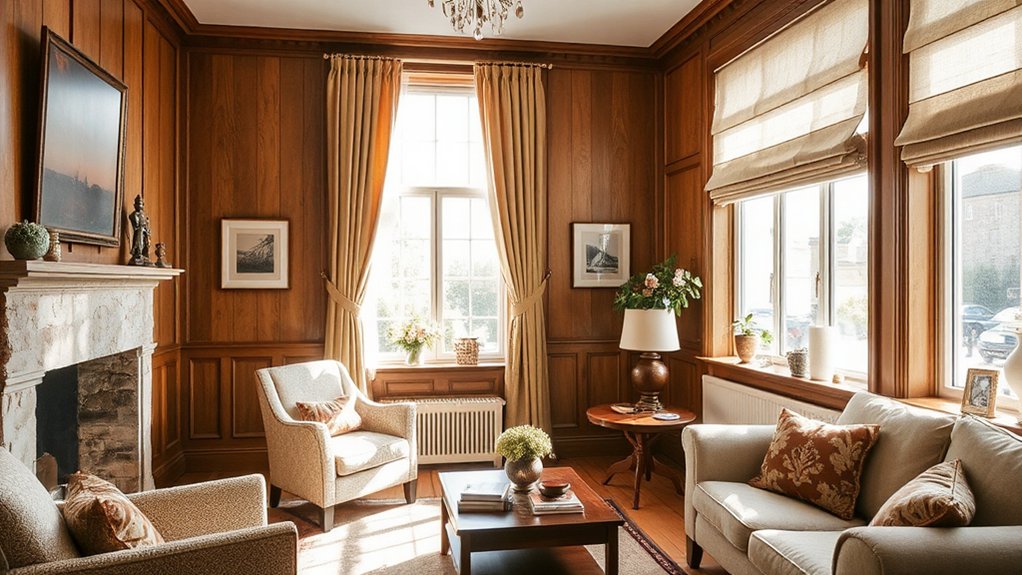
You’ll balance privacy with daylight by choosing window treatments that offer adjustable control, like operable blinds or light-filtering shades.
Consider how much outside view you need to see versus how much you want to screen from passersby, and use layered options to switch between sheer and opaque when needed.
In practice, pick a system that’s easy to operate, fits your room’s scale, and preserves the view when daylight is bright.
Privacy vs Daylight Balance
How can you balance privacy with daylight in a UK living room without sacrificing style or warmth? You can manage both by selecting window treatments that adapt to light and line of sight, prioritising practical materials and clean lines.
Consider dual-layer options and programmable shades for precise daylight management, paired with sheer alternatives for daytime privacy. Your aim is to reduce glare while keeping warmth in the room, not to block personality.
- Use translucent fabrics for daylight filtering without revealing interiors
- Choose adjustable blinds or roller shades for controllable privacy
- Pair with thicker drapes for evening seclusion
- Install soft, warm-tone foamed-backed liners to preserve ambience
Privacy concerns and daylight management should guide every fabric choice, ensuring comfort without compromise.
Treatments For View Control
Start with smart glazing, which adapts to changing daylight and external heat without heavy panels or manual adjustments.
Consider low-profile treatments that preserve sightlines while offering privacy when needed.
Window films deliver economical, non-permanent options for glare reduction and UV protection; select tinted or reflective films that complement your room’s palette and exterior.
For a traditional vibe, pair slim roller or Roman blinds with discreet hardware, ensuring operation remains smooth and quiet.
Test scenes at different times of day, noting how each option affects color and contrast.
Prioritize ease of use, durability, and maintenance for long-term satisfaction.
Wall Finishes That Stay Fresh and Faithful to Mouldings
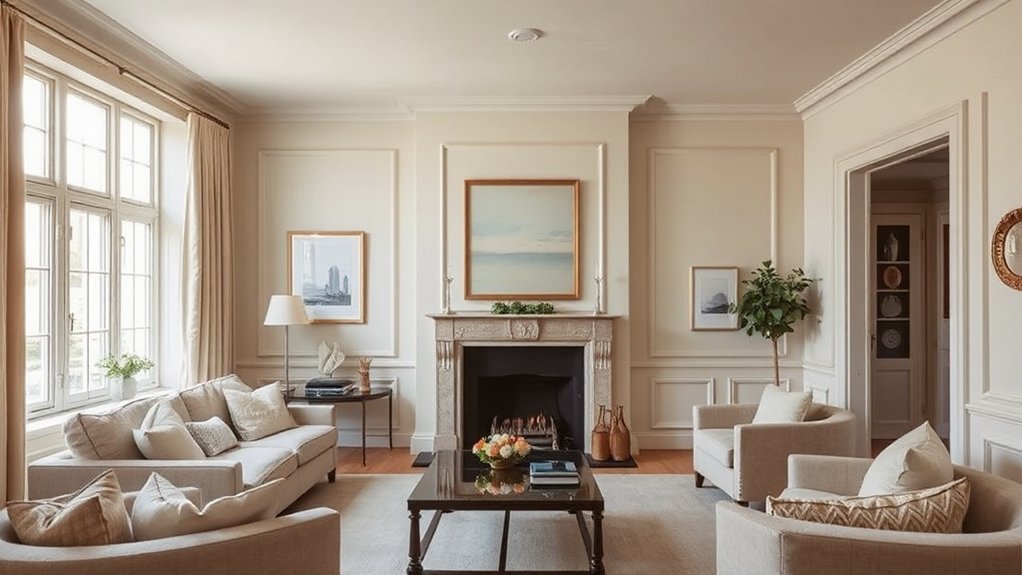
Achieving wall finishes that stay fresh and faithful to original mouldings means selecting textures, paints, and topcoats that respect profiles while resisting yellowing, cracking, and wear. You’ll choose coatings that expand and contract with plaster, preventing microcracks while preserving detail.
Aim for low-sheen or satin finishes to reduce glare and highlight profiles without overpowering woodwork. Prepare surfaces thoroughly, sealing gaps to stop moisture ingress that spawns staining. Lean on breathable products that still resist dirt and fingerprints, and pair with period-accurate decorative trims and subtle vintage textiles for a cohesive look.
- Opt for breathable, matte or satin emulsions that preserve moulding shadows
- Use clear acrylic or varnish topcoats to guard profiles without yellowing
- Seal joints and corners, reducing crack formation
- Test colour and sheen on sample panels with trim accents
Note: vintage textiles and decorative trims inform scale and contrast decisions.
Accent Details With Period-Leaning Character
Accent details that endure bring instant character without overpowering your space. Choose period-inspired touches—trim, lighting, or fabrics—that reinforce a cohesive narrative while staying practical and timeless.
Prioritise quality, proportional scale, and subtle contrast to guarantee these accents read as refined, not historic costume.
Accent Details That Endure
- Vintage textiles add warmth without clutter.
- Antique hardware provides tactile history on doors, drawers, and fixtures.
- Subtle mouldings or cornices echo traditional craft.
- Updated lighting that nods to era without dominating the room.
Maintain a restrained palette and purposeful placement, so period-leaning details enhance, not overwhelm. This approach keeps your space cohesive, flexible, and ready for contemporary living.
Period-Inspired Character Touches
Start with fabric and texture: choose vintage textiles in restrained palettes, like a wool crepe throw or linen cushions, to add warmth without clutter.
Next, select classic hardware for furniture and storage—drawer pulls, hinge detailing, and metal brackets that read as timeless rather than fussy.
Balance is essential: repeat one or two motifs across the room to create coherence.
Incorporate lighting with period-minimal fixtures that offer clean lines and warm glow.
Limit ornate items to a single focal piece to avoid visual overload, letting modern forms retain full impact.
Period-inspired touches reinforce character while maintaining contemporary clarity.
Discreet Technology Integration in a Traditional Room
In a traditional living room, discreet technology should blend with the room’s silhouette rather than dominate it; the goal is to preserve architectural lines while delivering modern function. You implement smart technology and hidden speakers with intent, so gear stays invisible yet reliable. Prioritize cable management, concealed enclosures, and low-profile mounts to maintain ambience.
Choose devices that automate lighting, climate, and shading without shouting tech. Guarantee user interfaces are simple and centralized, avoiding clutter. Calibrate acoustics to suit the space, letting hidden speakers deliver balanced sound without drawing attention.
Maintain robust wireless coverage, and opt for discreet wall plates and raceways.
- Concealed mounting for displays
- Ceiling or in-wall speakers
- Hidden cabling and outlets
- Unified remote/app control
Art and Gallery Walls That Complement Mouldings
Art and gallery walls should respect the room’s mouldings while carefully curating artwork that anchors rather than competes with architectural details. You achieve this by selecting pieces that harmonise with the moulding profiles—avoid overpowering contrasts and lean toward restrained palettes.
Prioritise balance: choose a focal work that sits at eye level, flanked by smaller pieces in a symmetrical arrangement or a deliberate grid. Contemporary artwork works well when it references traditional tones without clashing.
Use a consistent framing language—thin profiles in black, walnut, or white—so frames read as a unified belt around the room. For depth, mix two- and three-dimensional forms, such as Abstract sculptures, positioned to cast subtle shadows that echo moulding lines.
Maintain negative space to preserve architectural clarity.
Rug Selection to Anchor a Traditional Space
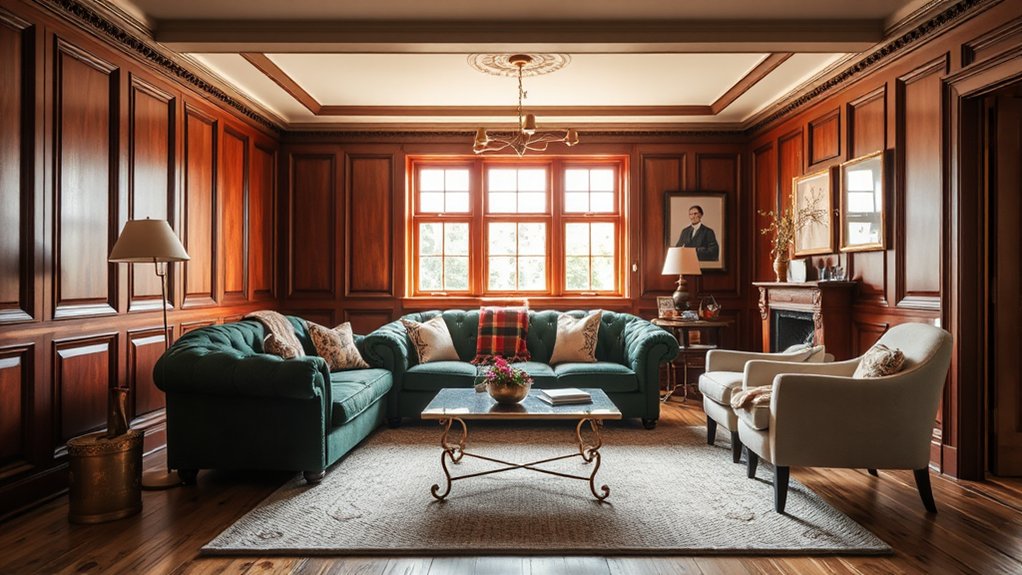
A rug should ground a traditional space by echoing its architectural cues while delivering practical warmth and texture. To anchor the room, choose a size that fits beneath key furnishings, ideally overlapping the front legs of sofas and chairs.
Opt for a pattern that respects period details without overpowering them, leaning toward muted tones or vintage textiles textures that harmonise with existing wood and plaster.
Consider pile height for wear and acoustics, prioritising medium-density for daily use.
Incorporate decorative trim subtly along the rug’s edge if possible to hint at craftsmanship.
Guarantee the rug’s feel underfoot is comfortable and durable, with a backing that prevents slipping.
- Size and placement aligned with seating
- Pattern restraint with vintage textile influence
- Texture and pile suitable for daily use
- Subtle decorative trim integration
Cabinetry and Surfaces: Practical Upgrades With Timeless Looks
So, when updating cabinetry and surfaces, prioritize enduring materials and clean lines that won’t clash with evolving trends. Choose solid-wood frames or high-quality veneered doors in neutral tones for longevity and repairability. Opt for classic profiles—flat panels or shaker-inspired silhouettes—that resist passing fads.
Surfaces benefit from quartz or solid-surface materials with subtle veining; these resist stains and wear while maintaining a refined look. Minimise ornamentation to preserve timeless appeal; conceal hardware where possible for a streamlined finish.
When accessorising, lean on vintage textiles for soft furnishings and introduce antique hardware on a small scale to add character without overpowering the room. Guarantee integration by matching tones across cabinetry, reveals, and work surfaces, creating cohesion and lasting elegance.
Subtle Accent Colors That Work in a Traditional Room
Subtle accent colors can elevate a traditional room without overpowering its timeless character. You’ll want hues that complement vintage textiles while keeping modern accessories distinct. Favor warm, muted tones like soft terracotta, olive, and slate blue for walls or upholstery to preserve depth without shouting.
Introduce color through cushions, throws, and lamps to preserve balance and avoid saturating the palette. Use color sparingly on furniture edges or trim to draw the eye without dominating space. Pair bold accents with neutrals to maintain cohesion and timeless appeal.
Key strategy: test swatches in daylight, then layer gradually.
- Soft terracotta cushions with vintage textiles
- Olive throws paired with refined, modern accessories
- Slate blue accents in upholstery details
- Subtle color on lamp bases and picture rails
Plants and Biophilic Touches for Life and Air
In a modern UK living room, plants aren’t just decoration; they’re functional elements that boost air quality and well-being. You’ll select low-maintenance species (snake plant, pothos, ZZ) for reliable filtration without fuss, placing them where you’ll pass daily.
Use layered light—from bright indirect to sheltered sun—so growth stays steady. Pair greenery with practical biophilic touches: a simple herb corner near the kitchen, or a desk plant for productivity.
Incorporate garden accessories that complement your scheme—modest ceramic pots, breathable planter liners, and a water-drip tray to reduce spills. When feasible, choose plants with varying heights to create depth.
Then weave vintage textiles into cushions or throws for warmth without clutter. This approach keeps air quality up while maintaining a crisp, cohesive look.
Scale, Proportion, and Balance in a Modernised Space
Scale, proportion, and balance form the backbone of a modernised living room. You’ll want items that relate to the room’s scale—neither dwarfed nor overpowering—so every piece feels intentional.
Achieve scale harmony by pairing large furniture with lighter, airy accents to prevent heaviness. Prioritise proportion balance by matching sofa length to the room’s width and ceiling height, then tune with sideboards and coffee tables that mirror or gently offset those lengths.
Maintain a cohesive rhythm through repeated shapes and tonal values, avoiding sudden jumps in size or contrast. Use focal points sparingly to anchor the eye without clutter.
- Assess the space before choosing dimensions
- Match silhouettes to room geometry
- Balance mass with negative space
- Repeat shapes and tones for cohesion
Budget-Friendly Updates With High Impact
Smart updates don’t have to cost a fortune. You can create high impact with targeted, inexpensive changes that respect traditional roots.
Begin with textiles: swap in Vintage textiles for cushions, throws, and a single statement curtain to refresh colour and texture without a full reupholster. Choose Retro patterns in moderation—one feature item or a few coordinating pieces keep the look cohesive and avoid visual clutter.
Update lighting with a budget-friendly statement lamp or a pendant, prioritising warmth and task practicality.
Trim your window line with affordable roman blinds or sheers to soften daylight.
Refinish existing flooring or paint a bold, durable zone on a focal wall to define space.
Accessorise deliberately: mirrors, a clock, and a restrained gallery of black-and-white photos.
Maintenance Tips to Keep the Look Vibrant
To keep the refreshed look vibrant, establish a simple, regular maintenance routine that protects textiles, finishes, and lighting. You’ll prevent dulling and premature wear by targeted care, aligning methods with material type.
For vintage textiles, vacuum with a brush attachment, rotate cushions, and spot-clean spills promptly.
For Contemporary textiles, follow care labels, avoid direct sunlight, and use a fabric protector where appropriate.
Treat hard finishes with dusting, gentle polishing, and humidity control to reduce cracking and discoloration.
Lighting should be cleaned regularly and bulbs replaced to maintain color accuracy and brightness.
- Vacuum and rotate cushions for vintage textiles
- Follow care labels and avoid sun for contemporary textiles
- Dust, polish, manage humidity for finishes
- Clean and refresh lighting to sustain vibrancy
Frequently Asked Questions
How Can I Preserve Architectural Mouldings Without Clutter?
You preserve architectural mouldings by prioritizing quality finishes, decluttering decisively, and integrating storage invisibly. Choose architectural preservation as your guide, minimize clutter with built-ins, and showcase mouldings through strategic lighting, neutral palettes, and purposeful, restraint-driven decor.
What Budget-Friendly Upgrades Deliver High Impact?
A penny-pincher’s gold rush: you’ll get big impact from budget-friendly upgrades. You should incorporate vintage accessories and color accents, elevating contrast and texture while keeping scale in check for a cohesive, refined, and practical modern look.
How to Balance Scale Between Modern Furniture and Big Features?
To balance scale, prioritize furniture proportions by pairing slim, low-profile pieces with bold, oversized features. Maintain decor harmony through consistent finishes and cohesive color; avoid clutter, so modern elements don’t overwhelm the room.
Which Lighting Layers Create Warmth in a Traditional Room?
Warmth comes from ambient layers: soft, layered lighting, plus warm-hued bulbs. You’ll blend smart lighting with dimmable task accents, ceiling washes, and floor lamps for cozy, controlled ambience that suits a traditional room’s character. Alliterate: softly, subtly, speckled.
How Can I Integrate Discreet Tech Without Losing Charm?
Smart integration hides clutter by using concealed technology, so you preserve charm while gaining modern control. Choose discreet cabinets with integrated outlets, receivers, and sensors; conceal cables, mount screens flush, and program routines for seamless, practical performance.
Conclusion
You’ll modernise a traditional UK living room by respecting its charm while dodging cliché. So you’ll preserve original details, but replace clutter with clean lines, layered light, and warm neutrals. Yes, you’ll move furniture for proportion and add texture, plants, and smart tech. No, you won’t abandon coziness for sterile minimalism. Maintain character, embrace practical updates, and budget with intent. Irony aside, the result proves modern comfort can actually enhance, not erase, heritage.