
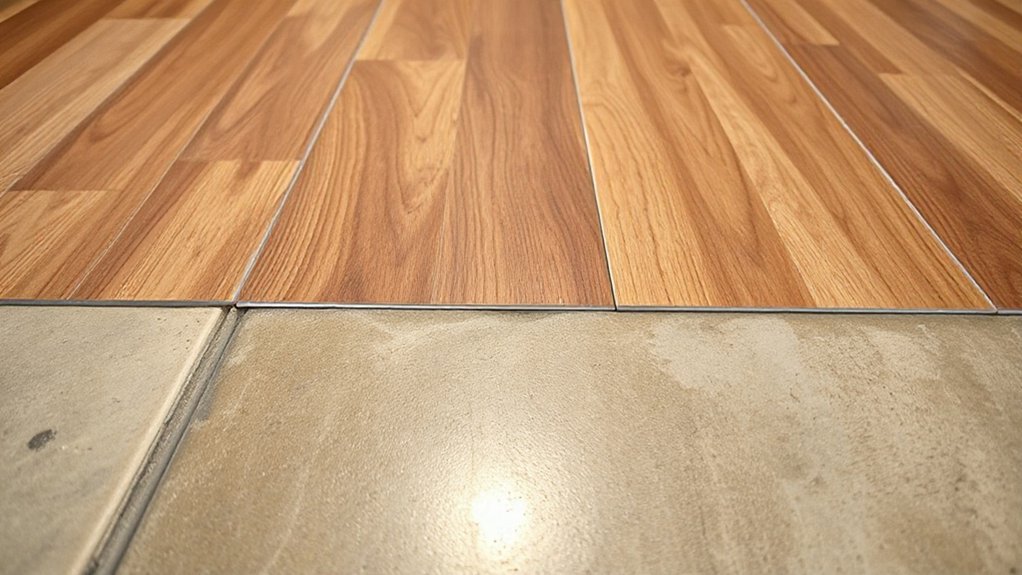

Laminate can be a good fit for basement concrete if you control moisture, create a flat, clean surface, and use a proper vapor barrier with compatible underlayment. Start with a moisture check, fix cracks, and level the slab. Choose water‑resistant laminate and a vapor‑retardant underlayment rated for below grade, then seal penetrations and install with attention to seams and junctions. With the right preparation, you’ll achieve durable results and a cohesive look that lasts—more details await.
Key Takeaways
- Ensure the concrete is flat, clean, dry, and free of major cracks before installing a water-resistant laminate and appropriate underlayment.
- Use a continuous vapor barrier and proper underlayment to manage moisture and improve sound and comfort.
- Assess basement moisture with visual checks, humidity tests, and drainage evaluation; address issues before installation.
- Choose laminate with below-grade suitability and plan transitions, trims, and color coordination for a durable, cohesive look.
- Implement a maintenance plan with regular moisture checks, inspections, and timely repairs to preserve longevity.
Is Laminate a Good Fit for Basement Concrete? Suitability Criteria
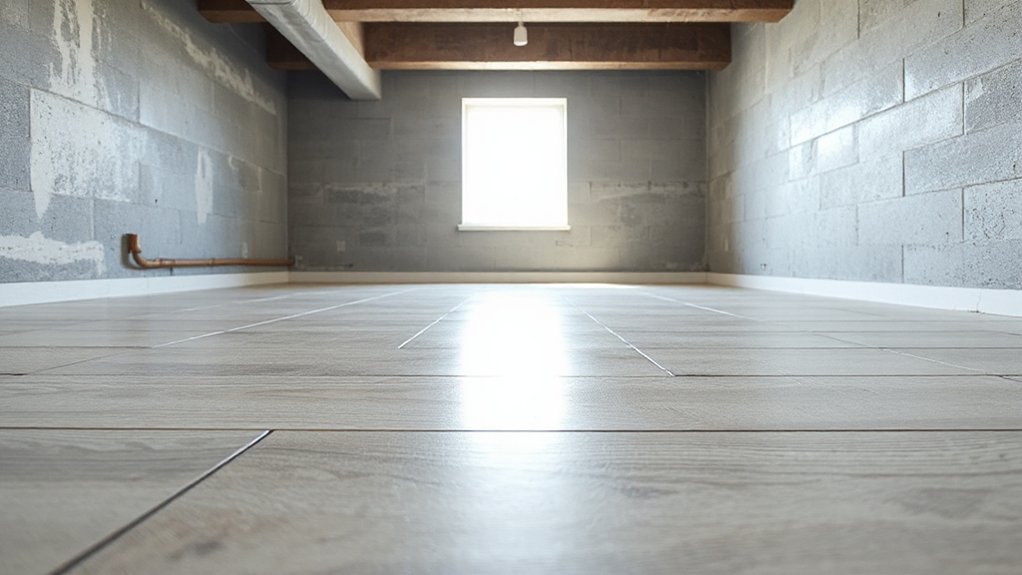
Laminate can work over concrete in a basement, but suitability hinges on moisture control, substrate condition, and a proper underlayment. You’ll verify moisture levels with a well-sealed test and address any dampness before installation.
Confirm the concrete is flat, clean, and free of cracks or major imperfections that could telegraph through the planks.
Underlayment selection matters: choose a vapor-retardant layer appropriate for basement use, plus a cushioning pad to reduce sound and improve comfort.
Look for locking systems that resist movement and tolerances for expansion.
For aesthetics, consider decorative patterns to hide seams and color options that complement your space while signaling durability.
How to Assess Basement Moisture Before You Buy
Before you buy, assess basement moisture with a practical, step-by-step approach: start with visual checks for leaks or staining, then implement a simple humidity and dampness test, and finally evaluate drainage around the foundation.
- Inspect walls and floor for discoloration, efflorescence, or condensation patterns, noting any recurring spots.
- Measure relative humidity with a hygrometer and perform a basic dampness test by placing a plastic sheet to detect condensation underneath.
- Observe standing water after rain and check grading, gutters, and downspouts to ensure proper drainage.
- Review basement ventilation—confirm cross-ventilation or exhaust options to reduce humidity and support Mold prevention.
Outcomes: you identify moisture risk, confirm ventilation, and plan a remediation path before flooring decisions.
Preparing Concrete: Moisture Tests, Repairs, and Leveling
Preparing concrete for laminate flooring starts with reliable moisture testing, targeted repairs, and proper leveling to prevent future failures. You’ll perform an accurate moisture assessment using calibrated meters and, if needed, calcium chloride tests, documenting readings at multiple points. If tests reveal excess moisture, address source issues first, then recheck before proceeding.
Sealing cracks is essential to halt water migration and create a uniform surface; fill with a compatible, non-shrink grout and cure fully.
Surface cleaning removes dust, oils, and debris that can impede adhesion or leveling products.
For repairs, use patching compounds rated for interior concrete, feathering edges to blend with the slab.
Leveling may require a self-leveling compound; install per manufacturer instructions, verify flatness with a straightedge, and allow complete cure prior to underlayment installation.
Choosing Laminate and Underlayment for Basements
Decorative trims and color coordination influence final aesthetics and perceived quality, so plan transitions and edge details early.
Follow these steps:
1) Pick water-resistant laminate with a certified underlayment for below-grade use.
2) Ensure subfloor flatness to within manufacturer tolerances to avoid gaps.
3) Choose decorative trims that align with color schemes and room style.
4) Verify installation sequence supports long-term stability and easy future replacement.
Moisture Barriers and Vapor Protection: Options That Work Below Grade
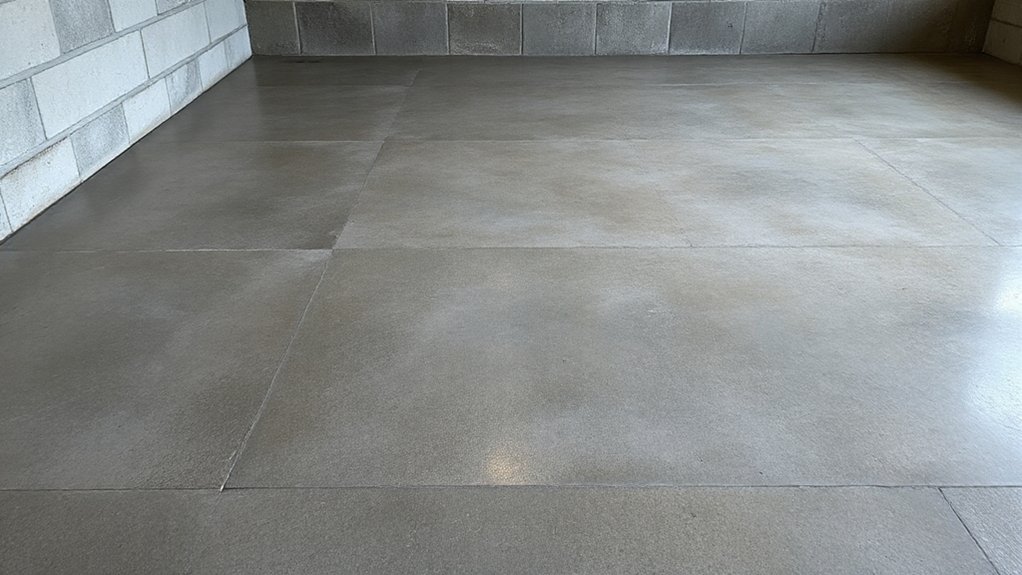
Moisture barriers and vapor protection below grade must be deliberate and reliable. You select barriers based on moisture source, measurement, and finished floor goals. Begin with a moisture assessment of the concrete, including vapor transmission rate and any hydrostatic concerns.
Damp proofing is suitable for low-traffic, non-pressurized spaces, but you’ll typically need more robust vapor barriers in basements. Choose a continuous, defect-free layer installed according to manufacturer instructions to prevent edge lift and seam gaps.
Confirm your underlayment type complements the barrier and won’t trap moisture. Use vapor barriers rated for below-grade use, and seal all penetrations against airflow paths.
After installation, verify there are no standing moisture issues and plan for routine checks to sustain long-term laminate performance.
Concrete-Installation Steps: From Slabs to Finished Floor
Concrete installation starts with a clean, level base and ends with a stable surface ready for laminate. You’ll progress from slab prep to final underlayment, ensuring compatibility with decorative patterns and color coordination in your design. Follow these steps precisely:
- Assess moisture and repair cracks to create a uniform plane.
- Grind high spots and fill voids, then vacuum thoroughly.
- Install a vapor barrier where required, sealing edges and seams.
- Lay the concrete-approved underlayment, smoothing for a flat finish.
With each move, verify levelness, edge straightness, and material compatibility. The result is a reliable foundation that supports durable laminate, enables decorative patterns, and preserves color coordination across the floor. You’ll finish with a stable, ready-to-install surface.
Maintenance and Troubleshooting for Long-Term Durability
To maintain long-term durability, you’ll implement humidity control techniques, protect panel edges, and follow a concise long-term maintenance checklist.
Start by stabilizing moisture levels to prevent warping. Then inspect and seal edges to deter gaps and moisture intrusion.
Use the maintenance checklist regularly to catch wear early and preserve performance.
Humidity Control Techniques
Humidity control is essential for long-term laminate basement flooring durability because excess moisture can cause warping, mold, and edge swelling. You’ll implement targeted strategies to protect air quality and maintain aesthetic appeal while preserving floor integrity.
- Monitor humidity with a hygrometer, keeping relative humidity between 30–50% to minimize moisture migration.
- Improve perimeter sealing and use vapor barriers, reducing condensation from concrete.
- Maintain proper ventilation with exhaust fans or dehumidifiers to stabilize the environment.
- Schedule seasonal checks for plumbing leaks, drainage, and sump pump function to prevent hidden moisture buildup.
Panel Edge Protection
Have you considered how panel edges can be the Achilles’ heel of long-term laminate over concrete? Protection starts with accurate panel alignment and secure edging.
Facilitate seams stay tight during installation to prevent moisture intrusion and edge curling. Use decorative edging that matches your décor while providing a durable cap against foot traffic and cleaning tools.
Inspect edges after acclimation and tightening, replacing loose fasteners or clips promptly. Seal gaps at wall transitions with a compatible adhesive along the edge, then roll the surface to promote uniform seating.
Avoid over-tightening locking mechanisms, which can distort profiles. Maintain consistent expansion gaps per manufacturer guidance to prevent edge buckling.
Regularly verify decorative edging remains flush, and address any micro-movements before they propagate into visible edge damage.
Long-Term Maintenance Checklist
A long-term maintenance checklist keeps laminate basement flooring over concrete safe and durable by guiding proactive inspections, timely repairs, and restraint from misuse. You’ll perform regular checks for fastener tightness, moisture indicators, and seam integrity, documenting findings for trend awareness.
Address issues promptly to prevent swelling, warping, or edge damage, and use proper cleaners that won’t dull finishes. Plan seasonal inspections around humidity shifts, maintain color coordination in storage and adjacent surfaces, and confirm decorative trims stay aligned with planks to preserve a cohesive look.
Follow these steps to sustain performance and appearance:
- Schedule humidity and moisture tests quarterly.
- Inspect seams, edges, and trims weekly for signs of separation.
- Clean with manufacturer-approved products; avoid abrasive tools.
- Refinish or replace damaged planks to maintain uniform color and decor.
Frequently Asked Questions
How Long Do Laminate Floors Last in Basements With High Humidity?
In high humidity basements, laminate floors last about 10–15 years if properly installed and protected. Monitor basement moisture, use vapor barriers, and choose water-resistant planks to improve laminate durability and long-term outcomes.
Can Radiant Floor Heating Be Used With Laminate Over Concrete?
Yes, you can use radiant floor heating with laminate over concrete. To guarantee success, verify radiant heating compatibility, follow laminate installation tips, maintain stable humidity and temperature, use an approved underlayment, and avoid high heat during installation.
What Refunds or Warranties Cover Basement-Specific Moisture Failures?
First, check your warranty terms: most basement moisture failures aren’t covered unless caused by manufacturing defects; you’ll likely need basement waterproofing and mold prevention measures. You’ll want documentation, inspections, and prompt remediation to protect the investment.
Do All Laminate Locking Systems Tolerate Repeated Basement Temperature Swings?
Not all locking systems tolerate repeated basement temperature swings; you should verify Locking system compatibility and Temperature tolerance before installation, testing panels across extremes, and choosing products rated for sustained humidity and cold cycles to guarantee durable performance.
Are There Low-Voc Options That Resist Basement Mold Growth?
Yes, you can find VOC alternatives and mold resistant treatments that resist basement mold growth. You’ll compare options, test adhesives, and choose finishes that meet low-VOC standards, install properly, and monitor humidity to guarantee durable, mold-safe results.
Conclusion
You can successfully install laminate on a concrete basement if you verify moisture, prepare the slab, and choose a compatible underlayment with a vapor barrier. Follow concrete repairs, leveling, and proper acclimation steps, then install with correct expansion gaps and fasteners. Maintain stable humidity and promptly address any moisture issues to prevent warping or mold. Stay disciplined and methodical—consistency is your best friend, and the payoff is a durable, attractive floor you can trust in. Don’t gamble; secure a solid foundation.