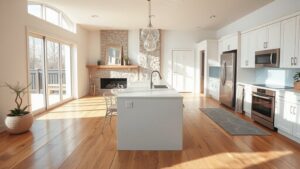
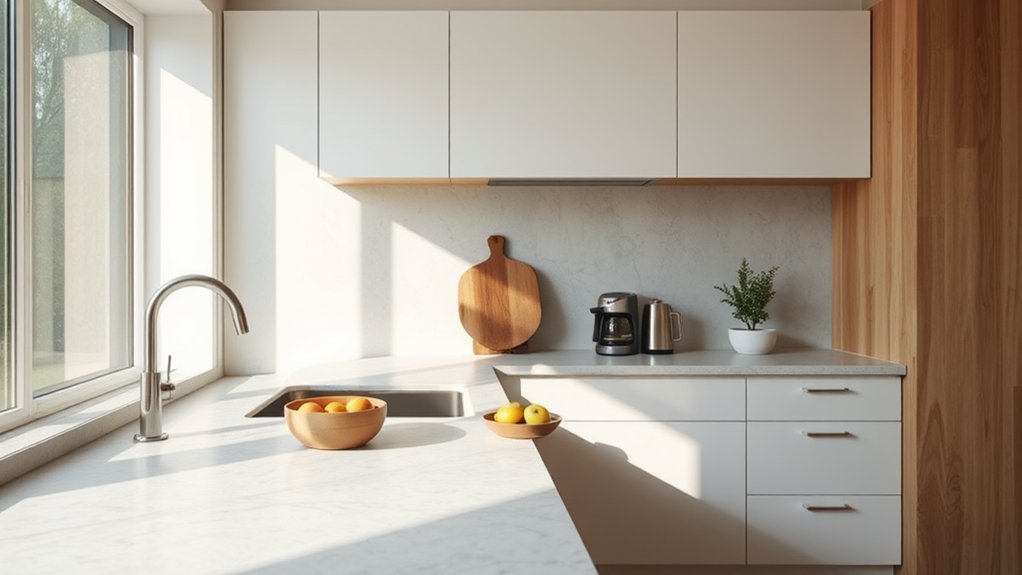

A warm, human minimalist kitchen balances clean lines with tactile materials and thoughtful storage. Prioritize natural woods, stone-like surfaces, and soft metals in matte finishes to calm glare and add warmth. Use restrained color with warm undertones, layered textures, and small pattern accents to create depth without clutter. Implement hidden storage—toe-kick drawers, shallow pull-outs, concealed panels—to keep counters clear. Add personal touches through vintage hardware and curated, intentional decor. If you want more practical steps, you’ll discover them next.
Key Takeaways
- Balance function and warmth by adding small contrasts and vintage accents to prevent a cold minimalist look.
- Create visual interest with bold, purposeful patterns and curated, clutter-free surfaces.
- Use integrated storage (toe-kick drawers, shallow pull-outs, concealed panels) to keep counters clear.
- Choose matte finishes, natural textures, and rounded edges to soften spaces and invite use.
- Layer warm lighting and quiet, panel-ready fixtures to foster a welcoming, human-centric atmosphere.
Why Warm Minimalist Kitchens Solve a Real Design Problem
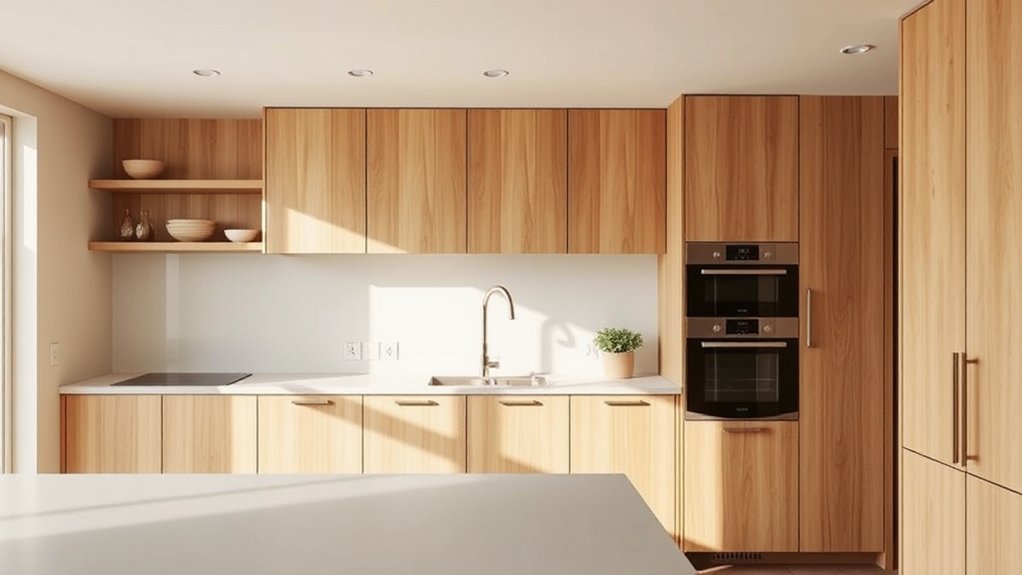
Warm minimalist kitchens solve a real design challenge by balancing function with warmth. You gain clarity when every surface serves a purpose, yet the space doesn’t feel cold. Warmth comes from thoughtful details that soften edges and invite use.
You can keep clean lines without sacrificing personality by incorporating small, intentional contrasts. Vintage accents introduce character without overpowering simplicity, giving your kitchen a lived-in feel that still reads modern.
Bold patterns, used sparingly, create focal points that guide the eye and prevent a sterile vibe. You’ll notice efficiency improves as storage blends into the design, not into clutter.
The result is a kitchen that’s calm, practical, and inviting, where every task feels effortless and every moment spent home feels intentional.
Foundational Warmth: Choosing Materials and Finishes That Calm and Invite
Foundational warmth starts with choosing materials and finishes that feel calm under daily use. You’ll prioritize tactile surfaces that resist fingerprints and scratches, leaning into matte rather than high-gloss to reduce glare.
Favor natural woods with gentle grain, soap-finished for touchability, and stone looks that don’t shout. Steel or brushed metals offer industrial influences without coldness when softened by warm undertones.
Vintage accents punctuate calm, inviting spaces without competing with clean lines. Consider warm whites, beiges, and greiges as a neutral backbone, then layer texture with woven textiles and cork or cork-like composites.
Keep edges rounded and corners soft to invite use. Balance durability with ease of maintenance, ensuring daily rituals feel effortless and welcoming rather than imposing.
Color Strategies for a Soft, Timeless Minimalist Look
You’ll start with soft hue tones that feel calm rather than stark, building a foundation that ages well.
Balance natural light hitting walls and surfaces to keep spaces open and inviting, not flat.
Add texture warmth through textiles and materials to prevent the palette from reading clinical.
Soft Hue Tones
Choose a base of matte neutrals and layer with slightly warmer undertones to invite warmth without clutter. Use color minimally on cabinetry or backsplash, reserving it for small, strategic moments.
Artful accents, like a terracotta vessel or a blush ceramic, punctuate surfaces without overpowering the room. Vintage elements—faded wood stools, brass hardware, a retro-inspired timer—bring character while preserving restraint.
Balance is key: pair soft tones with natural textures (linen, stone, wood) to deepen tactility. Keep lighting warm and shadows soft to preserve the serene mood, ensuring the space remains calm, approachable, and timeless.
Natural Light Balance
Natural light defines the feel of a minimalist kitchen, so you’ll want to position color and surfaces to play with it rather than fight it. You balance tone with light by choosing neutral base colors and reflecting surfaces that don’t overpower your view.
Use matte whites or warm grays on cabinetry, then add subtle, cooler accents to avoid a sterile look. Introduce natural timber or stone for texture without clutter, letting daylight reveal the material’s character.
Consider wide, uninterrupted window layouts and strategically placed mirrors to bounce light deeper. Seasonal decor can seasonally shift the mood without overhauling the palette.
Ambient sounds—soft music, quiet appliances—support a calm, human rhythm that makes the space feel quietly lived-in.
Texture Warmth Notes
Textural contrast becomes your quiet signature: matte stone against satin metal, woven wood against glazed ceramic, natural fibers beside sleek concrete. These juxtapositions make surfaces feel deliberate, not busy.
Ambient sound matters, because sound-absorbing finishes—soft plywood, cork, textile panels—gently mute echoes, reinforcing calm.
Keep color restrained and cohesive, using warm whites, ivory, and stone with subtle undertones. Let light reflect softly off velvety surfaces, while darker accents ground the palette.
The result is a timeless warmth that remains uncluttered, inviting, and endlessly refined.
Lighting That Makes the Space Feel Welcoming, Not Sterile
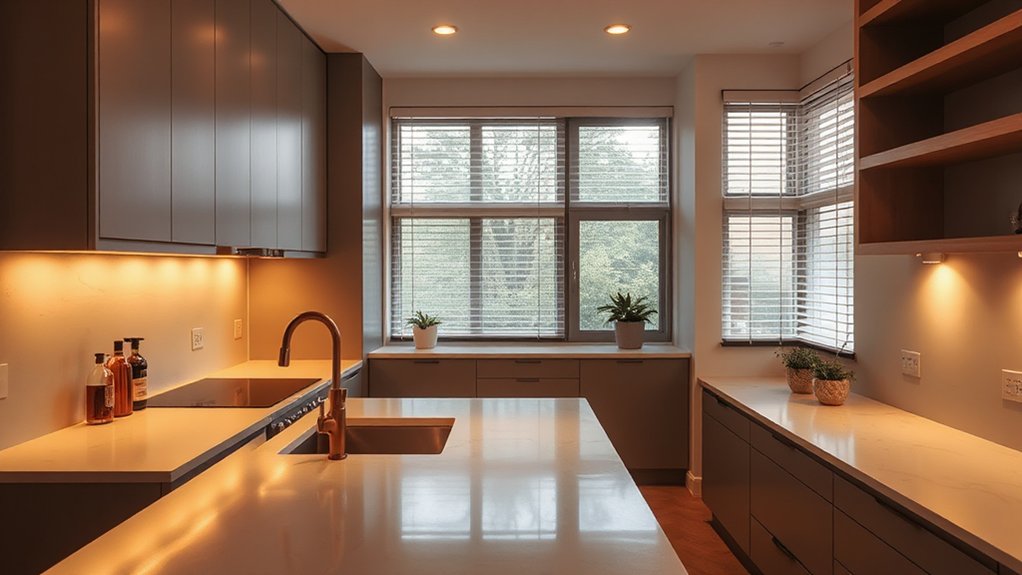
Good lighting in a minimalist kitchen should welcome you in, not glare at you. Choose warm color temperatures and dimmable options to adapt as you cook, dine, and unwind.
Layer light with a mix of ambient, task, and accent sources, avoiding harsh overheads that feel clinical. Opt for understated fixtures that enhance geometry rather than shout for attention.
Bold accents can come from a sculptural pendant, a subtle brass trace, or a matte-black silhouette that grounds the space without clutter. Use statement lighting sparingly to create focal moments—over an island or dining nook—without overpowering clean lines.
Prioritize CRI for true color, maintain even distribution, and keep cords tucked away to preserve the calm, human feel.
Layouts That Optimize Function and Kitchen Flow
Efficient layouts start with flow—placing the work triangle and clear zones where you actually use them. You optimize movement by aligning prep, cooking, and cleaning spaces so each task progresses naturally. Keep counters free of clutter and maintain direct routes between sink, stove, and fridge.
Use a galley or L-shaped plan to minimize steps, or a compact U-shape if space allows, ensuring three functional zones never collide. Integrate seating where it supports interaction without breaking work zones, and position lighting to highlight tasks rather than glare.
Subtle Vintage accents and Industrial elements add character without clutter, keeping edges clean and materials honest. Prioritize ergonomics, accessible storage, and adaptable surfaces to sustain warmth within a minimalist, human-centered workflow.
Smart Storage That Hides Clutter While Preserving Character
Hidden storage solutions keep essentials out of sight without shouting for attention, so your counters stay clean and calm. Use character-preserving organizers that complement materials, textures, and hardware to maintain the room’s personality.
You’ll balance practicality with style by selecting options that blend into the design while still offering smart access.
Hidden Storage Solutions
Smart storage can recede into the design, keeping clutter out of sight while enhancing the kitchen’s character. You’ll notice how hidden compartments and concealed shelving transform everyday routines into calm, practical moments. With a few strategic moves, you reclaim counter space without sacrificing style.
- Install toe-kick drawers beneath the cabinets to store flat tools and parchment, maintaining clean lines.
- Choose shallow pull-out trays inside base cabinets for lids, jackets, or spices, so clutter stays out of view.
- Integrate cabinet-panel doors that conceal small appliances, preserving a seamless wall while remaining reachable.
These choices feel deliberate, not clever tricks. Your kitchen stays warm, organized, and efficient, thanks to smart, discreet storage.
Character-Preserving Organizers
You’ve already seen how hidden storage can reclaim counters without stealing atmosphere. Now you want organizers that protect character, not erase it. Choose solutions that tuck into profiles you already trust: a shallow pull-out for utensils, a sliding bin behind a panel, or a labeled, glass-front canister that reads as decor.
Prefer soft-close drawers to preserve calm, tactile rhythm, and avoid chrome glare that feels clinical. Vintage accents subtly anchor a minimalist palette, giving warmth without clutter.
For daily use, keep a compact charging station and a small prep tray behind doors so tools stay curated, not displayed. Let your Statement artwork breathe in open sightlines, then hide the rest.
The result: storage that reads as intentional design, not technique.
Finishing Touches: Textures, Patterns, and Subtle Personality
Textures, patterns, and subtle personality are the finishing touches that turn a minimalist kitchen into a lived-in space without clutter. You’ll add texture through natural materials, soft textiles, and matte surfaces that catch light without shouting.
Patterns come in small, intentional doses—think a tiled backsplash, a woven rug, or striped towels—so you preserve calm while inviting depth.
Subtle personality emerges in Artful accessories and Decorative accents that reflect your routine, not trends.
- Curate a short rotation of textures to keep surfaces engaging without noise
- Introduce one patterned element as a focal counterpoint to solid tones
- Place thoughtful accessories where you cook, not just admire
These choices feel deliberate, cohesive, and human.
Quiet Tech and Discreet Appliances That Blend In
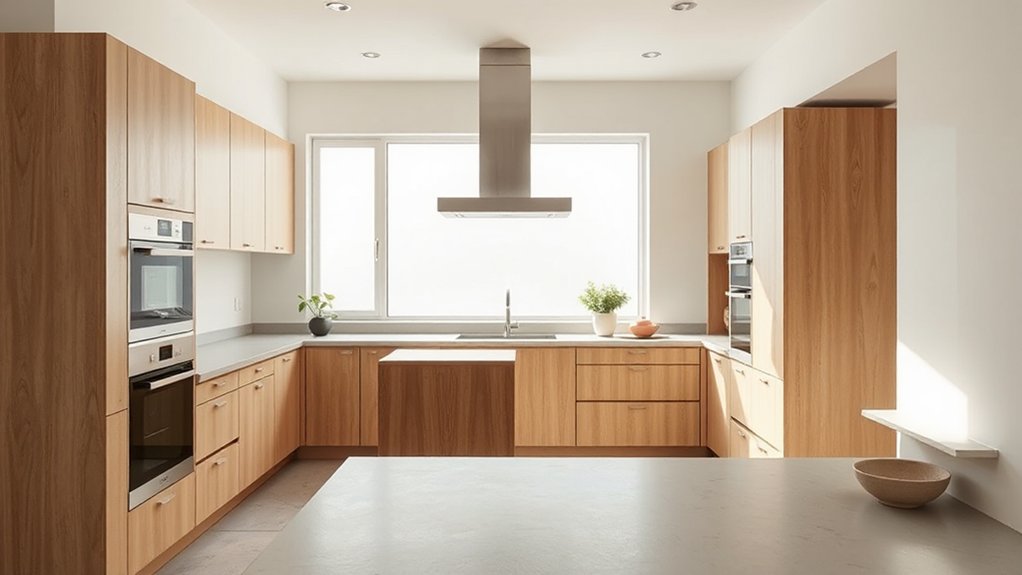
Quiet tech quietly elevates a minimalist kitchen. You’ll notice how smart appliances blend into cabinetry, keeping surfaces clean and purposeful.
Choose panel-ready fridges and dishwashers that mimic wood or matte finishes, so tech recedes rather than shouts. Hidden features matter: touch-lit controls, flush doors, and discreet vents preserve line and balance.
Opt for devices with quiet operation and programmable modes tucked behind doors you already open daily. Connectivity is practical, not flashy—auto-ordering groceries or syncing with your lighting for a warm, cohesive moment.
Favor intuitive interfaces and tactile feedback over complex menus. Consider maintenance and heat dissipation in alignment with your cabinet design.
The result is calm efficiency, where smart appliances serve you without interrupting the composition.
Soft Details That Read as Lived-In: Textiles, Ceramics, and Greenery
Soft details soften the minimalist kitchen without breaking its calm. You’ll notice how textiles, ceramics, and greenery humanize the space, adding warmth without clutter. Choose pieces that feel intentional, not decorative filler, so the room stays calm yet alive.
- Textile accents: linen napkins, a woven rug, or a cotton apron bring texture and subtle color.
- Ceramic studio pieces: a vase, bowls, or a mug set add tactile interest and personality.
- Greenery: a small herb pot or trailing plant enlivens counters while staying edit-friendly.
Vintage accents and bold patterns can slip in carefully—think a dated-look pitcher or a bold-patterned dish towel—without overpowering the clean lines. Keep scale small and language cohesive.
Seven Practical Steps to Declutter Without Losing Character
Decluttering a minimalist kitchen without losing character means you keep the elements that matter while removing the excess that dulls the space. To begin, identify essentials: appliances you actually use, dishes you reach for weekly, and a few decor items with meaning. Remove duplicates and hidden clutter, then group remaining pieces by function.
Next, curate surfaces: clear counters, but allow a single tray or bowl to host daily items, so it reads intentional, not bare. Introduce vintage accents sparingly—one clock, one vase—so texture remains tactile. Consider a statement backsplash that anchors the room while concealing minor imperfections.
Store seasonal tools out of sight, rotating pieces to refresh without chaos. Finally, evaluate periodically, replacing mass with meaning to sustain warmth and clarity.
A 7-Step Plan to Recreate a Warm Minimalist Kitchen (Practical Checklist)
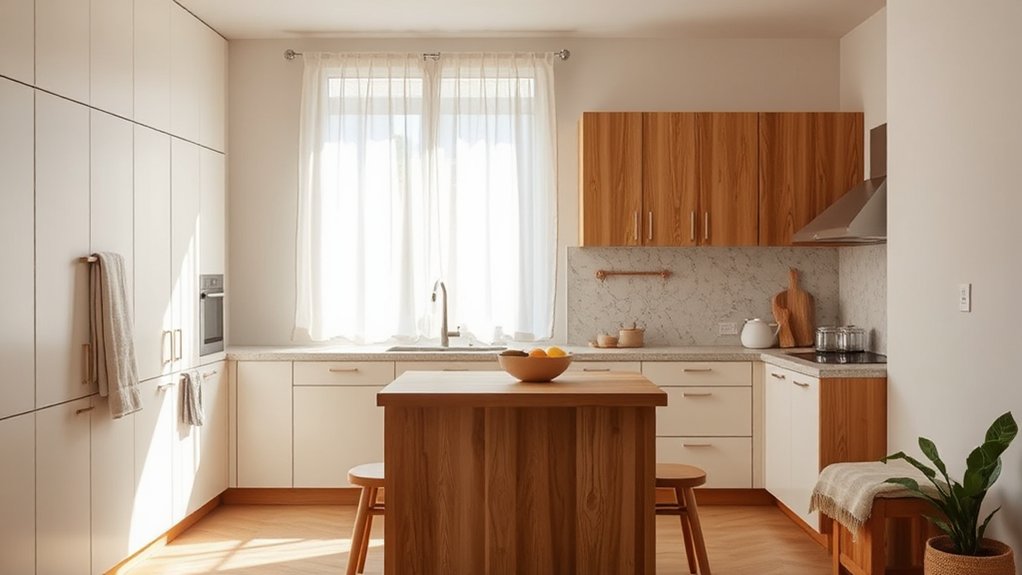
You’ll create warmth through simplicity by choosing clean lines, warm materials, and thoughtful textures.
Keep it functional yet inviting with strategic storage and a calming color palette that reduces visual noise.
Stick to clutter-free spaces that feel calm, spacious, and easy to live in.
Warmth Through Simplicity
Warmth in a minimalist kitchen comes from thoughtful contrasts and tactile details, not clutter. You’ll cultivate warmth by pairing clean lines with rich textures and careful scale. Use color contrast to guide the eye and define zones without crowding space. Choose materials with depth—stone, wood, matte metals—that invite touch and last.
Focus on Furniture placement to create a natural flow: position islands for work and seating, align storage to minimize visual noise, and keep sightlines open to the room beyond. Build your 7-step plan around these actions:
- Contrast textures
- Balance light and shade
- Align essentials for calm
Finally, prune duplicates and embrace restraint to sustain warmth without excess.
Functional Yet Inviting
Opt for furnishing styles that balance softness and edge, so seating and surfaces feel welcoming yet restrained. Choose appliance choices that disappear behind panel fronts or integrate into cabinetry, reducing visual noise while preserving usability.
Keep storage visible in tidy, accessible pockets for quick grasp-and-use moments. Introduce warm textures—wood, stone, linen—in consistent warmth to reinforce coziness without excess.
Use adjustable lighting to shift from bright prep to intimate dining, maintaining clarity and atmosphere. The result is a functional, human-scale kitchen that remains serene and inviting.
Calm, Clutter-Free Spaces
- Optimize flow: align appliances to prep, cook, and clean, keeping surfaces pristine.
- Tidy as you go: implement a daily reset that preserves breathability and focus.
- Curate, don’t collect: rotate a small selection of pieces—seasonal or meaningful—to maintain quiet drama.
Your minimalist kitchen becomes human when function leads form, with vintage accents and statement artwork elevating the quiet.
How to Personalize a Warm Minimalist Kitchen Without Sacrificing Cleanliness
To personalize a warm minimalist kitchen without sacrificing cleanliness, start by choosing a cohesive, low-contrast palette and simple textures that invite coziness without visual clutter.
You’ll layer warmth with practical accents that stay tidy. Introduce vintage accents in small, purposeful doses—think a retro kettle, a glass-front jar collection, or a slim brass handle—to add personality without chaos.
Pair these with bold patterns limited to a single focal area, such as a backsplash or a textiles patch, so the room preserves its calm.
Keep surfaces clear by storing items behind closed doors and using open shelving sparingly.
Choose tactile materials—wood, stone, linen—that age gracefully and hide fingerprints.
Maintain balance: function drives form, and personality shines through restrained, intentional detail.
Frequently Asked Questions
How Do I Keep Warmth Without Clutter in a Minimalist Kitchen?
Keep warmth by using decorative accents and functional accessories thoughtfully; choose tactile materials, soft lighting, and a cohesive color palette, then limit items to essentials. You’ll create a calm, inviting space without clutter, while your kitchen remains purposeful and stylish.
What Textures Instantly Add Coziness to a Minimalist Space?
Textures instantly cozy up a minimalist space by, you, embracing Textured ceramics for tactile surfaces and Knitted textiles for soft accents. You’ll create warmth with earthy glazes, breathable throws, and sculptural ceramic pieces that invite lingering, not clutter.
Which Colors Sustain Warmth While Staying Minimal and Calm?
Color psychology shows warm neutrals sustain calm while feeling inviting. You’ll keep aesthetic balance by pairing soft creams with muted terracotta accents, avoiding stark contrasts. Use accented woods and textiles to maintain warmth without clutter or distraction.
How Can Lighting Feel Inviting Rather Than Clinical in Minimal Kitchens?
Ambient glow comes from layered lighting: use warm bulbs, dimmers, and under-cabinet LEDs. You’ll avoid clinical vibes. Add cozy accents—soft textiles, wood textures, and pendant fixtures—to make your minimal kitchen feel inviting and functional.
What Small Details Reliably Convey Lived-In Warmth in Minimalism?
You add personal touches and vintage accents to small details, because they reliably convey lived-in warmth in minimalism. You layer textures, choose warm finishes, and keep clutter low, letting personal touches shine without dulling the clean, design-focused vibe.
Conclusion
In a warm minimalist kitchen, function and feeling align. You’ll pair calm materials with soft textures, letting light and color breathe without clutter. Keep essentials accessible, but add personality with ceramics, greenery, and subtle textiles. Declutter thoughtfully, not forever, so spaces stay lived-in. Plan around flow, not fear. Remember: less is more—unless it’s warmth. Then more of it, thoughtfully. Design is a conversation with your space, and a warm minimalist kitchen listens.