

You’ll design a calm, low-maintenance outdoor space by prioritizing function over flair. Choose a restrained plant palette with drought-tolerant, compact, native species, and use structure plants for backbone. favor durable materials, modular hardscapes, and clean lines. Install zone-specific irrigation with rain-aware automation, plus drip systems and rainwater harvesting. Keep storage hidden and tools organized. Maintain simple forms, low-profile furniture, and deliberate gaps for airflow. If you keep going, you’ll uncover practical steps to implement this serene oasis.
Key Takeaways
- Prioritize function with clean lines, uncluttered layout, and at least 3-foot clear walkways to enhance ease of movement and maintenance.
- Use durable, low-maintenance materials (concrete, pavers, weathered timber) and simple forms for timeless outdoor spaces.
- Select a restrained plant palette: drought-tolerant, compact, native with strong silhouettes; group by function for minimal upkeep.
- Implement zone-specific irrigation with rain-aware automation and drip systems to conserve water and reduce routine work.
- Optimize storage and lighting with hidden compartments, low-profile fixtures, and modular, foldable furnishings to keep spaces calm and organized.
What Minimalist Outdoor Living Fixes for You
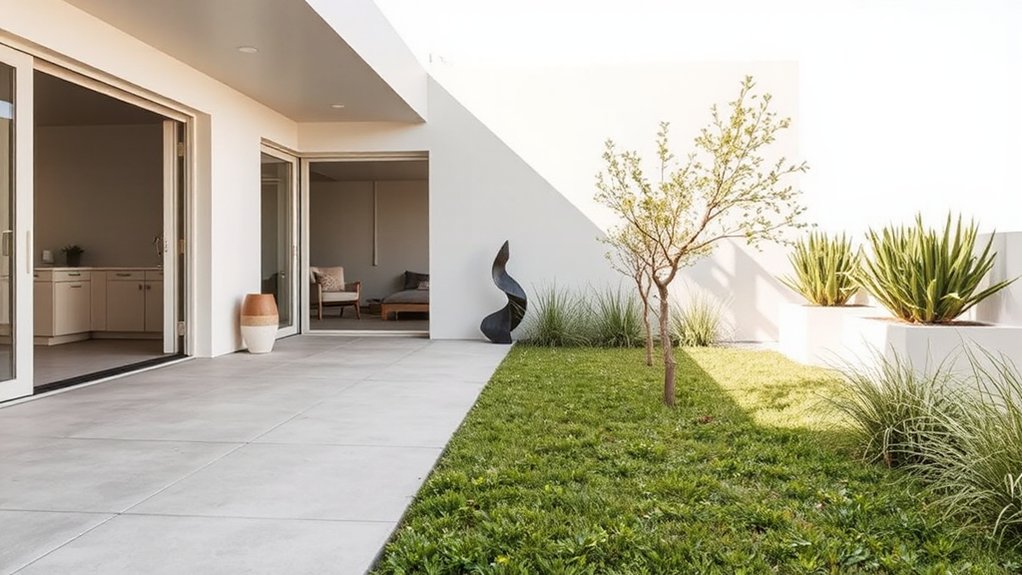
Curating a minimalist outdoor space starts with a clear purpose: what you want to do there. You’ll fix common friction by prioritizing function over flair, choosing durable materials, and simplifying maintenance.
Start with a tight palette: two or three plants, a neutral deck or path, and a chair you actually enjoy sitting in. Eliminate clutter that distracts from your goal, and store tools out of sight.
For gardening myths, trust proven practices: native species, proper spacing, and realistic watering. You’ll choose seasonal decorations that feel intentional, not gimmicky, so they don’t demand constant care.
Design around ease of access, clean lines, and outdoor lighting that guides you after dusk. With these fixes, you gain consistent usability, lower upkeep, and a space that truly serves you.
How to Assess a Space for Low-Maintenance Design
To design a low-maintenance outdoor space, start by thoroughly evaluating the area with your goals in mind. First, map sun exposure, drainage, wind routes, and existing structures. Note terrain and soil quality; these determine footing, planting options, and accessibility.
Prioritize zones for seating, cooking, and passage, avoiding clutter. Assess entry points for visibility and security, and identify any maintenance bottlenecks you want to eliminate. Consider water access and irrigation needs, selecting drought-tolerant, resilient materials.
Choose durable surfaces and low-fuss hardscape that won’t trap debris. Integrate garden art and outdoor decor in restrained doses to reinforce the design without drawing extra attention or demanding upkeep.
Document color schemes, texture contrasts, and scale to ensure cohesive, timeless visuals that stay effortless year-round. Revisit your assessment quarterly to adjust as conditions change.
Choosing a Restrained Plant Palette That Thrives
A restrained plant palette thrives when you select a few hardy, complementary species and group them by function—structure, foliage, and seasonal interest—so you get impact without clutter. You choose low-maintenance performers, then place them for year‑round balance rather than novelty.
Prioritize drought tolerance, compact growth, and strong silhouettes to reduce upkeep. Structure plants offer backbone; evergreens or architectural forms anchor corners and paths.
Foliage choices emphasize texture and color shifts, with repeated tones to unify the scheme. For seasonal interest, enlist a small rotation of bloom or color that’s easy to refresh with minimal effort.
Consider Succulent arrangements for dry zones and vertical gardens to maximize space and reduce soil disturbance. Keep spacing intentional, prune promptly, and resist crowding to preserve clarity and resilience.
Durable Materials That Stay Timeless and Simple
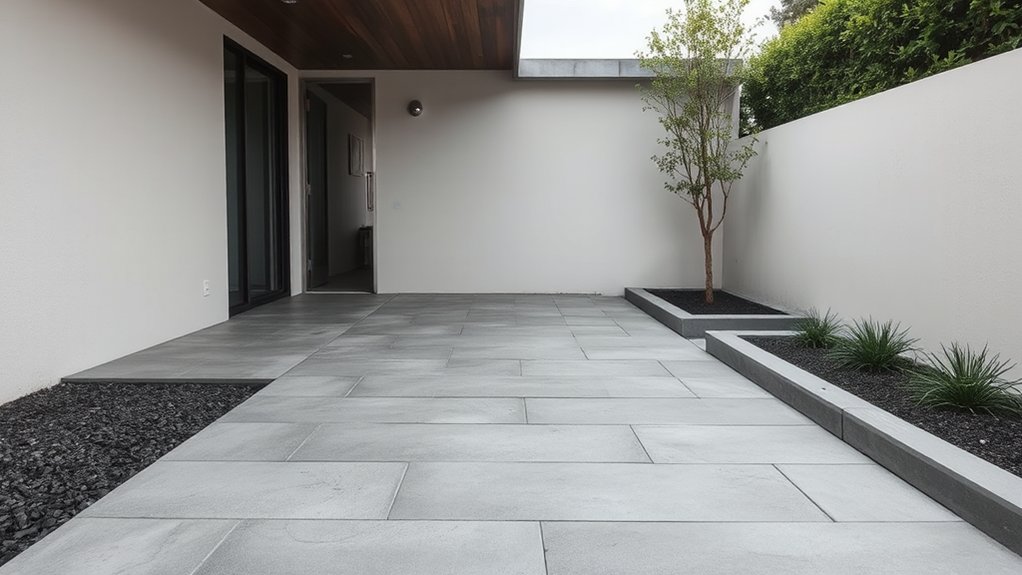
Durable materials keep your space looking timeless with minimal effort. Choose low-maintenance options that age gracefully and resist wear, so you’re not redoing features every season.
Timeless Material Choices
When choosing timeless materials for outdoor spaces, prioritize durability, low maintenance, and a clean, understated look that ages well. You’ll select surfaces that resist weathering and fading, with simple textures that don’t shout for attention.
Favor concrete, porcelain pavers, slate, and natural stone for a grounded base, and pair with powder-coated metal or solid wood that’s properly treated. Keep lines clean and joints tight to minimize upkeep.
Introduce rustic charm through weathered timber accents and clay or terracotta planters, avoiding ornate details that date quickly. Vintage accents can appear with reclaimed bricks or aged bronze hardware, used sparingly to avoid clutter.
Design with consistent color palettes, like charcoals, taupes, and sand tones, so materials harmonize as seasons change.
Low-Maintenance Durability
Simplicity that lasts comes from choosing materials built to endure weather, foot traffic, and everyday use without frequent upkeep. You’ll want options that age gracefully, resist staining, and require minimal care, so your space stays quiet and clean.
Durable choices help you skip constant replacements and upkeep, keeping budgets lean and routines simple. In practice, choose textures and tones that weather well and stay timeless, with finishes that tolerate moisture and sun without fading.
To stay low-maintenance, integrate these essentials:
1) Composite decking that resists warping and splinters
2) Powder-coated metal furniture for longevity and easy cleaning
3) Natural stone pavers with slip resistance
4) Low-water, native plantings paired with seasonal pruning and pest management strategies
Smart Irrigation for Effortless Upkeep

Smart irrigation starts with smart scheduling that matches your yard’s exact needs, saving water without sacrificing growth.
By pairing drought-resistant plantings with a compact toolkit, you’ll reduce maintenance while maintaining healthy, climate-adapted beds.
Let’s discuss how to implement efficient timers, sensors, and zone planning to keep minimalist spaces effortless to upkeep.
Smart Scheduling Efficiency
Efficient scheduling is the backbone of smart irrigation, saving water and time while keeping your plants thriving. You implement precise timelines, weather-informed tweaks, and zone-specific routines so every drop earns its keep. This approach frees you to enjoy the space rather than fuss over it.
1) Schedule by micro-climate zones to avoid overwatering.
2) Sync irrigation with rainfall alerts for leaner consumption.
3) Use soil moisture data to adjust runtimes precisely.
4) Integrate irrigation with garden art and outdoor entertainment plans.
With disciplined timing, you preserve foliage, reduce waste, and elevate outdoor moments. You’ll trust automation to handle the basics, so you can host confidently, knowing the lawn and beds stay vibrant with minimal hands-on work.
Drought-Resistant Plantings Toolkit
If you’re aiming for effortless upkeep, drought‑resistant plantings pair perfectly with smart irrigation to minimize water use while maximizing impact. This toolkit centers on selecting tough perennials, grasses, and natives that tolerate heat, drought, and poor soils, then pairing them with controlled irrigation schedules.
You’ll prioritize deep‑rooting species to encourage moisture access and reduce evaporation, plus mulching to lock in soil moisture. Implement rainwater harvesting to supply nonpotable water for sprinklers and drip lines, lowering demand on your supply.
Use soil moisture sensors and weather data to trigger irrigation only when needed, avoiding overwatering. Choose a wildlife friendly planting palette that supports pollinators and birds without inviting heavy maintenance.
The result: resilient color, minimal upkeep, and smarter water stewardship.
Low-Fuss Furniture That Lasts Year After Year
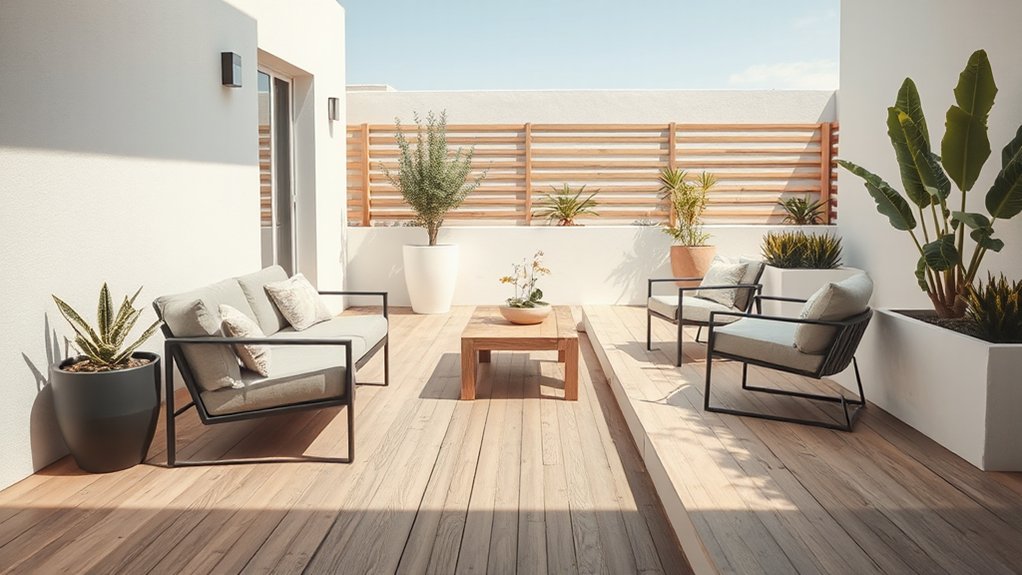
Durable, low-maintenance furniture is the backbone of an effortless outdoor space, so choose pieces built to withstand sun, rain, and seasonal use. You want lasting comfort without constant upkeep, so prioritize materials that resist fading, rust, and warping.
Focus on simple silhouettes that pair with minimalist vibes and can be mixed with vintage accessories or artistic sculptures for personality. Keep maintenance minimal with removable covers and easy-clean finishes.
Build a smaller, smarter collection that won’t overwhelm your patina.
- Choose powder-coated aluminum or teak with proper sealants for longevity
- Opt for modular designs that reconfigure as needs change
- Favor cushions with quick-dry foam and stain-resistant fabric
- Pair functional pieces with tasteful accents to evoke emotion without clutter
Ground Covers and Scalable Hardscape Ideas
You’ll explore ground cover varieties that reduce maintenance while lifting texture and color.
Scalable paving patterns help you expand or rework spaces without overwhelming the minimalist feel.
Border choices stay low-maintenance and clean, guiding foot traffic without stealing the scene.
Ground Cover Varieties
- Creeping thyme for scent, pollinator visits, and compact growth.
- Irish moss or similar for a bright, moss-like carpet and soft foot traffic.
- Sedum groundcovers for drought tolerance and subtle height variation.
- Perennial vinca or jasmine for evergreen cover and seasonal blooms.
Care tips: monitor moisture, edge the bed, and avoid dense mulch buildup to retain air.
Scalable Paving Patterns
How can you shape scalable paving that pairs ground covers with flexible hardscape? You design with modular slabs and living mats that fit both tight spaces and expanding areas.
Choose a base of permeable pavers or concrete units so water and roots move freely, then weave low-growing ground covers between gaps. This creates scalable paving that adapts as your yard evolves, reducing maintenance while preserving a minimalist vibe.
Emphasize pattern variation to soften rigid lines: staggered grids, running bonds, or irregular mosaics echo natural contours without excess clutter. Keep joints narrow and clean, using compacted gravel or crushed stone for drainage.
Select ground covers that thrive in sun or shade, pruning lightly to maintain calm repetition. Repeat elements thoughtfully, ensuring cohesive color and texture across zones.
Low-Maintenance Borders
Your borders can pair low-growing ground covers with scalable hardscape to stay tidy with minimal effort. You’ll create clean lines, reduced weeding, and durable edges that evolve with your space.
Ground covers suppress weeds and soften gradual shifts, while modular pavers or stepping-stone grids adapt to changes in sun and shade. This approach keeps borders approachable, not fussy, and you’ll enjoy steady maintenance gains.
Ground covers can form texture and color without heavy lifting, supporting garden art as focal points.
Wildlife habitats benefit from dense, layered planting and discreet spaces for critters.
Use the following ideas to inspire confidence:
1) Choose drought-tolerant spreads for year-round steadiness
2) Mix textures that invite movement
3) Integrate low-profile art pieces
4) Plan scalable steps for future updates
Simplified Outdoor Lighting for Extended Use
To extend outdoor use, simplify lighting by prioritizing two to three core zones and choosing a single, low-profile fixture that blends with the landscape. You’ll gain flexibility by targeting seating, entry, and path areas with a cohesive plan.
Use solar powered lighting to avoid wiring and reduce upkeep, placing panels where they won’t cast shade on essential zones. Select a fixture that’s unobtrusive—think a slim wall unit or recessed uplight—that provides sufficient ambient glow without dominating forms.
For atmosphere, opt for minimalist string lights as accents, not primary lighting. Keep cables hidden, interfaces simple, and switches straightforward.
Schedule seasonal checks, cleaning, and battery maintenance during daylight hours. The result is extended usability, safer movement, and a calm, unified exterior that stays low-maintenance.
Boxed Planting Beds With Clean Edges

Clean edges define a boxed bed by creating a crisp, uninterrupted line between soil and mulch, which enhances a minimalist look. You’ll want clean, rectangular outlines that make low-maintenance planting feel intentional and orderly.
Choose simple plantings and durable edgings that stay focused on form, texture, and ease of care.
Clean Edge Definition
A clean edge defines boxed planting beds with precision, anchoring the minimalist look and separating soil from turf or gravel with unmistakable clarity. You’ll see structure, not mess, and your landscape reads as intentional.
To maintain this discipline, implement exact, repeatable edges that hold mulch, groundcover, and edging material in place.
- Choose a solid edging, like steel or concrete, for lasting definition.
- Keep lines straight or evenly curved to preserve symmetry.
- Install during a dry window to prevent shifting and gaps.
- Pair with restrained plantings that highlight contrast rather than clutter.
Remember garden art and outdoor furniture should echo this restraint, enhancing the space without overpowering it.
Boxed Bed Aesthetics
Boxed beds define the minimalist look and make maintenance a breeze. They center plantings in defined, clean-edged modules that stay tidy with minimal effort. You’ll benefit from uniform edging, reduced soil erosion, and easier weeding, since paths and beds remain distinctly separated.
Choose compact, slow-growing varieties to maintain proportions without frequent pruning. Use uniform mulch or gravel to preserve contrast and reduce moisture loss.
For boxed bed aesthetics, keep color repetition simple: one or two complementary tones, avoiding clutter. Edge materials should contrast with plantings yet resist weathering; metal, concrete, or treated timber work well.
Introduce minimalist garden sculptures as focal points, placing them to guide sightlines without overpowering plant form. Prioritize symmetry or deliberate asymmetry; both reinforce calm, controlled spaces.
Low-Maintenance Planting
Boxed beds keep roots contained, reduce weed pressure, and simplify maintenance. For vertical gardens, light structures let you add greenery without crowding ground space, boosting visual interest with minimal footprint.
Use these guiding steps:
1) Choose hardy, drought-tolerant natives tailored to your climate.
2) Layer foliage from low to tall to maintain clean lines.
3) Install efficient irrigation and mulch to curb evaporation.
4) Integrate vertical gardens for year-round structure and seasonal color.
Water Features That Require Minimal Maintenance
Water features can elevate minimalist outdoor spaces without demanding constant care. Choose a simple, recirculating fountain or a compact pondlet with a built-in filter to minimize upkeep. Opt for models with self-cleaning grids and accessible pump housings, so routine maintenance stays quick.
Position features where natural drainage lanes away from seating, and conceal cords with weatherproof conduits. Use a neutral finish and quiet water flow to preserve the calm aesthetic. Pair water elements with bird feeders or subtle outdoor art to enrich the scene without clutter.
Schedule quarterly checks—inspect seals, replace a fused bulb, and refresh the water line. Keep plantings sparse and drought-tolerant to prevent debris buildup and overgrowth, ensuring enduring, low-effort impact.
Storage Solutions to Keep Spaces Serene
Hidden storage strategies and streamlined outdoor compartments offer serene clutter control you can trust. You’ll hide cords, tools, and cushions behind discreet benches or cabinetry that blend with the landscape.
Start by identifying high-use items and pairing them with unobtrusive, weatherproof solutions to maintain a calm, minimalist footprint.
Hidden Storage Strategies
Hidden storage is the backbone of serene minimalist outdoor spaces. You’ll keep your patio calm by smart, accessible design that disappears when not needed. Focus on quiet solutions that blend with surroundings and don’t crowd your routines.
Consider:
- Hidden compartments for cushions, tools, and daily essentials.
- Concealed drawers under benches to hide manuals and sprays.
- Slotted benches that conceal hardware yet allow easy access.
- Wall recesses with lid storage for seasonal items.
Choose materials that weather evenly and age gracefully. Locate units where prep and cleanup happen naturally, reducing clutter at the point of use.
Guarantee hinges and latches stay smooth with regular checks. Integrate power and charging with weatherproof housings.
The goal is calm, organized spaces you can enjoy without distraction.
Streamlined Outdoor Compartments
Choose materials that age well together—teak, powder-coated metal, or concrete—that resist weather and look cohesive.
Plan compartments near the points you frequent: grilling area, seating, or entry paths, so you don’t chase equipment across the yard.
Use vertical solutions to minimize footprint: tall narrow lockers, mounted racks, and magnetic strips for quick access.
Integrate decorative accents like garden sculptures and water features to elevate function without clutter.
Label shelves subtly and keep daily items accessible, seasonal gear stored out of sight, maintaining serene, low-maintenance outdoor spaces.
Seasonal Care Routines That Stay Brief
- Inspect soil moisture and adjust watering cadence for upcoming season.
- Trim dead growth and prune select plants to shape structure.
- Check lights, irrigation, and drainage; address issues promptly.
- Swap a few seasonal plants to keep color with minimal effort.
Keep notes, stay consistent, and resist overdoing tasks. Your space remains calm, functional, and resilient year-round.
Balcony Setups That Maximize Space With Less Effort
Your balcony should feel calm and usable, even in tight spaces. Start with a compact, multifunctional setup: foldable chairs, a wall-mounted table, and stackable planters to free floor area. Choose a neutral color palette and simple textures to minimize visual clutter.
Use vertical storage like railing shelves and hanging baskets to keep essentials within reach without crowding surfaces. Keep garden art and seasonal accents limited to two small pieces or a single focal object to avoid distraction.
Opt for weatherproof, low-maintenance plants in self-watering pots for consistency with minimal effort. When watering, group tasks to complete in one pass, and store tools in a single, labeled bin.
This approach delivers a tidy, inviting space that works with your routine, not against it.
Patio Layouts That Invite Calm Circulation
A calm patio layout starts with clear circulation: leave at least 3 feet of unobstructed walkways and place furniture to create natural routes that invite you to move without crowding. You’ll design rhythm into the space by focusing on flow, sightlines, and functional zones. Use simple forms, low-profile seating, and intentional gaps that feel breathable.
- Plan pathways first, then place every piece to sustain ease and calm.
- Position garden sculptures as focal dots, not obstacles, guiding movement softly.
- Use outdoor fire pits as anchors for gathering without breaking circulation.
- Align seating to protect sightlines while preserving open, uncluttered air.
This approach delivers serene accessibility with practical, durable elements you can maintain easily.
Color and Texture Tricks for Year-Round Interest
Color and texture keep outdoor spaces engaging through all four seasons; start with a cohesive palette and tactile materials that age gracefully. You’ll leverage color contrast to create focal points without clutter, pairing dark greens with warm neutrals or crisp whites to anchor plantings and furniture.
Texture layering adds depth: mix smooth concrete or porcelain with rough stone, and pair metal or glass with woven fibers for visual interest. Choose hardscape and fabric hues that mirror your garden’s seasonal shifts, so progression feels intentional, not accidental.
Keep scale proportionate, repeating elements across zones to unify the look. Maintain low maintenance by selecting durable finishes and weather-ready textiles. Regularly trim, clean, and reseed essential plantings to preserve year-round balance and minimalist appeal.
Privacy Solutions That Stay Low-Maintenance
To keep minimalist outdoor spaces private without adding upkeep, select screening that’s durable, unobtrusive, and easy to maintain. You want barriers that blend with your landscape and don’t demand daily attention, so choose low-profile options that still block sightlines.
- Durable screens that resist weather and stay clean without effort
- Unobtrusive panels or shrubs that complement your form-first aesthetic
- Low-maintenance options like composite fencing or pressed-wood textures
- Passive elements that double as focal points, such as Bird feeders or outdoor statues that deter casual peeking
Keep circulation open and air flowing, and position screens to respect sightlines from windows. Bird feeders add life without clutter, while outdoor statues provide subtle privacy cues without feeling busy.
Lawn Alternatives That Look Good Without Lawn Care
If you want a polished yard without the ongoing ritual of mowing, consider drought-tolerant alternatives that deliver curb appeal with minimal upkeep. You’ll achieve a tidy, inviting look by selecting low-water options that suit your climate and soil.
Artificial turf provides year-round greenery without mowing, irrigation, or seasonal reseeding, while maintaining a soft, natural appearance when paired with stepping stones and mulch beds.
Xeriscape gardening emphasizes native, drought-adapted plants arranged for visual rhythm and low maintenance, cutting back on fertilizer and pruning needs.
Plan with thoughtful contrast—aggregate pathways, a few sculptural grasses, and evergreen anchors—to preserve structure through seasons.
Maintain with strategic irrigation, seasonal pruning, and routine debris removal.
The result is a resilient, attractive landscape that stays vibrant with minimal effort.
Budgeting Basics for a Minimalist Outdoor Makeover
Budgeting for a minimalist outdoor makeover starts with a clear plan and realistic costs, then trims unnecessary extras to keep it affordable. You’ll prioritize essentials, estimate per-item costs, and build a lean budget that leaves room for small upgrades like garden art and outdoor décor without blowing through your funds.
- Define core goals and assign top priorities to financing.
- Create a simple spreadsheet that tracks items, prices, and delivery time.
- Compare two options per category to maximize value.
- Reserve a contingency (5–10%) for surprises and quick improvements.
With discipline, you’ll avoid EDGEs of over-spending while preserving impact. Focused purchases yield a cohesive look that feels intentional, not bargain-bin. This approach keeps your minimalist outdoor space calm, organized, and stylish.
Garden art and outdoor décor remain deliberate accents, not splurges.
Case Study: A Serene, Low-Maintenance Backyard in Practice
Case studies reveal how tiny tweaks produce big calm. In this backyard case, you embrace a low-maintenance rhythm: drought-tolerant perennials, compact evergreen borders, and a streamlined lawn substitute.
You choose hardscape that’s simple to clean and durable, like a single paver path guiding your eye without clutter. Garden art punctuates focal points, but it stays concise—one sculpture, one mirror, one sunlit feature—so ambience remains serene, not busy.
You optimize outdoor entertainment by placing a compact seating cluster near the kitchen door, ensuring easy serve-and-sit flow without overbuilding.
Water use stays efficient, with a drip system and mulch to minimize evaporation.
Maintenance rests on routines, not excess: weekly sweep, quarterly pruning, seasonal weed checks.
The result is a calm, ready-for-any-season space you genuinely enjoy.
Quick-Start Plan to Implement Your Minimalist Oasis
Start small and build momentum: you’ll establish a minimalist oasis with a three-step plan—define your core uses, select drought-tolerant plants and durable hardscape, and install a simple irrigation and maintenance routine.
- Define core uses: prioritize garden art and outdoor cooking so every element supports those activities.
- Choose hardy features: pick drought-tolerant plants and low-maintenance hardscape that tolerate sun, wind, and foot traffic.
- Install a simple irrigation: install drip or soaker lines with a timer to minimize waste and effort.
- Establish a concise upkeep: set quick weekly tasks, seasonal checks, and clear storage to keep spaces tidy and inviting.
Frequently Asked Questions
How Long Does a Minimalist Outdoor Upgrade Typically Take?
A minimalist outdoor upgrade typically takes a few days to a week, depending on scope. You’ll install outdoor furniture and lighting fixtures efficiently, coordinating deliveries and simple landscaping tweaks to minimize disruption and maximize long-term low-maintenance appeal.
What Maintenance Frequency Is Realistic for Minimalist Spaces?
You should plan maintenance every 1–2 weeks for basic upkeep, longer gaps during winter. Prioritize landscaping aesthetics and outdoor furniture checks; clean, weed, and tuck away items promptly to keep your minimalist space low-maintenance and tidy.
Can I DIY a Low-Maintenance Garden on a Budget?
Yes, you can DIY a low-maintenance garden on a budget; juxtapose lush dreams with sparse execution. You’ll rely on seasonal plant choices and budget friendly materials, ensuring resilient design, simple irrigation, and rapid, practical results.
Which Plants Require the Least Pruning and Care?
You should choose low-maintenance plant selection like native grasses and evergreen shrubs, as they require minimal pruning and care. Follow practical care tips: water deeply but infrequently, mulch, and avoid over-fertilizing to keep maintenance light.
Do I Need Professional Help for Irrigation Setup?
You can do it yourself, but you’ll likely want professional installation for reliability. An irrigation system is straightforward to set up, but professionals guarantee proper zoning, water efficiency, and leak prevention, saving you time and future headaches with professional installation.
Conclusion
You’ve got the framework for a calm, low-effort outdoor space. Pick a restrained plant palette, durable materials, and smart irrigation, then lean into lawn alternatives and a simple budget. Assess, plan, and execute with a ruthless eye for maintenance. Your minimalist oasis should stay neat with minimal fuss, not endless tuning. Remember: less is more—except for the features you actually use. Channel a zen mindset—your space works as hard as you do, even when you’re not watching. Anachronism: beware chrome-plated monoculture.