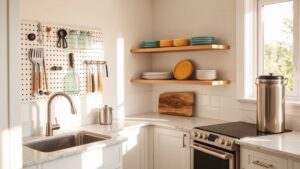
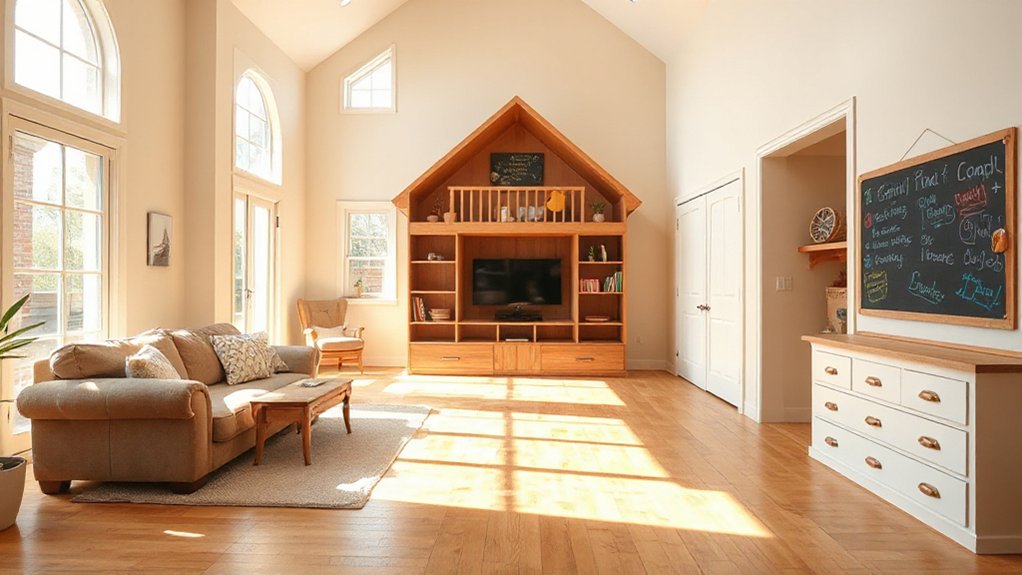

To future-proof your home for growing families, design with flexible layouts, durable, easy-clean surfaces, and kid-safe storage that still looks stylish. Prioritize modular spaces, convertible rooms, and open plans that define zones with rugs, lighting, and color. Choose low-maintenance materials, sound-damping elements, and built-in safety features in bathrooms and outlets. Establish clear flexible-living principles and a quick 60-second tidy rule to stay organized. Dive deeper to uncover practical upgrades you can implement now.
Key Takeaways
- Create flexible, multi-use spaces with modular furniture to adapt rooms for bedrooms, study zones, and play areas as the family grows.
- Implement kid-safe storage with labeled bins, soft-close cabinets, and accessible nooks to maintain organization and safety.
- Integrate safe bathroom and laundry upgrades, including non-slip surfaces, easy-to-reach storage, and temperature controls for family use.
- Design sound-aware layouts with noise-reducing materials and dedicated quiet zones to protect rest and study areas.
- Prioritize energy efficiency and durable finishes—insulation, sealing, and low-maintenance surfaces—to reduce long-term costs.
How Growing Families Change Home Needs

As families grow, your home needs evolve—from more bedrooms for kids to safer common areas and flexible spaces that adapt to new routines. You’ll value a home office that supports remote work without gobbling every corner, so designate a quiet nook with sound dampening and good lighting.
Consider pet friendly features that keep dogs and cats content while you balance chores and playtime, like non-slip flooring, easy-clean surfaces, and built-in feeding zones.
Prioritize adaptable layouts: bedrooms that can convert to study zones, bathrooms with accessible design, and living spaces that host evolving activities.
Storage matters, too—reach-in closets, hidden bins, and modular furniture reduce clutter as numbers grow.
Finally, ensure safety through sturdy gates, outlet covers, and updated security measures for peace of mind.
Set Your Flexible-Living Principles
To set your flexible-living principles, start by clarifying what you’ll tolerate—and what you won’t—as your family’s routines change. You’ll define nonnegotiables for space, noise, and timing, then translate them into daily habits and layout choices.
Prioritize adaptable routines over rigid schedules, so you can reconfigure rooms without friction. Choose flexible furniture that can morph with needs, like modular seating and foldaway surfaces, so spaces stay usable as kids grow.
Embrace adaptable layouts that support shared time and privacy, such as zone-friendly open plans with clear boundaries. Document guidelines for guests, chores, and spacing, keeping them short and actionable.
Revisit principles quarterly, pruning or expanding them as your lifestyle evolves, so your home remains functional, stylish, and aligned with your growing family’s pace.
Kid-Safe Storage That Still Looks Great
You’ll explore kid-safe storage that doubles as décor, balancing accessibility with aesthetics. We’ll look at hidden storage solutions and safe grooves that keep small items out of sight and out of reach while maintaining a cohesive look.
This approach sets a practical, stylish standard for families who want organization without sacrificing design.
Kid-Safe Storage Aesthetics
Kid-safe storage can look intentional and stylish without sacrificing safety. You’ll organize with purpose, choosing materials and colors that harmonize with your home while keeping tiny hands in mind.
Prioritize sturdy, closed storage for small items and soft-close mechanisms to prevent pinched fingers. Integrate child proof gadgets into furniture you’d already use, like labeled bins, adjustable shelves, and latch-secured cabinets.
Opt for playful storage designs that still read as design-forward—bright but muted tones, simple silhouettes, and tactile textures that invite exploration without chaos. Use clear or labeled containers so kids learn where things belong, reinforcing tidy habits.
Balance accessibility with durability, ensuring every piece supports growth, safety, and a cohesive, stylish aesthetic throughout your space.
Hidden Storage Solutions Safe Grooves
Hidden storage can be both covert and chic—conceal clutter without sacrificing style. You’ll want Safe Grooves that prioritize kid safety while delivering mature design. Built-in hidden compartments and concealed drawers blend seamlessly with cabinetry, so you avoid bulky bins and visible cords. Choose soft-close mechanisms and rounded edges to prevent pinched fingers, especially in high-traffic zones.
Integration is key: align grain, color, and hardware with your existing finish for a cohesive look.
- Install hidden compartments under benches or window seats for toys, chargers, and seasonal gear.
- Add concealed drawers within media consoles or coffee tables to keep remotes and cables tidy.
- Opt for recessed pull channels in cabinets to maintain clean lines without handles.
These choices keep spaces organized, stylish, and kid-friendly.
Flexible Room Layouts for Daily Routines
Flexible room layouts aren’t just about clever furniture placements—they’re about making daily routines smoother. You’ll benefit from open floor plans that minimize hallway traffic and create visual clarity for mornings and homework.
Use adaptable furniture to reconfigure spaces as needs shift—think modular seating, stackable chairs, and height-adjustable desks that shift between work, play, and dining.
Zone definitions matter without rigid walls: designate soft boundaries with area rugs, lighting, and color cues so kids know where to study, where to read, and where to play.
Prioritize gravity of traffic flow, keeping clearance around doorways and seating.
Choose scalable storage that grows with your family, and pair it with multiuse surfaces to reduce clutter while supporting multiple daily routines.
Enduring practicality elevates style and function.
Durable, Easy-Care Surfaces for Busy Homes
Durable, easy-care surfaces keep busy homes looking orderly even when daily life is imperfect. You’ll value materials that endure spills, fingerprints, and heavy traffic without frequent upkeep. For a confident, modern aesthetic, choose options that blend function with minimalist design and eco-friendly materials.
- Opt for high-performance laminates or quartz that resist scratches and stains while maintaining a clean, simple look.
- Choose sealed concrete, tile, or vinyl over porous surfaces to simplify maintenance and reduce sealing needs.
- Favor matte finishes in neutral tones to hide smudges yet preserve a refined, contemporary vibe.
Prioritize surfaces that scrub clean, resist heat, and pair with sustainable palettes. Your home stays calm, organized, and stylish, even on bustling days.
Safe, Resilient Flooring for Crawlers
Safe, resilient flooring matters more with crawlers, because little knees and hands encounter every surface. You choose materials that cushion falls and tolerate daily wear, so your space stays calm and safe.
Prioritize closed-cell foam, vinyl, or cork with appropriate underlayment to reduce noise and impact. Look for non-slip surfaces that maintain traction when wet, yet feel gentle under tiny palms.
Rounded edges or softened progressions minimize scrapes, while seamless seams prevent snagging. Install quick-access, easy-clean zones near play areas to curb mess, not trap it.
Consider color and texture that hide minor scuffs, yet stay visually cohesive with the home’s style. Always verify floor ratings for moisture, durability, and life cycle, aligning with playground safety standards and practical family needs.
Kitchen Upgrades That Save Time and Mess

If you want a kitchen that works as hard as your family does, start with streamlined storage that keeps everyday essentials within reach.
Pair that with time-saving appliance hacks that cut prep and cleanup, so you spend less on chores and more on life.
We’ll explore practical setups and smart routines you can implement this week.
Streamlined Storage Solutions
Want a kitchen that runs like clockwork? Streamlined storage begins with intentional placement and durable systems. You’ll gain time and reduce stress by prioritizing space optimization and clutter management, so daily tasks feel effortless. Use these practical moves:
- Install adjustable pull-out bins and shallow organizers to keep ingredients visible and reachable.
- Opt for labeled, stackable containers and transparent jars to minimize digging and prevent duplicates.
- Create dedicated zones for prep, cookware, and snacks with clearly defined shelves and hooks.
Together these tweaks deliver immediate clarity, prevent overstuffing, and promote mindful use of every inch.
Maintain momentum by reviewing your setup quarterly, swapping any mismatched pieces, and expanding storage as your family grows. Consistent, thoughtful organization keeps counters clear and efficiency high.
Time-Saving Appliance Hacks
Ever wondered how a few targeted appliances can cut your daily kitchen workload in half? You’ll streamline meals and cleanup by prioritizing time-saving tools that fit real-life routines. Start with smart gadgets that automate familiar tasks, like programmable coffee makers, one-touch ovens, and sensors that adjust cooking times.
An instant-read thermometer speeds confidence in doneness, while a dishwasher with auto-load settings minimizes prewash fuss. Choose energy-efficient models to realize energy savings without sacrificing performance.
Consider a induction cooktop for rapid heat response, and a compact microwave with preset programs for kid-friendly breakfasts. Pair these upgrades with smart lighting and outlet timing to curb idle energy use.
The result is a calmer kitchen, faster cycles, and better control over every meal, every day.
Energy-Efficient Improvements With Real Impact
Smart energy upgrades pay off fast when you focus on real-world impact. When you tackle efficiency, you’ll feel the difference in comfort, bills, and resale value. Start with practical steps you can implement now, without overhauling your home.
1) Conduct an energy audit to pinpoint leaks, insulation gaps, and equipment inefficiencies.
2) Invest in durable, low-maintenance improvements like sealing drafts, attic insulation, and efficient lighting.
3) Add solar panels and consider a smart thermostat to optimize usage based on real patterns.
The goal is measurable gains: lower monthly costs, steadier indoor temperatures, and fewer hot-water shocks.
Real impact comes from targeted changes, not flashy upgrades. Keep the plan tight, budget-smart, and aligned with your family’s daily routines for lasting results.
Kid-Friendly Bathroom Upgrades

When you plan kid-friendly bath upgrades, start with safe, non-slip floors and rounded edges to reduce slips and bumps. You’ll want bright lighting and easy-clean surfaces that stand up to daily use while keeping the design cohesive and stylish.
Think kid-focused bath design with durable materials, simple storage, and features that make routines smoother for growing families.
Kid-Friendly Bath Design
A kid-friendly bathroom should be safe, accessible, and engaging, so start with sturdy, slip-resistant flooring, rounded edges on furniture, and temperature-controlled water to prevent scalds.
You design for growing bodies by prioritizing tub and shower zones that are easy to reach, with visual cues for kids learning to wash hands and faces.
Key focus areas include bathtub safety and consistent water temperature, so you never surprise a child with sudden hot spots.
Implement practical upgrades that blend function with style.
- Install a handheld showerhead at kid height for independent rinsing and quick cleanup.
- Choose a low-threshold tub or curbless shower to minimize stepping hazards.
- Use accessible storage at eye level for toiletries, towels, and bath toys.
Safe, Bright Lighting
Bright, even lighting is essential in a kid-friendly bathroom. You’ll prioritize safety and usability with layered, practical fixtures that minimize shadows and glare. Choose a cool-to-neutral color temperature to help concentration during grooming while keeping spaces welcoming.
Use creative lighting options, like recessed strips above mirrors for even face illumination and under-cabinet LEDs to reduce blind spots. Integrate ambient illumination through dimmable sconces or cove lighting to soften late-night trips without startling kids.
Avoid harsh ceiling spots that create strong contrasts; instead, blend sources for consistent brightness. Confirm all fixtures and outlets meet kid-safety standards, with tamper-resistant covers and waterproof ratings appropriate for bathrooms.
Document placements for future tweaks, and keep controls reachable, intuitive, and clearly labeled for daily independence.
Easy Clean Surfaces
With kids in the mix, easy-clean surfaces save you time and headaches. In the bathroom, focus on materials and layouts that resist grime and wipe clean fast, so you spend less scrubbing and more living. Choose surfaces that pair durability with style, embracing Eco friendly finishes and Modern minimalism for a calm, timeless look.
Practical choices matter when kids rush in for quick showers or spills.
- Install seamless, wipeable countertops and backsplashes to minimize grout buildup.
- Select solid-surface or lacquered cabinetry with rounded edges and kid-friendly hardware.
- Opt for stain-resistant, non-porous flooring and easy-clean fixtures that handle splashes and toothpaste drips.
Together, these tweaks keep the space tidy, durable, and visually cohesive while supporting growing-family needs.
Laundry Room Makeovers That Actually Work
If you want a laundry room that actually works for a growing family, start with smart storage and sturdy surfaces that can handle daily use. Prioritize a workstation layout: folding counter at a comfortable height, utility sink, and space for hampers that keep clutter contained.
Install adjustable shelving and labeled bins so towels, codes, and supplies have a dedicated home, cutting chaos during busy mornings. Choose durable, water-resistant surfaces and sealed seams to resist stains and moisture.
Implement a simple workflow from sorting to washing to folding, so everyone can contribute without extra planning. Use Eco friendly detergents to reduce toxins while protecting fabric longevity.
Emphasize Laundry room organization with color-coded baskets and clear containers for quick visibility and efficiency. End with a concise maintenance routine to sustain order.
Outdoor Spaces for Play, Relaxation, and Safety
A well-designed outdoor space balances play, relaxation, and safety by prioritizing durable materials, clear zones, and child-friendly supervision. You’ll create distinct areas that reduce chaos and enhance oversight, with smart storage and low-maintenance surfaces guiding everyday use.
Focus on safe, age-appropriate opportunities for exploration, while keeping maintenance realistic for a busy family schedule. Outdoor safety is built into every decision, from slip-resistant decking to shaded passages that deter overheating.
Play area design should align with your yard’s layout, ensuring sightlines from the house and protective boundaries that still feel open. Use these ideas to shape your space:
- Define zones with visual cues and soft fencing
- Choose impact-absorbing surfacing under play features
- Integrate seating for supervision and relaxation
Noise Reduction and Privacy in Shared Homes
In a shared home, noise and privacy aren’t afterthoughts—they shape daily harmony and focused living. You’ll boost quiet, reduce clashes, and maintain boundaries by prioritizing deliberate layouts and materials.
Start with strategic room placement: locate noisy zones (play areas, laundry) away from study nooks and bedrooms. Employ sound-absorbing materials like heavy curtains, plush rugs, and acoustic panels where echoes multiply.
Use door sweeps and weatherstripping to seal gaps that let sound wander. Consider privacy screens as flexible dividers in open layouts, enabling flow without full enclosure.
Implement predictable routines and clear signage for quiet hours. Choose high-quality hardware, stable furniture, and soft-close mechanisms to reduce sudden noise.
Regularly assess acoustics, updating soundproofing techniques as needs evolve.
Smart Storage Zones for Each Home Zone
Think through each home zone and map its strongest storage needs to three focused ideas: Dedicated Family Bins for shared sorting, Flexible Closet Zones that can morph with seasons, and Kid-Friendly Storage Nooks that keep essentials accessible without clutter.
This approach keeps everyday items within reach while maintaining tidy boundaries between zones. By design, you’ll create practical flows that scale as your family grows and routines shift.
Dedicated Family Bins
Setting up Dedicated Family Bins turns clutter into clarity by pairing every home zone with its own smart storage zone. You’ll streamline daily routines by assigning bins to entry, living, kitchen, and play areas, so items land in predictable places.
This approach reinforces family organization and reinforces consistent storage solutions across the home.
Here are quick steps to implement:
1) Tag each zone with a simple label and color cue for instant recognition.
2) Create a bin set per area, tuned to its typical contents and usage rhythm.
3) Establish a quick 60-second weekly tidy rule to maintain order and accountability.
With clear zones and purpose-driven bins, you’ll reduce chaos, boost efficiency, and support practical, durable storage solutions for growing families.
Flexible Closet Zones
Already imagining a clutter-free zone? Flexible Closet Zones tailor storage to each room’s rhythm. You’ll design smart tiers, labeled bins, and adjustable rods that adapt as your family grows.
Prioritize closet organization by separating daily wear from seasonal gear, keeping kids’ uniforms near the entry and adults’ essentials near the master, so morning routines stay smooth.
Use modular shelves that reconfigure with a few moves, and pair them with pull-out baskets for easy access to smaller items. Integrate labeled storage solutions so everyone can return items to the right spot without hesitation.
Build in accessible chest-height zones for kids and higher shelves for seldom-used items. The result: faster mornings, calmer spaces, and intentional, stylish organization throughout your home.
Kid-Friendly Storage Nooks
Looking for kid-friendly storage options that actually work in daily life? You’ll create smart, accessible zones that keep clutter contained and daily routines smooth. Think compact, durable designs that blend with home style while supporting independent kids.
Use these principles:
- Align with Creative play spaces and child friendly furniture to keep toys organized near activity hubs.
- Install low, labeled bins and open shelving at kid height for quick self-serve cleanup.
- Designate quick-access nooks for coats, backpacks, and shoes near entry points to minimize hallway mess.
Color, Texture, and Light That Grow With You
As your family grows, choose colors, textures, and lighting that adapt with you rather than quick fixes that fade fast. You’ll plan with longevity in mind, focusing on color psychology to calm high-traffic spaces and invigorate casual zones.
Favor surfaces and textiles with texture contrast—knits against smooth finishes, matte against gloss—to add depth without clutter. Select a versatile palette: neutrals as anchors, with accent tones that can shift as tastes evolve.
Lighting should be layered: ambient, task, and accent layers that scale from nursery to teen rooms. Prioritize durable materials and easy-clean surfaces, so daily life remains stylish, not stressed.
Keep focal points simple and cohesive, allowing evolving personalities to drive subtle updates without replacing core design.
Budget-Smart Renovation Tactics for 0-to-5-Year Plans
Smart budgeting early on means prioritizing renovations that scale with your family’s needs, not just how they look today. You’ll focus on practical upgrades that add safety and efficiency as your kids grow.
- Choose modular projects that adapt from infant to preschool, like paintable, durable finishes and adjustable storage solutions.
- Invest in core systems that yield home security and energy savings, such as reinforced entry points and programmable thermostats.
- Prioritize low-cost, high-impact updates—LED lighting, sealing gaps, and weatherproofing—to reduce ongoing expenses while boosting comfort.
Kid-Proofing Without Sacrificing Style
Even with kids in the house, you don’t have to sacrifice style for safety. You can achieve a polished look while prioritizing practical, kid-friendly design. Start with durable finishes and thoughtful layouts that minimize sharp edges and trip hazards.
Use wall guards, plug protectors, and sturdy, rounded furniture to reinforce toddler safety without shouting safety gear. Choose nursery decor that blends soft textures with clean lines, so baby spaces feel calm yet cohesive with the rest of your home.
Incorporate concealed storage to reduce clutter and maintain a curated aesthetic. Implement cordless blinds or motorized shades for safety and convenience.
Opt for non-slip rugs and washable surfaces to keep the space pristine, week after week.
Planning a Long-Term Upgrade Roadmap for Your Home
- Define nonnegotiables (safety, storage, multi-use spaces) and set a phased schedule.
- Layer in technology thoughtfully (smart lighting, climate control, security) with future-proofing in mind.
- Budget for maintenance and contingencies, reviewing annually to stay aligned with evolving needs.
A disciplined plan keeps your home adaptable, stylish, and resilient.
Frequently Asked Questions
How Soon Should I Start Planning for a Growing Family’s Needs?
Start planning now, you should begin as early as possible to adapt for growth. Measure spaces, budget, and phased updates. Focus on nursery organization and outdoor play to guarantee safe, practical, stylish setups for a growing family.
Which Upgrades Yield the Best Long-Term Value?
Upgrades that yield the best long-term value include smart kitchen updates and space-planning for growing needs, plus luxury upgrades and outdoor improvements. Prioritize durable materials, energy efficiency, and timeless design to keep your home stylish and resale-ready.
How Can I Balance Safety With Stylish Design?
You balance safety with style by selecting nursery decor that’s both functional and chic, and installing safety fixtures thoughtfully; opt durable, non-slip surfaces, cordless window coverings, outlet covers, and rounded furniture to protect your growing family.
What Is a Realistic Timeline for Kid-Friendly Renovations?
A realistic timeline for kid-friendly renovations spans 4–12 weeks, depending on scope. Start now with nursery organization tweaks, then install childproofing essentials, reassessing weekly. You’ll balance safety and style as you progress, maintaining momentum and budget discipline.
How Do I Prioritize Tasks With a Tight Budget?
You tighten the reins on scarcity like a captain steering fog. Prioritize by essential safety, then cost-effective upgrades. Budget allocation should favor durable basics, design tweaks later. You’ll track costs, cut vanity, and allocate for future growth.
Conclusion
The smart move is planning ahead—your home should flex with your kids, not your budget. By prioritizing kid-safe storage, durable surfaces, and adaptable layouts, you’ll cut clutter and create calm, multi-use spaces today and tomorrow. Fun fact: homes with formal, high-maintenance upgrades see 0–5-year resale value dips when families grow, while flexible, practical renovations maintain appeal. Start with a long-term upgrade roadmap, then make small, style-conscious changes that scale as your family does.