
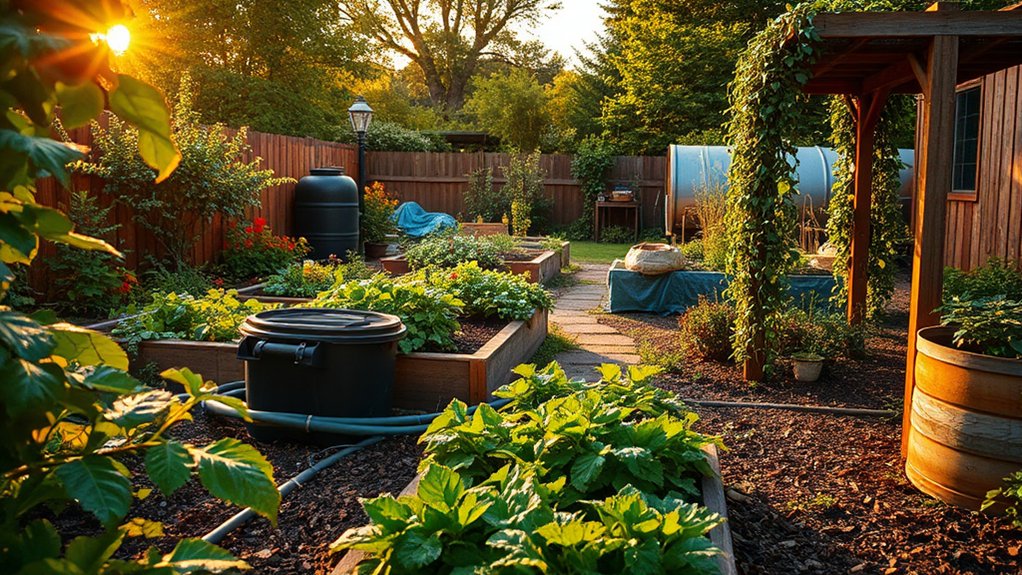

To boost resilience and beauty, start with sustainable design: zone for sun, shade, and wind, choose native, drought-tolerant plants, and group those with similar water needs. Build soil health with compost and mulch, then use rain capture and efficient irrigation, like drip lines. Embrace habitat-friendly practices—native plantings, pollinator habitats, and wildlife refugia. Maintain with targeted pruning, tools cleaned between uses, and seasonally appropriate mowing. You’ll see measurable gains in soil, water use, and biodiversity as you progress.
Key Takeaways
- Design with sun, shade, wind zones and native plants to reduce water use and maintenance while maximizing resilience and function.
- Build healthy soil through composting, mulching, and consistent management to improve texture, nutrients, and microbial life.
- Implement drought-resilient water practices: drip irrigation, mulching, soil moisture monitoring, and zoned watering networks.
- Support local ecology by planting natives, creating habitat features, and connecting pollinator corridors and wildlife refugia.
- Maintain sustainability-minded care: targeted pruning, natural pest control, seasonal mowing, and regular soil testing to guide amendments.
Start With Sustainable Gardening Foundations
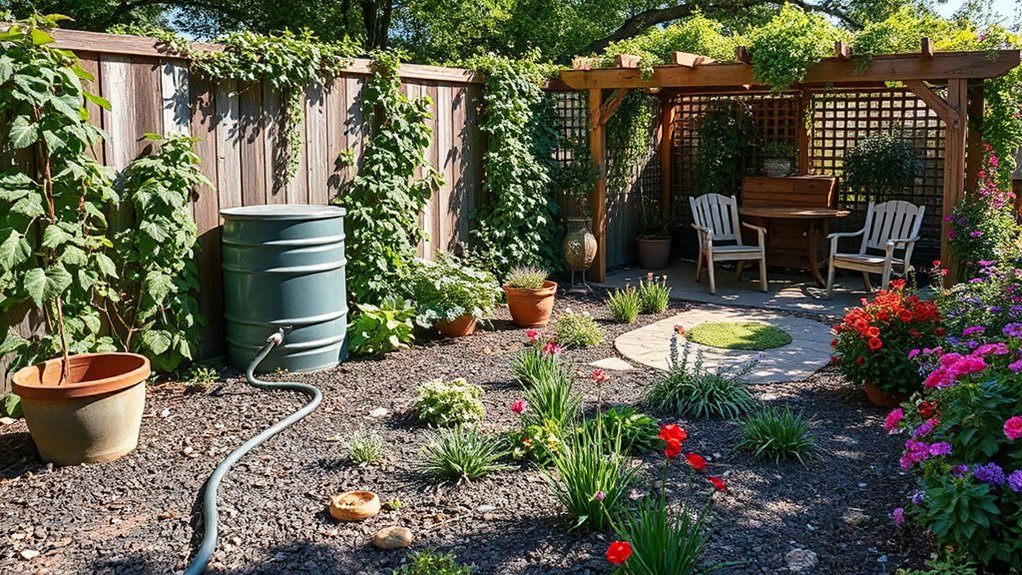
Starting with sustainable gardening foundations sets the tone for a thriving, low-impact landscape. You begin by outlining a practical garden design that minimizes resources while maximizing function. Define zones for sun, shade, and wind, and align plant choices with native conditions to reduce water use and maintenance.
Prioritize plant diversity to create resilience against pests and climate stress, selecting species with complementary bloom times and growth habits. Emphasize structural elements—paths, borders, and focal points—that guide movement and support microclimates.
Use rainwater capture, efficient irrigation, and seasonal planning to conserve inputs. Maintain clear records of plant performance to refine design decisions over time. You’ll build a cohesive, adaptable system that supports ecosystem services and delivers enduring beauty.
Build Soil Health With Composting and Mulching
Compost and mulch are your two fastest routes to soil health: compost feeds the soil biology and builds structure, while mulch shields nutrients and moisture. You actively build a robust foundation by composting kitchen scraps, leaves, and yard material, then monitoring C:N balance and aeration to accelerate decomposition.
Apply finished compost as a soil amendment to improve texture, nutrient availability, and microbial activity. Use mulch to conserve moisture, regulate soil temperature, and suppress weeds, keeping organic matter on the surface to feed soil life gradually.
Emphasize consistent input and timely turning for composting techniques that yield stable humus with minimal odor. For best results, layer materials and adjust thickness by season, ensuring mulch benefits promote steady root growth without suffocation.
Plant for Water-Wise, Drought-Resilient Growth
You’ll start by selecting water-wise plants that thrive in your climate, reducing irrigation while maintaining curb appeal.
Then apply drought-resilient growing strategies—drip irrigation, mulching, and thoughtful spacing—to boost resilience and conserve resources.
Water-Wise Plant Selection
Assess local climate, soil, and sun exposure, then match species to micro-sites to minimize stress. Consider drought tolerant species that establish quickly, resist pests, and provide year-round interest.
Incorporate native plants where possible to maximize ecological compatibility and reduce maintenance. Plan a diverse palette that thrives under seasonal rainfall patterns, with groupings that optimize irrigation efficiency through drip or mulch-based systems.
Emphasize structure with evergreen backbone plants and seasonal color accents. This approach aligns with xeriscape design principles, delivering beauty, function, and water conservation without compromising resilience.
Drought-Resilient Growing Strategies
Drought-resilient growth starts with a clear plan that builds on water-wise plant selection by prioritizing species, placements, and practices that conserve moisture while maintaining garden importance. You implement xeriscaping principles by grouping drought-tolerant plants with similar water needs and reflecting sun exposure, soil type, and microclimates.
Choose drought tolerant plants that thrive in your conditions, minimizing irrigation requirements without sacrificing color or structure. Water deeply but infrequently to encourage deep roots, and mulch to reduce evaporation and soil temperature.
Use efficient irrigation, like drip lines or soaker hoses, and schedule irrigation early morning or late evening. Incorporate resilient textures, edibles, and seasonal interest to sustain function with reduced water.
Regularly assess soil moisture, adjust strategies, and document outcomes for ongoing improvement.
Choose Native and Adaptive Species
Choosing native plants boosts your garden’s resilience and reduces maintenance because they’re already adapted to your region’s climate and soils.
Adaptive species support local ecology by providing appropriate habitat and food for native wildlife, while still meeting your design goals.
Start with a few well-chosen selections, then expand as you observe how they perform through seasonal changes.
Native Plants Benefit
Native plants that are well adapted to your region conserve resources, support local wildlife, and reduce maintenance. When you choose native plants, you align your garden with ecological balance, lowering irrigation needs and chemical inputs.
You’ll notice improved resilience to local pests and weather patterns because these species have evolved alongside regional ecosystems. This compatibility also simplifies your garden care, as plants thrive with natural soil and periodic pruning rather than frequent interventions.
By prioritizing native plants, you create habitat corridors that sustain pollinators and beneficial insects, contributing to a healthier yard and neighborhood.
Remember to select species that match sun, moisture, and soil conditions. In doing so, you maximize performance, longevity, and the environmental payoff of your landscape.
Adaptives Support Local Ecology
What you plant should actively support local ecology by aligning with native and adaptive species that thrive in your region. Choosing natives and adaptable cultivars strengthens local biodiversity, supplying habitats and food sources for indigenous pollinators and wildlife.
Prioritize species with documented performance in your climate, soil, and hydrology; this promotes ecological resilience against drought, pests, and extreme weather.
Diversify plantings across layers: canopy, understory, and ground cover, ensuring continuous resources for beneficial insects year-round.
Reduce irrigation and fertilizer inputs by leveraging deep-rooted natives that tolerate local conditions.
Avoid invasive look-alikes and monitor for unexpected spread.
Integrate habitat features—stone piles, log debris, and native grasses—to create refugia.
Regularly reassess plant success and replace underperformers with better-adapted choices.
Your landscape becomes a resilient, biodiverse, local ecosystem.
Prune Smartly for Longevity
Pruning with purpose extends a plant’s life and productivity, so start by removing only dead, diseased, or crossing branches to reduce stress and open light.
Pruning smartly protects structure, promotes vigor, and improves flowering if applied correctly. You’ll prune properly by selecting tools, cutting at the right node, and preserving strong leaders.
Use targeted pruning techniques that balance growth and form, avoiding over-thinning which can shock the plant.
- Pinpoint critical cuts to maintain shape and airflow
- Avoid heavy pruning during dormancy to reduce stress
- Clean tools between plants to prevent disease spread
Tackle Pests With Sustainable Methods
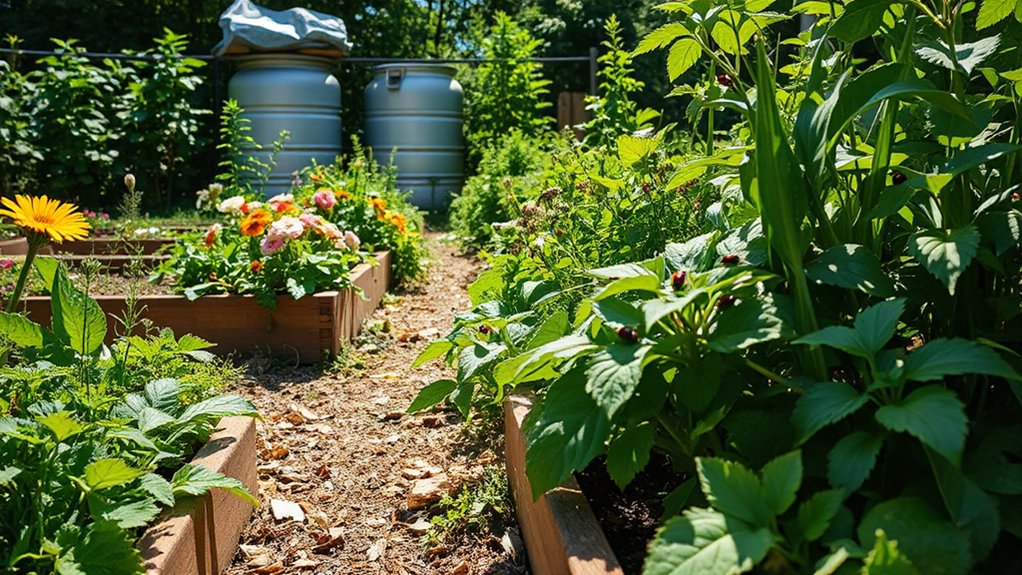
Tackling pests with sustainable methods starts with prevention and observation, then moves quickly to targeted, low-impact actions. You’ll create a resilient garden by monitoring regularly, spotting early signs, and correcting conditions that invite trouble.
Prioritize natural pest control: promote beneficial insects with diverse flowering plantings, avoid broad-spectrum sprays, and use pheromone traps sparingly to disrupt pest cycles.
When issues arise, act precisely: remove affected foliage, prune infested shoots, and isolate affected areas to prevent spread. Strengthen plant health through proper watering, soil life, and mulching to reduce stress.
Incorporate companion planting to deter pests and attract allies; plant lovers and aromatics near vulnerable crops.
Maintain a calm, systematic approach, document occurrences, and adjust strategies seasonally for sustainable, long-term protection.
Mow Less, Edge Clean, Groundcover Smart
Mow less, edge clean, and groundcover smart to keep your garden resilient and low-maintenance. You’ll reduce fuel, noise, and soil disturbance by trimming only when necessary and letting groundcovers fill gaps.
With strategic mowing, you expose healthier turf and improve water retention, while edges stay neat without harsh lines.
Groundcover smart choices suppress weeds, conserve moisture, and support beneficial soil life. This approach enhances durability during droughts and heavy rain, so your outdoor space remains inviting with less effort.
- Embrace seasonally appropriate mowing cadence to preserve root health
- Install durable groundcovers that require minimal maintenance
- Use clean edges to define beds without disruptive edging practices
Create Wildlife Habitats and Pollinator Corridors
Creating wildlife habitats and pollinator corridors isn’t optional—it’s essential for a resilient garden. You design with purpose, selecting native plants that flower across seasons to feed birds, bees, and butterflies.
Establish wildlife corridors by connecting natural areas to garden beds, hedgerows, and unmowed edges, enabling safe movement and genetic exchange.
Prioritize diverse layers: canopies, shrubs, and groundcovers that offer shelter, nesting sites, and foraging opportunities. Include a mix of nectar sources, seed producers, and larval hosts to sustain life cycles.
Install nesting boxes, brush piles, and bare-soil patches thoughtfully to minimize predation risk while maximizing availability.
Maintain soil health and water sources, ensuring drought-tolerant, pest-resilient plantings.
Aim for thriving pollinator gardens that extend benefits throughout your landscape and community.
Optimize Sun and Shade for Microclimates
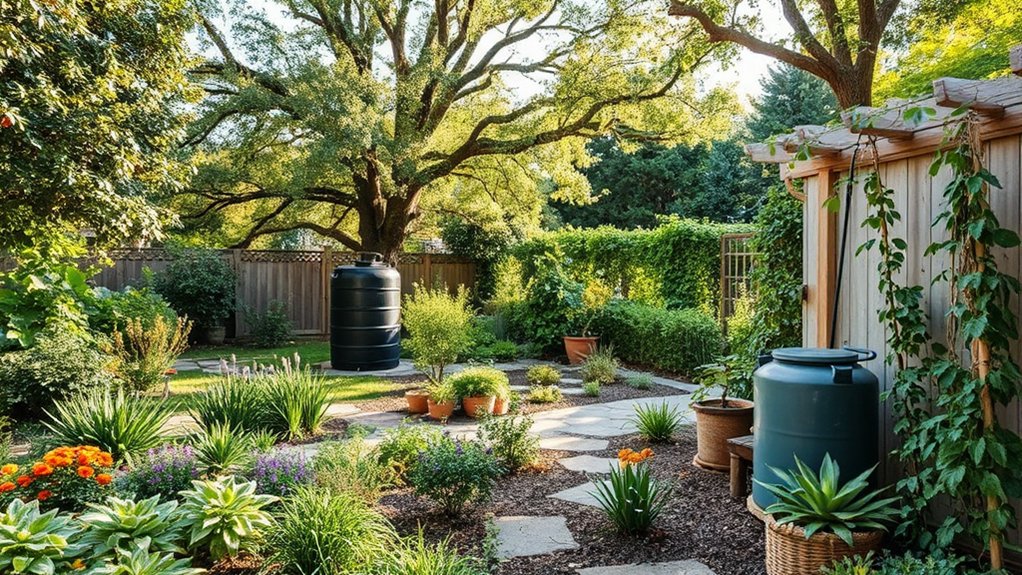
Begin by mapping sun exposure across your site, identifying full sun, partial shade, and clustering microclimates for precision planting.
Use shade pattern insights to align plant needs with available light, and to plan shading strategies that protect heat-sensitive species.
Integrate microclimate management strategies to optimize water use, soil temperature, and seasonal sun shifts for healthier, more resilient landscapes.
Sun Exposure Mapping
- Identify sun patterns by hour to reveal true light levels
- Map microclimates to match species with light needs
- Use ongoing exposure analysis to refine layouts
Shade Pattern Insights
Shade patterns reveal how sun and shade shift across your garden, so you can align plant choices with microclimates rather than generic expectations. You’ll map shade pattern changes throughout the day and seasons, identifying spots that receive filtered light or prolonged darkness.
By tracking sunlight distribution, you’ll predict which areas support drought-tolerant shrubs, shade-tolerant perennials, or sun-loving edibles at specific times. Observe how nearby structures, trees, and fences alter exposure, creating nuanced pockets of intensity.
With this insight, you optimize bed placement, container grouping, and irrigation pacing to match each microclimate. Prioritize progressions between light and shade to minimize stress on sensitive species.
This approach reduces waste, boosts performance, and yields a resilient, visually cohesive outdoor space.
Microclimate Management Strategies
To optimize sun and shade across your microclimates, map each area’s daily and seasonal light shifts and tailor plantings and irrigation accordingly. You’ll create distinct microclimate zones that respond to sun exposure, wind patterns, and moisture demands.
Ensure pruning, mulch, and irrigation align with each zone. Use wind protection strategies to buffer exposed edges and deploy reflective surfaces to modulate light intensity where needed.
With precise placement, select drought-tolerant varieties for hot spots and shade-loving species for cooler pockets, optimizing overall garden performance and resilience.
Monitor outcomes, adjusting irrigation timing and mulch depth as days lengthen or shorten.
- Identify microclimate zones and tailor plant choices
- Implement targeted wind protection and sun exposure adjustments
- Schedule proactive maintenance for consistent performance
Install Watering Systems and Capture Rain
Installing a reliable watering system and capturing rain dramatically lowers water waste and guarantees consistent moisture for your garden. This is achieved by choosing a layout that fits your space, climate, and plant needs.
You’ll design a thoughtfully zoned network, prioritizing essential beds and containers, so every drop counts.
Opt for rain harvesting with sturdy gutters, filters, and a storage tank sized to your rainfall patterns, ensuring a steady supply during dry spells.
Implement drip irrigation to deliver moisture directly to roots, reducing evaporation and leaf disease risk.
Use adjustable emitters and soil moisture sensors to fine-tune delivery, avoiding overwatering.
Regularly inspect connections, anticipate seasonal shifts, and integrate the system with existing irrigation controls for efficient, reliable performance.
Weekend-Friendly Sustainability Tweaks You Can Do Now
After setting up a reliable watering system and rain capture, you can take a few weekend-friendly steps that keep sustainability real and practical. You’ll optimize space, reduce waste, and boost soil health with intentional, repeatable actions. Focus on quick wins that pay off over time, using proven methods without complexity.
Urban composting turns kitchen scraps into nutrient-rich amendments, cutting landfill burden and enriching beds. Pair this with Organic fertilizers, applied sparingly and according to need, to maintain balanced nutrition.
By prioritizing compact tasks, you’ll sustain momentum and demonstrate measurable impact.
- Start a small compost bin and manage it weekly
- Apply composted material and organic fertilizer in targeted beds
- Schedule monthly soil checks to guide adjustments
Measure Progress: Soil, Water, and Biodiversity Trends
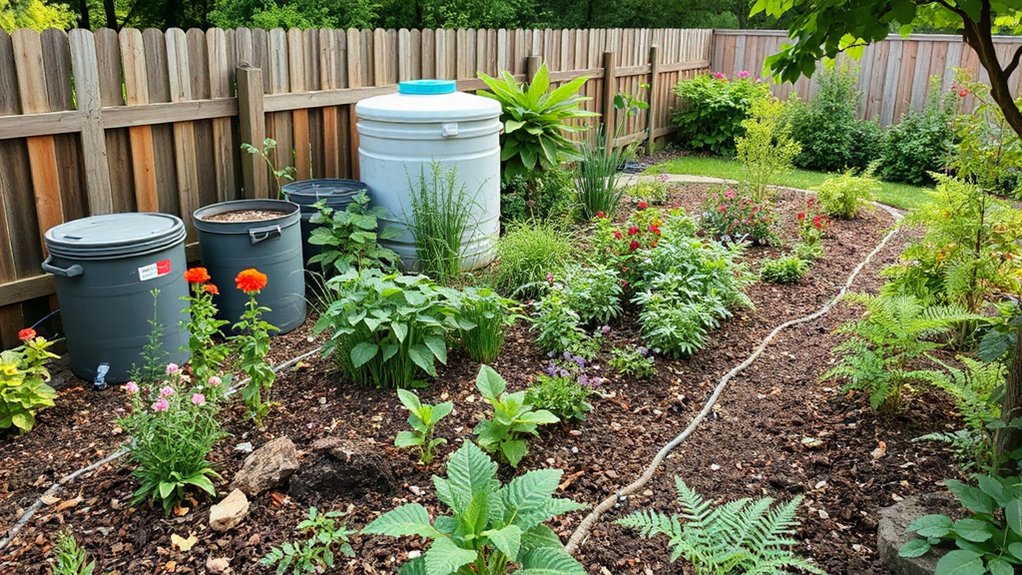
Measuring progress is about turning results into actionable adjustments for soil, water, and biodiversity. You’ll track changes with concise metrics rather than broad impressions, focusing on practical outcomes.
Start with soil testing at regular intervals to gauge nutrient balance, structure, and organic matter; use the results to fine‑tune amendments and planting strategies.
Monitor water use through rainfall records, soil moisture checks, and irrigation efficiency to prevent waste while sustaining plant health.
For biodiversity monitoring, note species presence, pollinator activity, and habitat quality, then adjust plant selections and habitat features to support resilience.
Document trends month to month, compare against targets, and implement small, iterative changes.
This disciplined approach strengthens soil *crucial* , conserves water, and enriches garden diversity over time.
Frequently Asked Questions
How Can I Start a Compost System in a Small Yard?
To start a compost system in a small yard, choose a compact bin, place it in shade, and balance browns and greens. Composting for beginners works best when you monitor moisture, aerate weekly, and optimize compost bin placement.
What Are Budget-Friendly Mulch Options for Beginners?
You plant a thrifty mulch garden, like a careful beehive, using organic amendments and affordable options. You save money, deter pests, and feed soil; you’ll master pest control, while mulch breathes life into your yard.
Which Native Plants Tolerate Both Sun and Shade?
You’ll want native plant selection that shows sunshade adaptability; seek species thriving in both conditions. You’ll compare drought tolerance, soil needs, and bloom cycles, choosing versatile contenders to create resilient, seasonally dynamic landscapes you can proudly maintain.
How Can I Measure Biodiversity Without a Lab?
You can measure biodiversity without a lab by conducting habitat assessment and wildlife observation, noting species variety, abundance, and behavior; compare seasonal changes, track indicators like pollinator visits, and document habitat quality to infer ecosystem health with confidence.
What’s the Easiest Way to Rainwater Harvest at Home?
Rainwater collection is easiest: set up a barrel with a lid and overflow, connect a hose, and you’re harvesting. You’ll save water daily; Water saving tips abound, and you’ll feel like a watering pro.
Conclusion
You’ve planted the seed of stewardship; now let your garden grow as a compass, not a cage. With composted wisdom circulating like a quiet river, and drought-resilient choices anchoring every bed, you’ll sculpt a landscape that sips gently from rain and sun. Prune with purpose, tune microclimates, and let native vigor lead. Track its heartbeat in soil and streams, and watch biodiversity bloom where effort becomes habit. Sustainable gardening isn’t a project—it’s a practiced philosophy you live outside.