


Smart homes fuse sensors, automation, and intelligent controls to cut energy use, boost security, and simplify daily living from a single interface. You’ll gain centralized control, reliable routines, and real-time alerts across security, lighting, climate, and appliances. Choose platforms with open standards like Matter and Zigbee for future-proof interoperability, while prioritizing local control and solid security. Budget for upfront hardware, installation, and ongoing upkeep, then measure ROI from energy savings and productivity gains. If you keep exploring, you’ll learn how to design a scalable, private system.
Key Takeaways
- Smart homes centralize control, automation, and monitoring to boost safety, comfort, and energy efficiency.
- Platform choice matters: ensure interoperability, strong security, and scalable ecosystems (Matter, Zigbee, Z-Wave, Wi‑Fi).
- Design with future-proofing: modular components, open APIs, and clear data governance for long-term flexibility.
- Key must-have devices include security sensors, cameras, smart lighting, climate control, and energy monitors.
- Privacy and security require data minimization, robust access controls, transparent policies, and regular security audits.
What a Smart Home Delivers: Core Benefits and Real Use
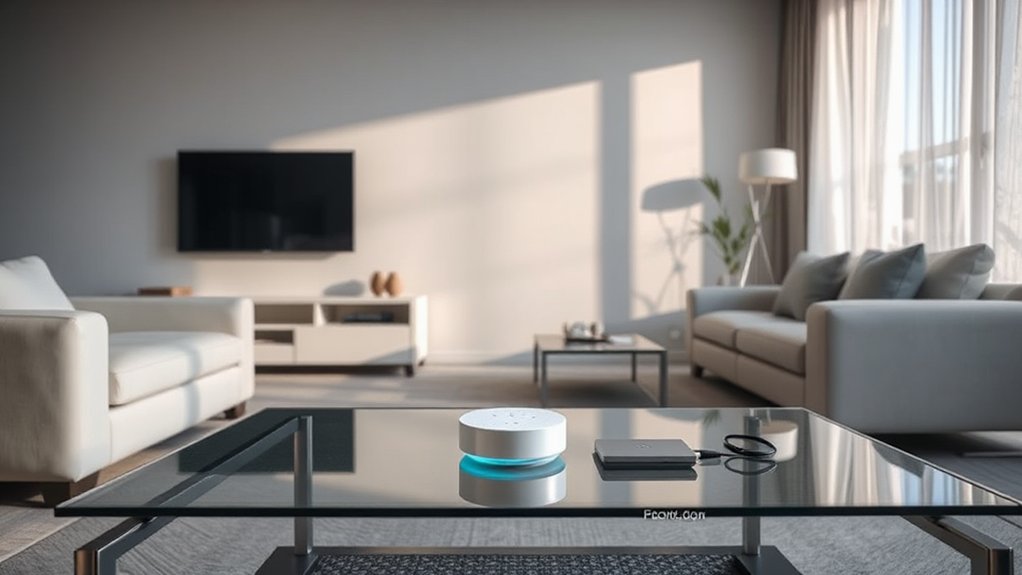
Smart homes deliver tangible benefits by streamlining everyday tasks and enhancing safety, comfort, and efficiency. You gain centralized control over routines, automation, and monitoring, reducing manual steps and human error.
Core benefits include energy management, security, and convenience, delivered through reliable sensing, messaging, and actuation systems. You’ll experience improved comfort via adaptive climate and lighting, while safety features—alerts, access control, and fault detection—mitigate risks.
Real-use scenarios demonstrate measurable outcomes: lower energy bills, faster incident response, and consistent user experiences across rooms and devices.
Focus on interoperability, ensuring smooth device integration and predictable performance. The framework supports Smart energy optimization, load balancing, and demand response without compromising reliability.
As you scale, you’ll preserve privacy, maintain control, and sustain system integrity.
Choose Your Platform: A Simple Decision Framework
Start by identifying your platform selection criteria, focusing on device interoperability, data security, and ease of automation.
Check ecosystem compatibility with your existing devices and preferred cloud services.
Then assess how well newcomers will fit long-term needs.
Finally, emphasize future-proofing by evaluating roadmap clarity, update frequency, and compatibility with upcoming standards.
Platform Selection Criteria
Choosing a platform is a decision that hinges on your ecosystem needs, device compatibility, and long-term maintenance goals. You’ll assess core criteria that determine reliability and scalability.
Start with interoperability: guarantee your chosen platform supports your primary devices, sensors, and hubs without excessive adapters.
Next, security and privacy: verify encryption, access controls, and update cadences to minimize exposure.
Performance matters: look for responsive automation, predictable latency, and robust scheduling.
Consider AI integration and voice control capabilities, evaluating natural language processing quality, scene handling, and multi-user access.
Platform maturity and support are non-negotiable: review vendor roadmaps, frequency of firmware updates, and community ecosystems.
Finally, data governance and monetization terms influence long-term costs and flexibility.
A clear decision framework reduces fragmentation and speeds modernization without compromising control.
Ecosystem Compatibility Check
How compatible is your ecosystem? You approach compatibility as a measurable constraint, not a guess.
Start by mapping core devices, apps, and hubs you rely on, then verify vendor interoperability statements and supported protocols (Matter, Zigbee, Z-Wave, Wi‑Fi).
Prioritize platform-native routines over third-party bridges to reduce latency and failure points.
Assess control reliability across voice control and mobile interfaces, noting which ecosystems offer native wake words, routines, and secure pairing.
Check data handling and API access for automation, ensuring consistent event triggers and state reporting.
Consider energy analysis capabilities: plan for centralized telemetry, granular energy dashboards, and export options.
Confirm update cadence and backward compatibility, and document any known integration caveats.
This keeps your setup predictable, scalable, and resilient.
Future-Proofing Your Choice
To future-proof your platform choice, focus on scalability and long-term support baked into the ecosystem. You’ll judge APIs, device discovery, and update cadence, prioritizing standards that resist obsolescence.
Favor modular architectures that let you replace components without rewiring your setup. Assess vendor roadmaps for backward compatibility, security fixes, and formal deprecation flags.
Evaluate AI integration pathways and data governance—ensure models can be retrained or swapped without fragmenting control. Consider openness to third‑party integrations and interoperability across protocols, ensuring you can add devices as needs evolve.
Energy optimization should be a design constraint, with built‑in analytics and automation that persist as ecosystems mature.
Finally, quantify total cost of ownership, including migration efforts, to avoid future lock‑in and preserve flexibility.
Must-Have Devices by Use Case: Security, Comfort, and Efficiency
Smart homes require a clear set of must-have devices organized by use case: security, comfort, and efficiency. You’ll choose core security sensors (door/window contact sensors, motion detectors, a unified alarm hub) and integrate them with robust video surveillance and a fail-safe alert system.
For comfort, prioritize voice automation interfaces, smart lighting, climate control, and occupancy-aware shades that respond to presence and schedules.
Efficiency hinges on energy monitoring, smart plugs, thermostats, and appliance-aware controls that optimize runtime and demand response.
Guarantee interoperable ecosystems, local control options, and secure cloud fallbacks. Prioritize scalable networks and firmware updates to reduce risk.
These choices create resilient, responsive environments that minimize effort, maximize safety, and cut operating costs.
Privacy First: Protecting Your Smart Home Data
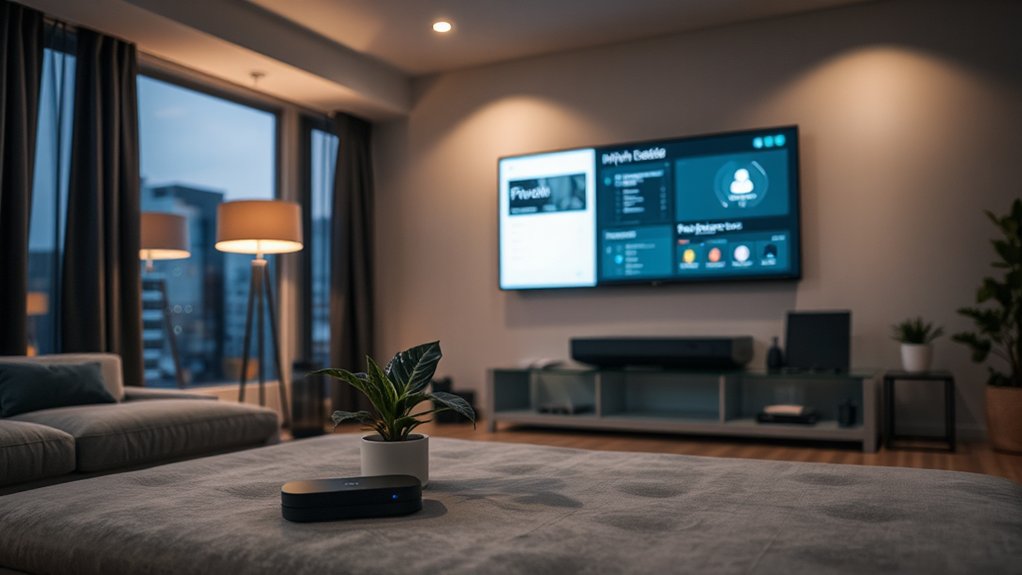
To protect your smart home, start with data minimization by collecting only what’s necessary and retaining it for the shortest practical period.
Build a secure network architecture that segments devices, enforces strong authentication, and monitors for anomalies.
Communicate clear, transparent data policies so you know what’s collected, how it’s used, and how you can control or delete it.
Data Minimization Practices
Data minimization is a foundational privacy practice for smart homes: collect only what you need, store it briefly, and delete it when it’s no longer necessary. You implement least-privilege data collection, restrict telemetry to essential signals, and enable automatic purge after defined retention windows.
You should document data flows, map storage locations, and disable unused features that generate unnecessary data. Emphasize data privacy by design, not after the fact, and require explicit user consent for any nonessential collection.
You configure devices to anonymize or pseudonymize data where possible, and apply strict access controls to minimize exposure. You prioritize user control, offering clear options to review, export, or delete data.
Finally, you audit for compliance, enforce retention limits, and terminate data sharing when no longer warranted.
Secure Network Architecture
A secure network architecture forms the backbone of privacy-first smart homes by preventing unauthorized access and limiting data exposure across devices. You implement a disciplined, defense-in-depth approach that minimizes attack surfaces and enforces strict access controls.
Wireless encryption and robust authentication protect each link, while network segmentation confines breaches to isolated segments, preserving overall integrity. You monitor traffic, patch gaps, and enforce least-privilege permissions to reduce exposure risk.
- Visualize isolated zones: IoT devices in their own segment, wired and wireless paths guarded by strong keys.
- Picture encrypted channels: end-to-end protection across hubs, cameras, sensors, and controllers.
- Envision centralized policy: consistent rules, audit trails, and rapid revocation across your ecosystem.
Transparent Data Policies
Data transparency means you can trace sources, purposes, retention periods, and access controls for every device and service. Your privacy policies must spell out data-sharing boundaries with third parties, including analytics providers and manufacturers, plus options to opt out of nonessential processing.
Confirm automated processing can’t infer sensitive attributes without justification. Examine breach notification timelines, user rights, and cash-value recommendations for data deletion or portability.
Regularly review updates to terms and conditions, and insist on verifiable encryption, secure APIs, and auditable security reviews to sustain trusted operations.
Standards to Watch: Zigbee, Matter, and Interoperability
Standards like Zigbee and Matter shape how devices from different brands work together, so interoperability isn’t an afterthought but a design priority. You’ll rely on wireless standards that enable cross-brand communication, reducing setup friction and enhancing reliability.
Matter, in particular, aims to unify ecosystems, while Zigbee provides proven mesh networking for scalable coverage. When evaluating products, prioritize certification status and interoperability guarantees to avoid silos.
This discipline minimizes latency, improves security, and accelerates updates across devices.
- Picture a living room where lights, sensors, and speakers sync seamlessly as you move through a home.
- Imagine a mesh network that expands gracefully, maintaining strength from hallway to bedroom.
- Visualize frequent firmware updates delivering security patches without user intervention.
Design for Simplicity: A Scalable Setup Plan
Interoperability from the previous topic sets the stage for a scalable setup plan you can actually deploy. You design for simplicity by selecting a minimal, modular core: a reliable hub, standardized protocols, and single-point control.
Prioritize a top-down architecture that scales without reengineering—start with essential devices, then layer add-ons via open APIs.
Emphasize energy management through centralized schedules, occupancy awareness, and power-usage analytics that respect privacy.
Build a configuration that reduces manual tweaks: templates, presets, and automated routines that are easy to copy across rooms.
Guarantee you maintain a clean user experience by avoiding feature bloat; keep interfaces consistent and responsive, with clear feedback.
Document integration steps, test failure modes, and update paths to preserve long-term reliability.
Smart Home Budgeting: Costs, Savings, and ROI

Smart home budgeting boils down to balancing upfront costs with long-term savings and measurable ROI. You’ll perform a cost analysis that captures hardware, installation, and integration fees alongside ongoing maintenance.
Then you quantify savings from energy efficiency, reduced labor, and enhanced productivity to estimate investment return over time. This disciplined approach helps you avoid overprovisioning and align features with use cases.
- Upfront investment versus projected energy and maintenance savings across a 5–10 year horizon.
- System interoperability costs weighed against incremental efficiencies and resilience benefits.
- Tax incentives, rebates, and depreciation that improve your net ROI and payback period.
Setup and Troubleshooting: Quick Wins and Pitfalls
To set up a connected system efficiently, start with a focused plan that prioritizes core functions, reliable devices, and known compatibility. You’ll establish a baseline configuration that minimizes cross‑vendor friction and preserves update paths.
Begin with a single hub or ecosystem you trust, then layer compatible devices that share a common protocol. Prioritize clear naming, consistent rooms, and automated routines that are testable in a single pass.
When troubleshooting, isolate components: confirm network reach, firmware versions, and cloud service status before hardware swaps. Use logs and diagnostic modes to identify failures quickly, and document successful settings for future replication.
For voice control and energy management, ensure routines are idempotent and securely authenticated, reducing unintended triggers and energy waste. Avoid over‑reliance on third‑party bridges.
Future-Proofing Your Home: Upgrades and Migration Paths
Upgrading a home now means planning for compatibility, scalability, and ongoing support, so you can preserve value without rebuilding uncoverable tech debt. You’ll map migration paths that balance current needs with future standards, prioritizing modular components and open interfaces.
Focus on energy management to optimize consumption and reduce costs, while preserving a seamless user experience across devices and platforms. Implement predictable software lifecycles, secure update channels, and documented change logs to minimize disruption during upgrades.
- Plan for interoperable hubs and standards-driven devices that simplify transitions and preserve energy management gains.
- Schedule staged firmware and firmware-free upgrades that maintain user experience without downtime.
- Align vendor roadmaps with your long-term needs, ensuring data portability, privacy, and sustainable migration.
Frequently Asked Questions
How Secure Are Smart Home Devices Against Hacking?
Smart home devices are reasonably secure, but vulnerabilities exist. You reduce risk by enabling device encryption, applying firmware updates promptly, using strong, unique passwords, and isolating IoT devices on a separate network to limit attacker movement.
Can I Mix Brands and Still Have a Unified System?
Yes, you can mix brands and still have a unified system. Coincidence highlights your setup’s limits: guarantee device compatibility and seamless Brand integration across hubs, apps, and routines to avoid fragmentation and maintain centralized control.
Do Voice Assistants Record or Share My Data?
Voice privacy varies by device, but you should assume it can record; data sharing occurs with providers and partners. You control settings, review permissions, and disable always-on features to minimize exposure while maintaining functionality.
What Happens if the Platform Fails or Outages Occur?
In a tone of concise certainty, you’ll rely on platform reliability during outages and engage outage recovery protocols. When outages hit, you stay informed, switch to backups, and follow official guidance to restore service and maintain security.
Are There Hidden Costs After Initial Setup?
Yes—there can be hidden costs after initial setup. You’ll face ongoing subscriptions and potential hidden fees for premium features, cloud storage, or firmware updates, so budget for maintenance, service tiers, and compatibility checks over time.
Conclusion
To conclude, you’ve explored a smart home path that’s mostly straightforward, with small compromises in complexity. You’ll gain convenience and efficiency, yet you’ll trade occasional setup quirks for a smoother future. Start simple, scale thoughtfully, and respect privacy as a quiet priority. Interoperability matters, but keep a measured pace to avoid overreach. Plan, monitor, and evolve—embrace gradual upgrades while avoiding speculative leaps, so your home remains reliable, secure, and quietly capable.