
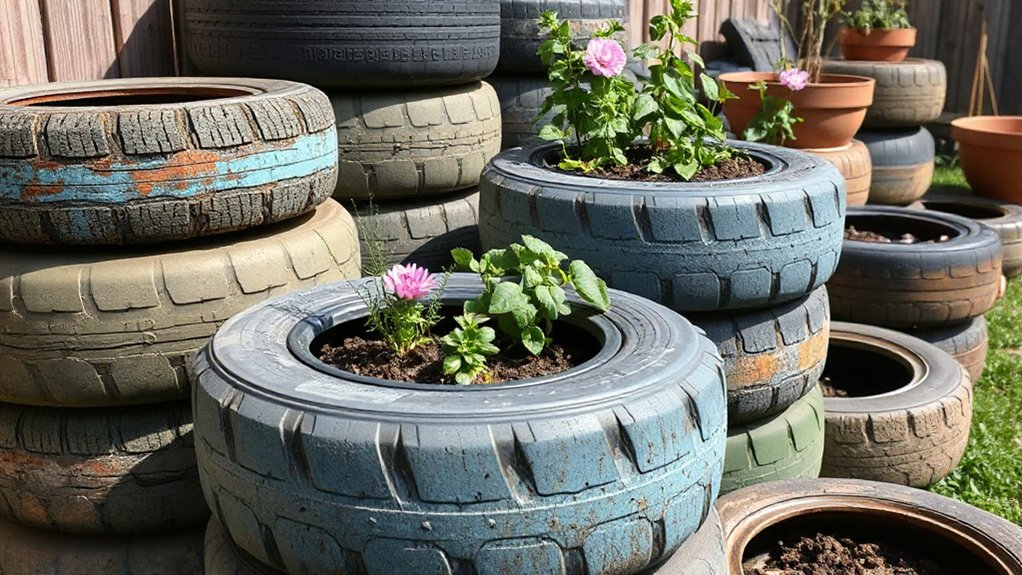

Upcycling tyres into garden planters is cost-effective and eco-friendly. Start by choosing durable tyres with good sidewalls, and prep surfaces with sealants to prevent leaks. Drill drainage holes, add gravel, and use a well-draining potting mix. Clean, dry tyres and apply a weatherproof finish for longevity. Select sun-loving, drought-tolerant plants and tailor size to space. Maintain safety during setup and regular inspections. If you want more practical steps and design ideas, you’ll find them here.
Key Takeaways
- Upcycling tyres into garden planters saves waste, lowers costs, and extends material life by repurposing durable rubber for gardens, schools, and urban farming.
- Select tyres with minimal weathering, durable materials, and proper size to suit plant types and space, ensuring good drainage.
- Prepare surfaces with moisture barriers, seal seams, drill drainage holes, and apply weatherproof coatings for durability and aesthetics.
- Use well-draining soil mixes, layered drainage, and regular moisture monitoring to prevent waterlogging and promote healthy roots.
- Choose suitable plants (drought-tolerant herbs, compact greens, sun-loving annuals) and maintain planters with secure mounting and seasonal care.
Why Upcycle Tyres for Planters?
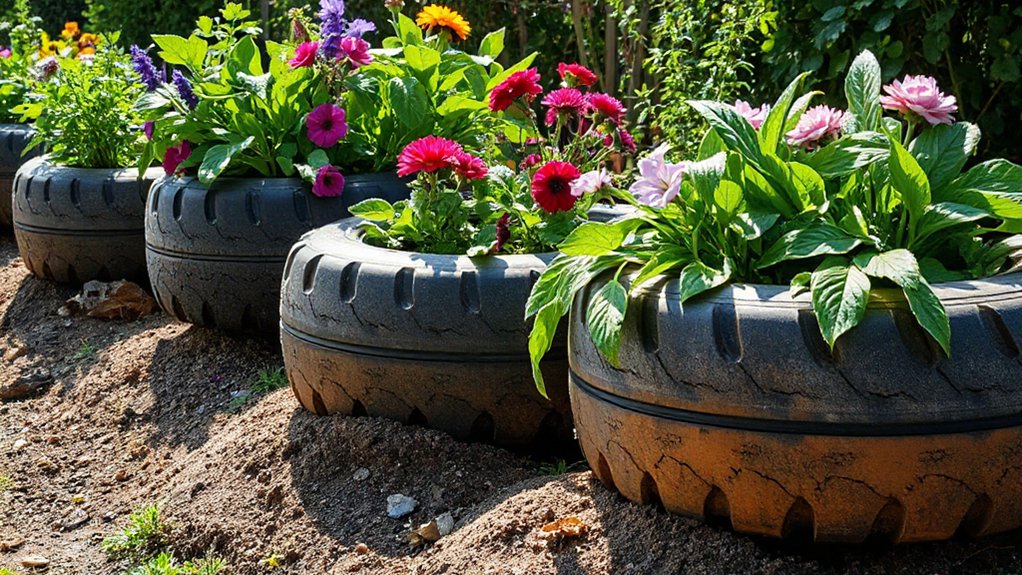
Upcycling tyres into planters saves money and reduces waste. You’ll see why this approach matters when you consider historical context: tyres, once discarded as junk, became resources in gardens, garages, and schools.
By choosing upcycling, you honor the lifecycle of materials that would otherwise end in landfills or incinerators. You gain immediate environmental impact benefits as well: you divert durable rubber from waste streams, minimize new materials, and cut production emissions linked to traditional planters.
Practically, tyres provide sturdy, weather-resistant containers you can stack, cut, or embellish to suit various spaces. You control costs, reuse existing items, and tailor sizes to your crops.
This isn’t just frugality; it’s a deliberate, efficient strategy for sustainable gardening.
Safety: Cleaning, Disinfecting, and Sealing Tyres
Before you repurpose tyres for planters, clean and disinfect them thoroughly to remove dirt, oils, and contaminants. Then seal them to protect plants and extend usefulness.
In this safety step, you proactively manage residue and potential pathogens so your Tyre recycling project stays healthy. Wear gloves and work in a ventilated area when applying cleaners, and follow label directions to avoid fumes or skin irritation.
Rinse thoroughly and let surfaces dry before sealing with an appropriate sealant designed for repeated outdoor exposure. Select a sealant compatible with soil and plants to minimize chemical transfer.
Regularly inspect edges for cracking or peeling, re-sealing as needed to maintain garden aesthetics and longevity. Prioritize clean, stable containers to support safe, durable Tyre recycling outcomes.
Pick the Right Tyres for Planters
Choose tyres with durable materials that resist cracking and weathering, so your planters stay sturdy season after season.
Make sure the tyre size and depth suit your plant choices and space, providing enough soil for healthy roots.
Prioritize safety and ventilation by selecting tyres with proper drainage and avoiding airtight configurations.
Tire Material Durability
Choosing the right tires hinges on material durability: you want cores that resist cracking, tearing, and UV-induced degradation so planters last season after season. In this section, you’ll evaluate tire compounds and construction for longevity, emphasizing how steady performance reduces replacements and waste.
Look for solid sidewalls, reinforced treads, and minimal aging signs like stiffening or weathering, which signal superior resilience in outdoor conditions. Prioritize Eco friendly materials and formulations that resist ozone and heat cycling, extending the planter’s life without frequent turnover.
Consider puncture resistance when filling with soil and plants, since structural integrity matters beneath weight and moisture. Recycling benefits arise when you choose durable tires, lowering disposal needs and supporting circular practices in your garden.
Size and Depth Fits
Size and depth matter more than you might think when turning tires into planters. You’re selecting sizes that support plant roots while matching your space, so choose wide, low tires for shallow-rooted species and tall tires for deeper roots.
Consider your climate; deeper containers retain moisture longer, reducing watering frequency. If drainage is weak, add a layer of gravel or broken ceramic before soil to prevent saturation.
When stacking or cutting, preserve structural integrity and avoid sharp edges that could injure plants or hands.
For garden aesthetics, mix tire colors or paint surfaces sparingly to fit surrounding decor without overpowering the display.
Embrace Tyre recycling as a practical, stylish choice, aligning functionality with environmental responsibility while keeping planters stable and visually balanced.
Safety and Ventilation
When picking tyres for planters, prioritize material peace of mind and practical airflow. You’ll want tyres with intact sidewalls and minimal cracks, reducing chance of leakage or collapse as soil settles.
Avoid asbestos-containing or heavily treated treads; instead, select durable, clean tyres to curb contaminants.
Ventilation matters: drill or peg small drainage holes low in the tyre walls, and consider puncture‑free vents to prevent waterlogging and root rot.
Pair adequate drainage with breathable potting mix to support healthy roots and steady moisture.
Mind the garden aesthetics: uniform tyre sizes look neater, while painted or textured finishes can enhance the display without compromising function.
Keep safety in mind during upcycling and disposal, supporting tire recycling where possible to close the loop.
This approach aligns sustainability with practical, long‑term use.
Tyre Size and Shape Options for Planter Designs
Selecting the right tyre size and shape is crucial for stable, durable planters. You’ll choose dimensions that match your space, plant needs, and weight expectations, ensuring safety and longevity. Use larger tyres for shrubs or multi-year herbs, and smaller ones for compact beds or decorative borders.
Shape options—flattened, stacked, or cut and joined—affect drainage, aeration, and visual appeal, so align with your garden aesthetics while maintaining balance. Consider rim cutouts for drainage, or bevels for seating areas, to maximize use without compromising structure.
When planning, think about stability on varied surfaces and the loading capacity of each tyre. Tyre recycling is most effective when you design for reuse, not disposal, preserving resources and minimizing waste.
Your approach reflects practicality, durability, and style.
- Size-to-purpose alignment for stability
- Shape variations tailored to plants
- Drainage and aeration considerations
- Aesthetics and cohesion with surroundings
- Reuse principles and long-term care
Prep the Surface: Stopping Rot and Leaks
To prep the surface, start with solid sealing techniques to curb rot and leaks before you paint or line.
Use reliable sealants and primers suited for tyres, and apply evenly to create a moisture barrier.
Keep leak prevention methods simple and durable so the planter stays dry and long-lasting.
Surface Sealing Techniques
Sealing the surface is essential to prevent rot and leaks before you transform a tyre into a planter. You’ll prep, then seal, and guarantee long-term durability with precise steps and sturdy materials. Focus on clean, dust-free edges and consistent coverage for reliable paint adhesion and a solid base.
- Choose a breathable, water-resistant sealant compatible with the tyre material
- Apply a primer to improve paint adhesion and reduce chances of peeling
- Fill seams with flexible caulk, smoothing for a seamless surface
- Use multiple thin coats rather than one thick layer
- Allow complete curing between steps and test for leaks before planting
Leak Prevention Methods
After prepping the surface, you’ll focus on stopping rot and leaks to keep your tyre planter durable. Begin with a robust waterproof liner, cut to fit, then seal all seams with flexible, weatherproof sealant.
A quality primer helps coatings adhere and reduces peeling, while a topcoat offers UV resistance and colorfastness.
Drill drainage holes strategically and add a gravel layer to prevent capillary wicking.
Use a breathable, rot-resistant substrate and avoid overwatering by monitoring moisture.
Apply an underseal or epoxy barrier for extra protection where the tyre contacts soil.
This approach supports creative design without sacrificing function, preserving aesthetic appeal through seasons.
Regular checks for cracks or corrosion keep leaks at bay and extend the planter’s lifespan.
Soil Mix and Drainage for Tyre Planters
Choosing the right soil mix and ensuring proper drainage are key to healthy tyre planters. You’ll want a balanced blend that retains moisture yet drains quickly, supporting robust root growth without soggy bottoms.
Use a base of high-quality potting mix, add compost for nutrients, and mix in perlite or coarse sand to improve aeration. For heavy tyres, include a small amount of river gravel to aid drainage and prevent compaction over time.
Consider soil composition that supports long-term fertility without frequent repotting. Pair this with a reliable drainage system: drill drainage holes, cap the bottom with mesh, and place each tyre on a tray or tray liner.
Regularly monitor moisture, staying alert to signs of waterlogging or drying out. Drainage systems keep roots thriving.
Watering Strategies for Tyre Planters
Watering Tyre Planters: Given the soil mix and drainage you’ve set up, you’ll want a strategy that keeps roots evenly moist without staying soggy. Start with a baseline watering frequency tailored to season and plant type, then adjust as needed after observing soil moisture.
In hot summers, you may increase frequency slightly, but always guarantee surface dries between sessions to prevent mold.
Use a layered irrigation approach: consistent moisture at the root zone while avoiding surface saturation. Drip irrigation is ideal here—install a low-flow line or emitter near the plant base to minimize evaporation and water waste.
Pair your system with a simple moisture meter to verify targets, and fine-tune timings for reliable, efficient hydration across your tyre garden.
Plants That Thrive in Tyre Planters
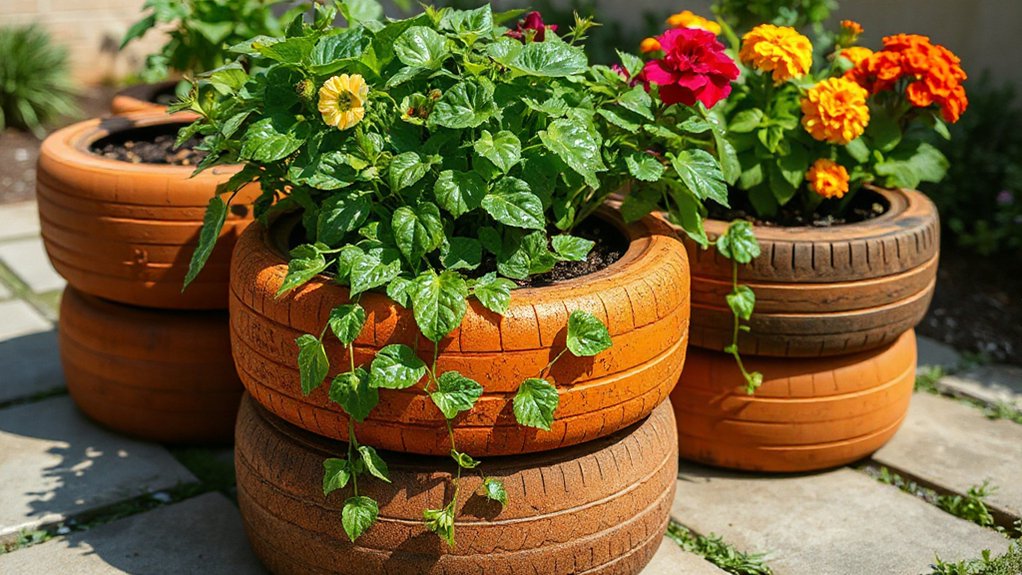
What plants excel in tyre planters, and why? Tyre planters suit compact, sun-loving varieties that tolerate heat and limited root depth. Choose drought-tolerant herbs and hardy ornamentals, plus leafy greens with shallow roots.
Succulents and Mediterranean herbs thrive, while flowers add cheap color with low maintenance. For wildlife-friendly curb appeal, mix perennials that self-seed and attract pollinators, aiding wildlife habitats. Yet, keep pest control in mind by rotating species and avoiding overcrowding.
Guarantee drainage is clear and soil stays breathable, preventing root rot. Mulch lightly to conserve moisture without suffocating roots, and group plants by moisture needs.
- Drought-tolerant herbs (rosemary, thyme)
- Compact lettuce and greens
- Sun-loving annuals (marigolds, alyssum)
- Sedum and small sedges
- Pollinator-friendly perennials
Note: This content avoids vertical wall discussion.
Vertical Tyre Planters: Building a Green Wall
To build a secure vertical display, choose mounting methods that suit your wall type and weight, and test for stability before adding plants.
Plan a soil and drainage setup that stays lightweight yet retains moisture, using well-draining mix and visible drainage paths.
Start with a simple, scalable layout that you can expand as your green wall grows.
Secure Mounting Methods
Secure mounting is essential when creating vertical tyre planters to build a reliable green wall. You’ll want sturdy anchors that suit your wall type, distributing weight evenly and preventing sag. Use corrosion-resistant brackets, heavy-duty screws, and wall plugs rated for outdoor use.
Planter offsets should be secured to avoid shifting with wind or irrigation runoff. Consider internal reinforcement inside each tyre for enhanced rigidity and safety. Regularly inspect fasteners and replace any worn components to maintain garden aesthetics and long-term durability.
Position units to permit easy watering access without compromising stability.
- Choose compatible fasteners for your wall material
- Use internal bracing inside tyres for extra strength
- Seal edges to prevent moisture damage
- Plan irrigation drainage to reduce weight
- Schedule seasonal checks for wear and tear
Tyre recycling and garden aesthetics drive practical, lasting results.
Soil and Drainage Setup
Choosing the right soil and ensuring proper drainage are essential for healthy, long-lasting vertical tyre planters. You want a balanced mix that supports root growth while preventing waterlogging.
Start with a base of high-quality potting mix, then add compost for nutrients and organic matter that improves soil structure.
For soil composition, aim roughly 60% aerated medium, 30% compost, and 10% coarse perlite or coconut coir to enhance drainage.
Layer drainage material at the bottom, such as crushed charcoal or gravel, to prevent soggy pockets.
Water retention matters, but avoid compacting the media; keep it loose enough for roots to penetrate.
Test drainage by watering; if excess water pools longer than a minute, adjust the mix.
Regularly refresh the topsoil and monitor moisture to sustain the green wall.
Tiered Tyre Gardens: Stacking for Space
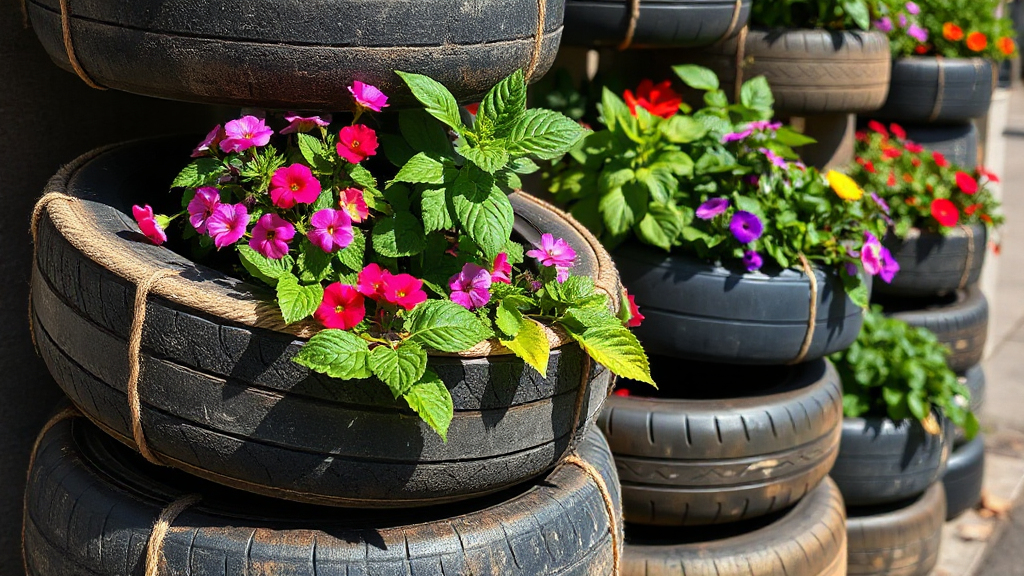
Tiered tyre gardens maximize space by stacking planters in a compact, stable arrangement. You’ll create levels that keep drainage consistent, expose sun across each tier, and reduce footprint in small spaces. Start with identical tyres for uniform height, then nest them securely to prevent tipping.
When selecting plants, choose compact varieties that suit your climate and rotate crops seasonally to maintain soil health. Use sturdy fasteners or welds to lock tiers, and consider a drip line for efficient watering.
Tyre recycling isn’t just eco-friendly—it reinforces a durable, low-maintenance system. Garden aesthetics remain strong with a clean, orderly stack, exposed edges, and consistent color profiling. Your tiered setup will deliver visual depth while maximizing productive, reachable planting space.
- Choose uniform tyre sizes for stability
- Plan an accessible irrigation strategy
- Layer herbs above compact ornamentals
- Inspect seams and fasteners monthly
- Recycle and replace worn tyres as needed
Decorating Tyres: Paint, Texture, and Style
Decorating tyres isn’t just about color—it’s about creating durable, weather-ready planters that elevate your garden’s look while preserving practicality. You’ll approach paint, texture, and style with purpose, aligning choices with performance and upkeep.
Begin with a weatherproof coating, selecting finishes that resist sun, rain, and fading. For texture, opt for subtle patterns or stencils that add depth without trapping moisture. Consider contrasting rims or two-tone schemes to sharpen garden aesthetics while keeping maintenance minimal.
Choose colours that complement existing plantings and hardscaping, then seal lightly to preserve vibrancy. Remember tyre recycling benefits extend beyond appearance: well-applied finishes reduce soil and moisture wear at the tire surface, supporting longevity.
When you finish, test drainage and avoid overcoating, ensuring safe, attractive, long-lasting planters.
Liners, Hardware, and Supports That Last
- Liner materials choices that balance durability and cost
- Hardware options prioritizing corrosion resistance
- Secure, level under-structures for stability
- Effective drainage and ventilation planning
- Routine inspection and maintenance plan
Placing Tyre Planters in Small Spaces
When you’re placing tyre planters in tight spots, start by evaluating the available footprint and sightlines to avoid clutter. You’ll prioritize vertical space, stacking where safe and stable, and use slim, stackable designs to maximize function without crowding pathways.
Think through access: guarantee handles, lids, and drainage remain reachable, not obstructed by furniture or fixtures.
Historical context informs your choices; legacy uses show tyres as modular, durable containers, so align sizes and colors with nearby elements for cohesion.
In small gardens, prioritize industrial uses of utilitarian form—simple, heat-resistant, weatherproof finishes that tolerate wear.
Place planters against walls or fences to reflect a compact, purposeful layout, and group species with similar light needs for maintenance efficiency and visual rhythm.
Seasonal Care: Winter and Heat Protection
Seasonal care for tyre planters means prepping for both winter freezes and summer heat so your plants stay healthy year-round. You’ll protect their roots with seasonal insulation and smart placement, ensuring consistent moisture and temperature.
In winter preparation, add a thin layer of mulch and shield planters from wind. Then lift pots slightly to avoid cold-soak.
For heat, shade midday sun and use reflective coatings or lighter paints to reduce heat gain. Maintain even watering and check drainage to prevent soggy roots.
Monitor for frost pockets and adjust covers as needed.
- Seasonal insulation tips to minimize temperature swings
- Strategic placement to beat wind exposure
- Mulching depth and materials for tyres
- Shade strategies for hot afternoons
- Drainage checks and watering cadence
What to Avoid Planting in Tyres (and Why)
Avoid planting certain crops in tyres because the material’s internal heat, chemical residues, and drainage quirks can stress plants and compromise safety. In this context, you should avoid high-heat crops and those with long growing periods that require frequent root disturbance.
Tire recycling methods can leave trace substances; even inert tyres accumulate compounds that leach slowly into soil. Opt for short-cycle or hardy varieties instead, and keep tyres well above ground to limit heat buildup on sunny days.
Rubber breakdown over time reduces structural integrity, increasing risk of cracking and contaminant release, especially when planted deeply or overfed. Inspect tyres for cracks or bulges before use, and rotate crops to minimize exposure.
Use this guidance to protect both plants and your environment.
Budget-Friendly Makeover Ideas
Looking for budget-smart upcycling ideas, you’ll start with low-cost materials and simple swaps that still deliver impact. Consider easy material sources like repurposed containers or reclaimed hardware to keep costs down while you customize each tyre planter.
Explore creative planter variations—from stacked towers to color-blocked wheels—to maximize visual appeal without breaking the bank.
Budget-Smart Upcycling
- Repaint with durable, spray-on paint for a fresh look
- Add drainage holes and a liner to extend lifespan
- Use shredded fabric or compost as lightweight soil substitutes
- Pair tyre planters with stacked pallet shelves for height
- Label each planter with chalk to track plant rotation
This approach stays lean, delivers visible results, and keeps your project clean, organized, and edge-cutting in design.
Easy Material Sources
Finding easy material sources starts with what you already have on hand or can cheaply acquire. You’ll maximize value by surveying your garage, shed, and curbside cleanups for usable items that pair well with tyres, such as paint, primer, bolts, or seed trays.
Look for secondhand or repurposed containers that support drainage and stability, reducing the need to buy new. Tap local recycling centers, barter with neighbors, or join community swaps for budget-friendly components.
Be mindful of recycling misconceptions—not every “free” item is suitable, so assess weight, weather resistance, and safety before use. Consider the environmental impact of each choice, prioritizing durable finishes and non-toxic coatings.
With careful sourcing, your planters stay cost-effective and long-lasting.
Creative Planter Variations
Upcycling tyres into garden planters opens the door to creative, budget-friendly transformations. You’ll explore variations that maximize impact with minimal cost, while honoring history and meaning. By assigning purpose to discarded tyres, you reconnect with a broader Historical context and consider the cultural significance of reuse.
Shape, paint, or embed tyres to suit spaces—from compact balconies to rugged entryways—without sacrificing durability. You’ll balance aesthetics with practicality, using weatherproof coatings and drainage tweaks to extend lifespan.
Planter variations invite experimentation: stacked cycles for vertical interest, half-cut tyres as troughs, or painted mosaics for texture. This approach keeps projects affordable, striking, and respectful of legacy. Embrace function, style, and provenance to elevate every nook.
- Repurposed vertical stacks for compact spaces
- Half-cut tyres as durable troughs
- Painted, mosaic-textured planters for visual interest
- Double-tier setups for herb gardens
- Recycled tyre lids as decorative mulch covers
Real-Life Tyre Planter Makeovers: Gallery and Lessons
Real-life tyre planter makeovers reveal practical, doable transformations you can replicate. You’ll see how hobbyists convert raw tyres into stylish, sturdy planters that suit varied spaces.
Each project prioritizes safety first, with clean cuts, smooth edges, and weatherproof finishes that resist chlorine, sunlight, and rain.
In the gallery, you’ll notice consistent design hooks: repurposed bands for stability, neutral to bold color palettes, and mixed textures that elevate garden aesthetics.
You’ll learn quick-fix methods—priming, sealing, and decorative coatings—that preserve colour and curb erosion.
These case studies emphasise simple sourcing, from scrap yards to local tyre recycling programs, reducing waste while maintaining durability.
Apply the lessons to your own setup, balancing accessibility, maintenance needs, and personal taste for lasting impact.
Maintenance Dos and Don’ts for Longevity
To keep tyre planters looking sharp and lasting longer, establish a simple maintenance routine and stick to it. You’ll protect longevity by regular cleaning, inspecting for cracks, and resealing exposed seams after power washing. Repaint faded edges to deter corrosion and refresh the look. Schedule seasonal checks to adapt care, especially as temperatures shift.
- Clean soil buildup and debris quarterly to prevent moisture traps
- Seal seams annually and touch up paint after heavy use
- Rotate placement with seasons for even wear
- Monitor for cracks and replace compromised tyres promptly
- Integrate seasonal planting and Pest control strategies to minimize damage
Troubleshooting Common Tyre Planter Issues
Tyre planters are durable, but they’re not invincible. When leaks occur, you’ll inspect seams first, as small cracks often stem from overwatering or sun exposure. If drainage is poor, add a few perforations or elevate the planter to prevent root rot.
Scratching paint isn’t needed for functionality, but if corrosion appears, sand lightly and reseal with exterior-grade sealant to preserve longevity. Temperature swings can stress rubber; shield planters with mulch or shade in peak heat.
Historical context informs adjustments—older tyres may have varied materials, affecting aging. Cultural significance guides your approach to reuse: clean, repurpose, and rotate crops to minimize wear.
If plants underperform, re-evaluate soil mix and mulch depth to maintain moisture balance and nutrient availability.
FAQ: Common Questions About Tyre Planters
You’ll want clear guidance on tyre planter safety and maintenance to prevent accidents and extend life.
We’ll address common questions about durability, weather resistance, and routine care so you can plant with confidence.
This discussion sets practical expectations and equips you to keep your tyre planters safe, durable, and easy to service.
Tyre Planter Safety Tips
When planning tyre planter safety, start by inspecting the tire for damage and ensuring it’s clean, dry, and free of sharp edges before planting. You’ll reduce punctures, leaks, and injuries while preserving the planter’s integrity and your confidence.
- Wear gloves and sturdy shoes to protect hands and feet
- Use non-toxic paint or sealant, and follow label directions
- Drill drainage holes to prevent waterlogging
- Secure the planter on stable ground or a pallet base
- Keep kids and pets away during setup and watering
Urban farming and recycling art shine when safety is built in, not after. By prioritizing precautions, you protect plants, people, and the project’s longevity, ensuring your upcycling effort remains practical, responsible, and inspiring.
Durability And Maintenance
You should inspect tires for cracks, bulges, and any signs of deterioration before each planting season, replacing damaged units promptly. Seal seams with weatherproof adhesive and add a drainage layer to prevent waterlogging.
Use breathable, rot-resistant liners to minimize moisture stress and avoid soil compaction by employing well-aerated potting mixes.
Protect planters from extreme temperatures and direct sunlight to reduce thermal cycling damage.
Regular cleaning reduces mold and bacteria buildup, preserving plant health.
Environmental impact and recycling benefits hinge on choosing durable, repairable tyres and reusing them thoughtfully, maximizing lifespan while minimizing waste.
Frequently Asked Questions
Can Tyres Affect Soil pH Over Time in Planters?
Yes, tyres can affect soil pH over time in planters as tyres degrade, releasing chemicals that may alter soil acidity; monitor regularly, use barrier liners, and refresh soil to counter tyre degradation impacts.
Are Tyres Safe for Edible Herb Gardens?
Tyres can be used safely for edible herbs if you seal interiors and choose food-grade, low-leaching materials. However, chemical leaching and pest attraction are real concerns; monitor soil, replace planters, and avoid direct contact with edible roots.
How Long Do Tyre Planters Typically Last Outdoors?
Tyre planters outdoors typically last several seasons, depending on sun exposure and maintenance. You’ll want Eco friendly alternatives if you seek longevity, but consider durability considerations like UV resistance, drainage, and secure mounting to extend their lifespan.
Do Tyres Release Microplastics Into Soil?
Yes, tyres can release microplastics into soil, contributing to microplastic pollution and soil contamination. You should monitor degradation, use liners or alternatives, and choose sustainable containment to minimize exposure and protect garden health.
Can Recycled Tyres Be Painted or Sealed for Durability?
Yes, you can: paint durability improves with high-quality paints, and sealing methods lock in color. You’ll guide the process like a steady beacon—use primer, durable exterior paint, and a sealant for long-lasting, weatherproof, and vibrant results.
Conclusion
You can make a bold, sustainable impact by upcycling tyres into planters, but don’t kid yourself—this only works if you diagnose risks first. If you test leaks, clean thoroughly, seal properly, and pick robust tyres, longevity follows. Now, here’s the twist: treating this like a small science project boosts results. Track what works, learn from failures, and adjust. When done right, your tyre planters flourish, proving a simple theory—reuse plus care equals lasting green gains.