
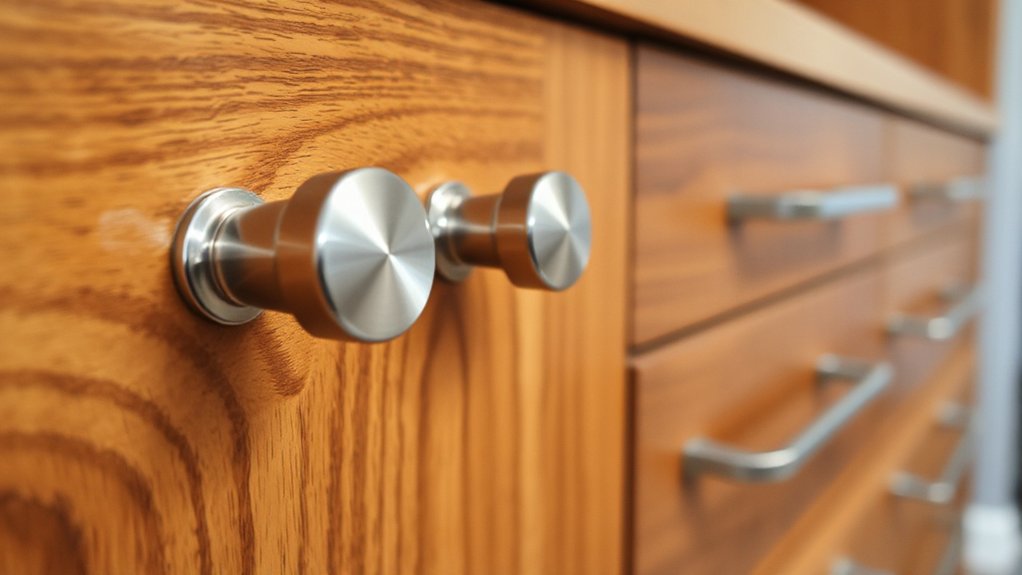

Upgrading cabinet hardware instantly refreshes kitchens and baths, boosting usability and style with durable finishes and matched metals. Start by selecting knobs for shallow doors and pulls for drawers, then guarantee the hardware size, mounting centers, and projection match your cabinets. Maintain consistency across rooms, align finishes with faucets and lighting, and coordinate proportions for visual harmony. Measure precisely, mark pilot holes, and use proper screws to avoid stripping. If you keep going, you’ll learn more practical steps and tips.
Key Takeaways
- Choose hardware that balances durability, usability, and style, ensuring comfortable grip, appropriate weight, and timeless finishes like chrome or brass.
- Coordinate with cabinet style, line weight, and finish for visual harmony across drawers and doors.
- Decide between knobs and pulls based on door depth, movement needs, and proportional scale to the cabinet.
- Measure precisely (center-to-center, projection, bore, and screw length) and plan mounting to prevent misalignment.
- Ensure cohesive upgrades by matching hardware across rooms and coordinating with lighting and faucet/appliances finishes.
Why Upgrade Cabinet Hardware: Goals, Timing, and ROI
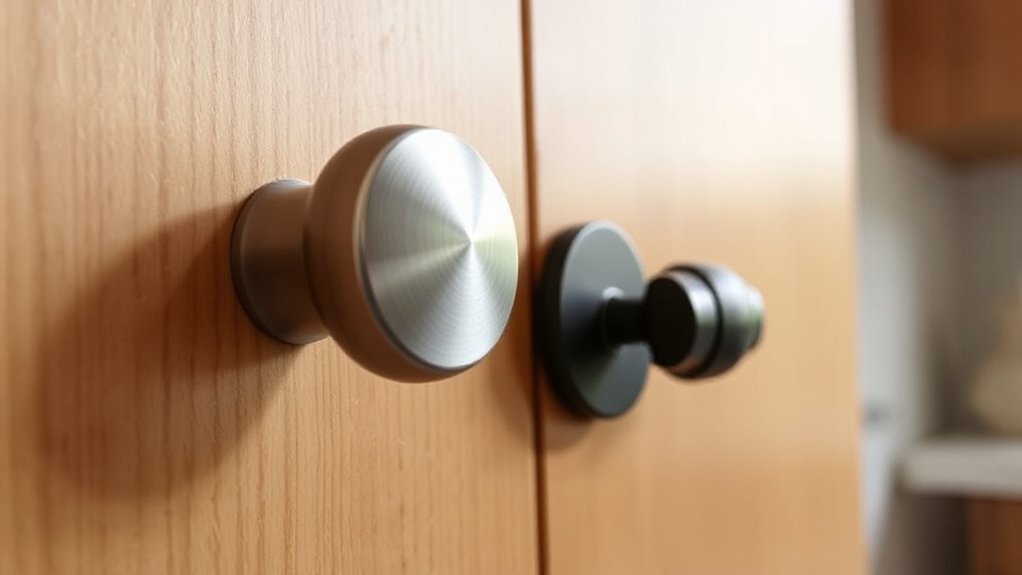
Upgrading cabinet hardware is a practical, high-impact renovation that you can tackle quickly and see meaningful results from. The goal is clear: you want better function, a refreshed look, and a solid return on investment.
You’ll save time and effort by selecting hardware that improves usability—consider grip size, weight, and motion, so doors and drawers operate smoothly day after day.
Timing matters too; align upgrades with other projects or seasonal sales to minimize downtime and maximize value.
Prioritize hardware durability to guarantee longevity in high-use areas, and weigh material sustainability to support greener choices.
With thoughtful sourcing and proper installation, you’ll boost perceived quality, extend cabinet life, and enhance resale appeal without overhauling the entire kitchen.
Choose Hardware Styles to Match Your Cabinets
When you choose hardware, consider how your cabinet style defines the look, from traditional to modern.
Pair your hinges and pulls with the cabinet details to keep the overall vibe cohesive.
Start by matching hardware finish and line weight to your cabinet doors and frames for a balanced, purposeful update.
Matching Cabinet Styles
Begin by identifying your cabinet finish—whether it’s light oak, painted, or stained—and select hardware that complements its tone. Vintage motifs can introduce warmth without overpowering, while Contemporary accents offer a clean, minimal counterpoint to bold grains or saturated colors.
Aim for a consistent profile across drawers and doors, and avoid mixing too many hardware shapes at once. Consider scale: knobs vs. pulls should feel proportional to each door’s size.
Finally, test alignment and spacing before installation to preserve symmetry and balance throughout your kitchen or bath.
Hardware Style Pairings
Choosing the right hardware styles to pair with your cabinets sets the tone for the whole space. When you mix styles, aim for a cohesive story: match metals, finishes, and scale to cabinet profiles, not just trends.
Start with a focal similarity—square knobs on flat-panel doors, or sleek pulls with traditional inset doors—and then introduce a complementary accent style through a single contrasting piece.
Consider material durability and finish longevity to avoid rapid wear or fading.
Ergonomic design matters: choose shapes that feel natural in hand and provide comfortable open/close action.
Balance fine detailing with practicality, ensuring alignment and consistent installation depths.
Finally, test with samples against your countertop, flooring, and hardware you already own to confirm the combined impact before committing.
Knobs vs. Pulls: What Works for Your Doors
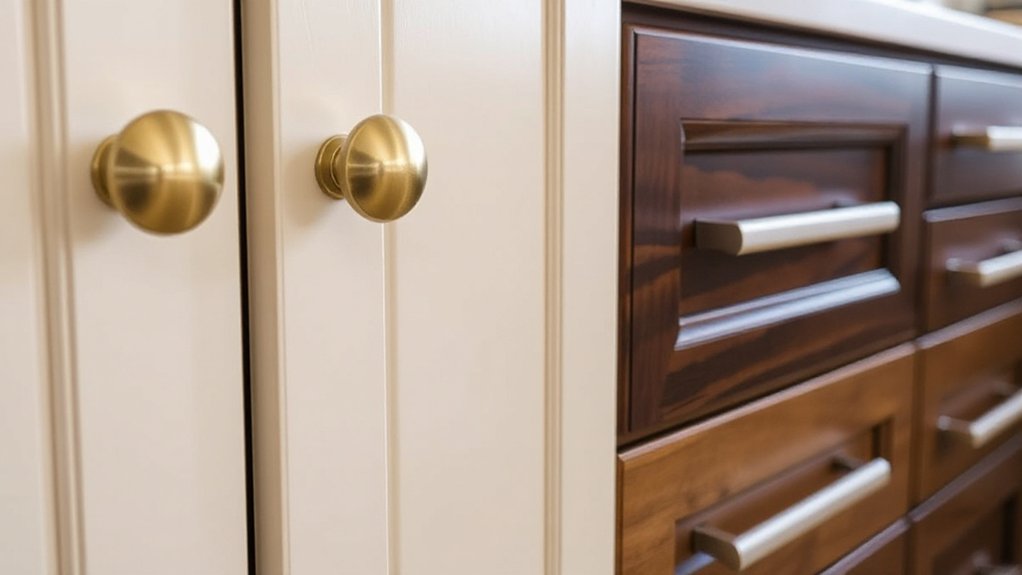
When you’re deciding between knobs and pulls, consider how each matches your door style and how you’ll use the space day to day.
This is the moment to check fit with your door thickness, edge profiles, and mounting hardware, so your choice feels integrated rather than tacked on.
Let’s weigh comfort, reach, and the overall look to map a practical knob-or-pull plan for your doors.
Knob Or Pull Choice
Knobs and pulls each bring a distinct feel to cabinet doors, so you should choose based on function, style, and practicality. When deciding, consider how you’ll use the space daily: knobs stay comfortable on shallow doors; pulls offer leverage for heavier drawers.
Material durability matters—sturdy alloys retain finish better and resist wear in busy kitchens. For higher-traffic areas, choose hardware with corrosion-resistant coatings and a reliable mounting system.
Aesthetic harmony matters too: round knobs read softer, while rectangular pulls read modern and linear. Your door thickness and hinge placement influence reach and operation, so test two or three options in the actual space.
Finally, guarantee style continuity with the rest of the room, balancing form with function for a cohesive update.
Door Accessory Fit Guide
Your cabinet doors deserve hardware that fits how you use the space, and the right choice between knobs and pulls can make daily tasks smoother and more comfortable.
In this Door Accessory Fit Guide, you’ll evaluate door style, dimensions, and finger reach to determine the best fit for your space. Knobs offer a classic, tactile grip ideal for smaller or intricate doors, while pulls provide leverage for wide doors and heavy loads.
Consider spacing: identify whether you want uniform hardware across all cabinets or mixed accents. Material and finish should align with overall decor—vintage charm calls for aged brass or patinated finishes, while minimalist design favors clean, simple lines.
Test feel, guarantee mounting depth matches door thickness, and prioritize comfort and accessibility for a balanced kitchen or bath.
Measure Precisely: Size, Depth, and Mounting Requirements
To guarantee a perfect fit, measure precisely for size, depth, and mounting requirements before you buy. Start with the door or drawer front: determine hole spacing, overall length, and the correct projection from the surface.
For knobs, confirm bore diameter and screw length so mounting hardware clears existing hardware and cabinet frame.
For pulls, note center-to-center distance and align with the preexisting hole pattern if you’re replacing a match.
Depth matters: ensure the knob or pull clears doors when opened and won’t strike nearby hardware.
Check mounting depth inside the cabinet or drawer to avoid crowding.
Material durability supports long-term function, while consistent dimensions preserve aesthetic harmony across the set.
Accurate measurements prevent mismatches and costly returns.
Finishes and Metals That Complement Cabinets
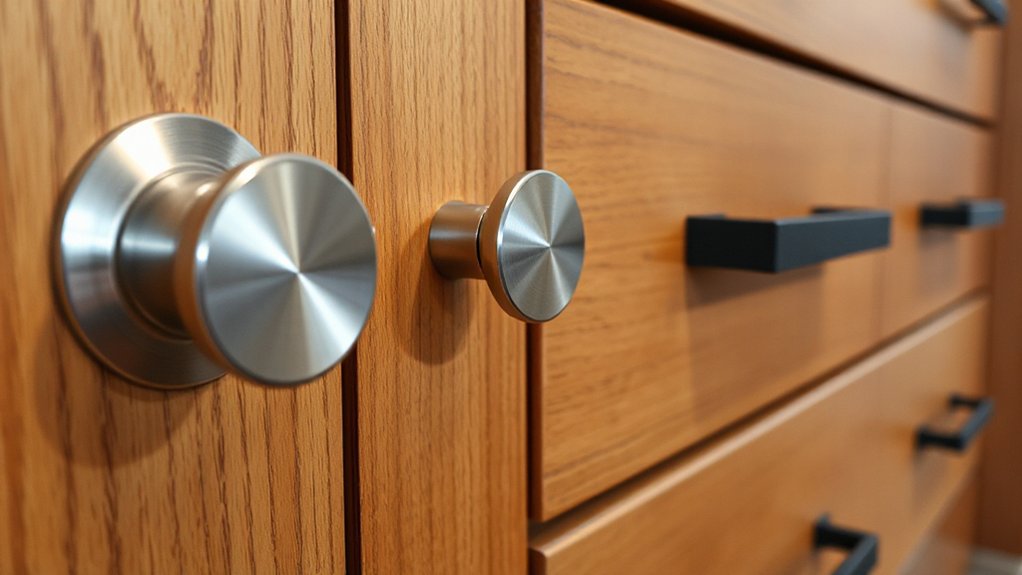
Finishes and metals set the tone for your cabinets, guiding everything from durability to daily upkeep. When choosing, balance aesthetics with practicality, so your hardware remains as reliable as it looks.
Consider how finish options will wear with use and cleaning, and how metal types respond to humidity and fingerprints. Polished chrome offers modern brightness, while matte black delivers contrast and timeless edge. Brass adds warmth, and nickel pairs with cooler palettes. Satin finishes resist showing wear, yet still feel refined.
Your goal is cohesion across fixtures, hardware, and cabinetry.
- Finish options: select a consistent sheen and undertone across pieces
- Metal types: match hardware metals to faucet and appliances
- Contrast vs. harmony: decide if you want standout or seamless
- Durability: prioritize corrosion resistance for high-use rooms
- Maintenance: choose coatings that simplify cleaning and upkeep
Budget-Smart Choices: Value Without Compromising Quality
When upgrading cabinet hardware on a budget, you don’t have to sacrifice quality for cost. You can balance durability with value by prioritizing core features over trends. Seek midweight knobs and pulls with solid construction, like a robust mounting shaft and corrosion-resistant finishes, to guarantee longevity.
Eco-friendly materials matter; look for hardware built from recycled metals or responsibly sourced alloys that still feel substantial in hand. Favor timeless shapes over fleeting fads to maximize versatility across kitchen updates.
Vintage-inspired designs offer character without a premium price, pairing well with contemporary cabinets when kept in a cohesive color family. Compare warranties, and choose finishes that resist fingerprints and wear.
With thoughtful shopper habits, you’ll achieve durable, stylish results without overspending.
How to Install: Step-By-Step Hardware Swap
Once you’ve picked your hardware, swapping it in is a straightforward, practical upgrade. To install, remove the old pieces, measure mounting centers, and align new hardware with existing holes. Use a drill with appropriate bit sizes, and drive screws snugly without stripping. Check that knobs turn smoothly and pulls slide evenly. Wipe away fingerprints and inspect decorative finishes for consistency. Tighten once more after a test pull to ensure durability, then reattach any interior stops or hinges as needed. This process preserves material durability while delivering a refreshed look.
- Confirm mounting center measurements before you drill
- Mark pilot holes lightly to avoid multi-hole mistakes
- Use the correct screws for cabinet material
- Test function with both doors and drawers
- Clean and inspect for even decorative finishes
Avoid Sizing Mistakes and Ensure Seamless Coordination Across Rooms
To avoid sizing mistakes and guarantee seamless coordination across rooms, start by confirming that all hardware dimensions, mounting centers, and projection depths match your cabinet style and door/drawer configurations.
Next, verify consistency in color coordination across different spaces, ensuring finishes and tones align with the overall design narrative.
Assess material compatibility between knobs, pulls, and mounting substrates, avoiding blends that stress fasteners or wear unevenly.
Create a simple spec sheet listing size, center-to-center, projection, finish, and recommended screws for each door or drawer family.
When possible, choose a common finish family and proportional sizes to maintain visual rhythm as you transition from kitchen to adjoining cabinetry.
Confirm hardware proportions relative to door scale, and coordinate with lighting to prevent glare or dullness.
Frequently Asked Questions
How Long Does a Full Cabinet Hardware Upgrade Typically Take?
A full cabinet hardware upgrade typically takes a day or two, depending on your project size. You’ll finish faster if you plan ahead, consider budget considerations, and gather tools needed before you begin.
Can You Reuse Existing Screws for New Knobs and Pulls?
Yes, you can reuse screws if they’re compatible with the new knobs and pulls. Check screw diameter, length, and thread type for common hardware. Also verify hardware color coordination to prevent mismatches and fitment issues. Screw compatibility matters.
Are Soft-Close or Dampening Features Worth It?
Yes, soft-close benefits are worth it; you’ll notice quieter doors and gentler closures. Dampening technology reduces slams and wear, protecting cabinetry, easing use, and boosting resale appeal. It’s practical, polished, and worth the upgrade.
Do Cabinet Heights Affect Knob or Pull Placement Accuracy?
Balance guides you: cabinet height affects knob placement accuracy. When you measure consistently, you chart a reliable path, aligning knob placement with your reach and sightlines. You’ll avoid misfires, ensuring comfortable access and cohesive, enduring aesthetics.
How Do You Match Hardware to Non-Wood Cabinets?
Match hardware to non-wood cabinets by considering material compatibility and style coordination, you should pair metal finishes with cabinet surfaces, test textures against contrasts, and choose timeless silhouettes for a cohesive, durable, polished look.
Conclusion
Upgrading your cabinet hardware is a quiet transformation you’ll feel every day. Imagine the kitchen doors as open windows to renewed light, the drawers like smooth rivers guiding you with confident taps. When you choose the right size, finish, and style, the room snaps into focus—cohesive, practical, timeless. You’ll notice faster opens, calmer clicks, and a polished, coordinated feel from room to room. Small changes, big impression: finish strong, finish smart.