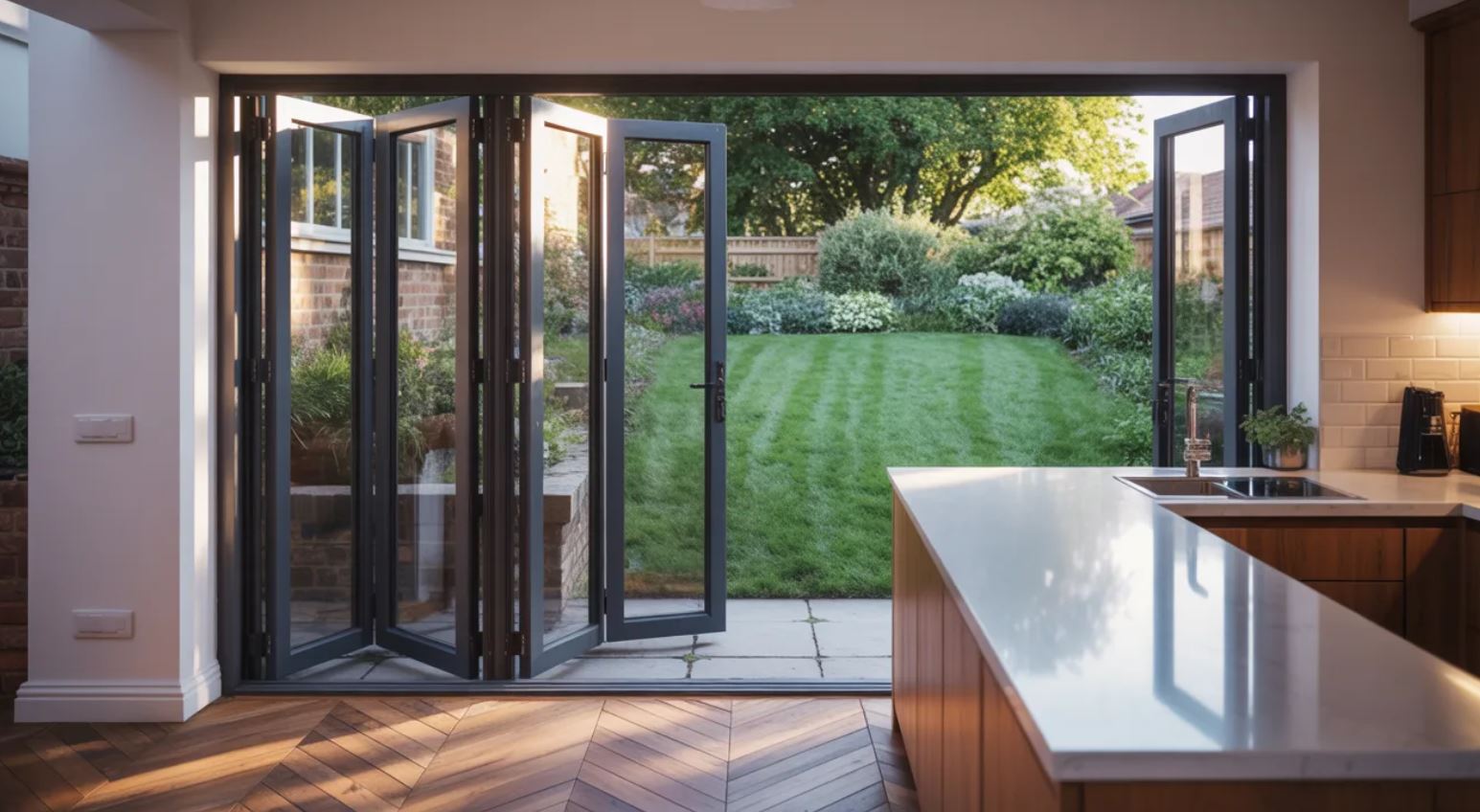

You’re weighing bi-fold doors for your UK home, but the price isn’t simple. From size and material to glazing and hardware, costs vary more than you might expect. You’ll likely face installation and possible structural tweaks, plus finishing and compliance needs. It’s easy to feel stuck between budget and quality. Get a clear picture of where money goes and how to stretch it without sacrificing security or durability. Let’s map out the realities together. So if you’re adding an extension to your home or just looking to update, read on.
What Drives Bi-Fold Door Costs in the UK
There are several factors that shape bi-fold door costs in the UK, and understanding them helps you budget accurately. You’ll notice frame material choices impact price more than you might expect, with timber at a premium and uPVC offering savings without sacrificing performance.
Glass quality, type, and tints affect both look and cost, especially when you choose double or triple glazing and low-emissivity coatings.
Hardware selections matter too; smoother operation hinges on quality hinges, rollers, and multi-point locking, which can add to the bill.
Installation complexity drives labor costs, including opening size, structural modifications, and finishing touches like plastering and floor transitions.
Optional features like smart controls or automated folding systems push prices higher, while standard, straightforward layouts stay more affordable.
Cost Ranges by Size and Material for UK Bi-Fold Doors
When you size up bi-fold door projects in the UK, price swings with both door width and material choice. Narrow setups cost less per panel, while wider configurations push totals higher due to added framing and manufacturing complexity.
Material impacts are clear: timber offers warmth and character but can require more maintenance. uPVC keeps upfront costs lower and resists weathering. Aluminum delivers slim sightlines with higher base prices.
Standard systems typically range from a few hundred pounds per panel for economy options to several hundred pounds per panel for premium builds.
Larger door assemblies scale in both panel count and hardware demands, meaning multi-panel installations magnify overall costs.
For budgeting, estimate per-panel prices, then factor installation and disposal into the total.
How Frame, Glazing, and Hardware Affect the Price
Frame quality, glazing type, and hardware choices are the main levers that push bi-fold door prices up or down. You’ll feel the impact as soon as you pick an aluminium frame versus PVC, or opt for thicker profiles that boost strength and consistency.
Glazing choices matter too: double versus triple glazing, low-emissivity coatings, and the size of glazed panes influence both insulation and cost.
Hardware contributes via track systems, seals, hinges, and handles; premium rollers and anti-slam features add to the bill but improve operation and durability.
Custom finishes, colour options, and aesthetics push prices higher, while standard, factory-finished options save money.
Budget for installation-ready packages and ensure compatibility between frame, glass, and hardware to avoid surprises later.
Installation Costs and Money-Saving Install Considerations
Installation costs can vary widely, but you can control the total by planning ahead and choosing practical options. You’ll save by sizing correctly for your opening, avoiding oversized panels that add framing and installation time. Compare door systems that meet building regs without custom tweaks, and ask for standard widths and panels first.
Do some DIY prep: clear the site, measure twice, and ensure you have a solid sill and level frame to reduce specialist time. Reuse existing hardware if compatible, or source compatible, cost-conscious alternatives.
Get multiple quotes from reputable installers who provide fixed-price options and clear breakdowns for labour, removal, and disposal. Consider seasonal discounts, like off-peak bookings, but don’t compromise safety or warranty.
Plan for essential weatherproofing and ventilation without over-specifying.
Hidden Costs: Preparation, Finishing, and Building Compliance
Hidden costs often creep in after you’ve picked a style and confirmed a price. Preparation isn’t just moving furniture; it means assessing the wall, frame size, and floor level, which can uncover unexpected plumbing or electrical work.
Finishing adds time and materials you mightn’t have budgeted, like sealing gaps, priming, and matching trims to your decor. You’ll also need to plan for disposal of old fittings and any site protection you must provide.
Building compliance matters, too: ensure correct glazing, safety glazing where required, and local regulations for permits or inspections. If you skip these checks, you’ll face delays or rework.
Budget a contingency for surprises, coordinate trades, and communicate clearly with installers to keep the project moving smoothly.
Getting the Best Value Without Compromising Security
You can get the best value for bi-fold doors without sacrificing security by comparing features that matter most: door materials, locking mechanisms, glazing options, and hardware quality.
Start with door materials: aluminum is sturdy and low maintenance, timber offers warmth but may need more upkeep, and uPVC balances cost with insulation.
Next, inspect locking mechanisms: multipoint locks, reinforced keep, and anti-snap cylinders improve resistance to forced entry.
Glazing options affect security and energy—laminated glass resists impact, while toughened glass adds strength.
Consider hardware quality: hinges, track systems, and door handles should be corrosion-resistant and rated for heavy use.
Performance ratings matter: check thermal efficiency, air leakage, and weather seals.
Finally, compare warranties and service commitments, ensuring responsive support if issues arise post-installation.
Choosing Brands and Warranties: Trade-Offs and Coverage
Brand reputations shape long-term value, so weighing brands and warranties helps you gauge confidence alongside cost. When you compare brands, look beyond price to track record, service networks, and response times. A well-known maker may offer stronger global support, while a smaller brand might provide customization perks—but confirm ongoing parts availability.
Warranties vary: some cover hardware and glass for two years, others for ten; comprehensive plans reduce your risk, but read exclusions for weather, wear, and accidental damage. Ensure installers honor the warranty through manufacturer-approved work; ask about transferability if you sell.
Coverage should include frame integrity, seals, and operating mechanisms. Finally, request documented proof of coverage and a single point of contact for claims to minimize hassle when issues arise.
Conclusion
You’ll likely pay more for timber or aluminum, bigger spans, and bespoke features, but you can trim costs with standard sizes and sensible glazing. Expect installation, finishing, and potential structural work to add to the bill, and don’t forget permits or building regulations. Shop around for multiple quotes, compare frames and hardware, and weigh warranties. By balancing quality and budget, you’ll get secure, durable bi-fold doors without breaking the bank.