

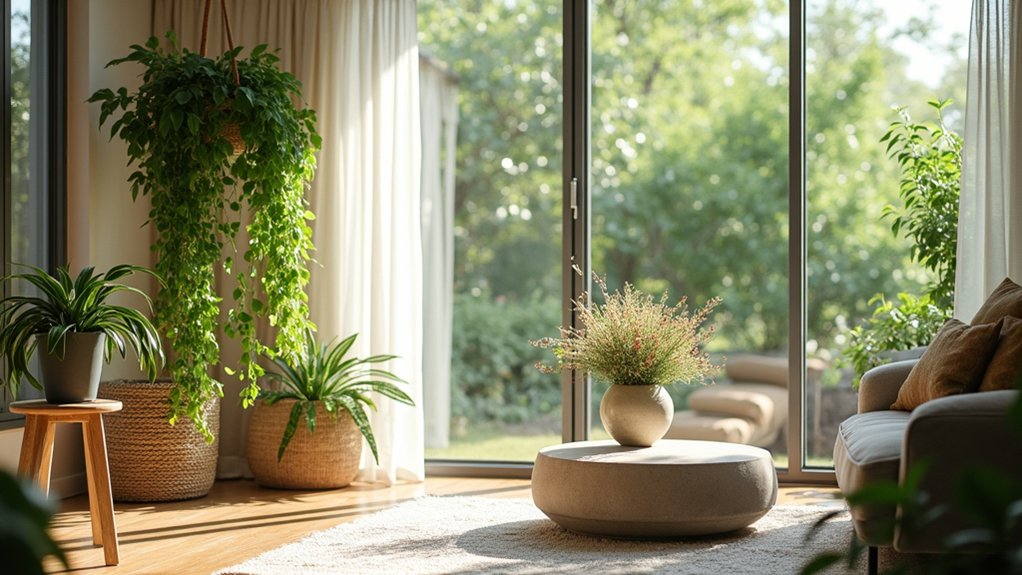

If you want to learn how to bring nature indoors, this is for you. This is an introduction and a guide to Biophilic Design. Bringing nature indoors starts with biophilic design—layer real plants that fit your light and space, then blend natural textures like wool, linen, stone, and timber for warmth and acoustic comfort. Maximize daylight with mindful layouts, unobstructed sightlines, skylights, and light finishes. Enhance calm with gentle scents, quiet natural sounds, and clean air. Maintain the system with simple routines for watering, checks, and pest prevention. Keep elements securely aligned to sustain the flow—you’ll explore more techniques below.
Key Takeaways
- Incorporate nature-inspired elements and living plants to create calmer, restorative indoor spaces aligned with biophilic design principles.
- Prioritize natural light, sightlines, and reflective surfaces to boost daylight, reduce glare, and visually connect to outdoors.
- Use natural textures and materials (wood, stone, wool, linen) to enhance tactile warmth and acoustic comfort.
- Establish an evidence-based maintenance routine for plants, furniture, and living walls to sustain health and aesthetics.
- Enhance sensory experiences with clean air, gentle scents, and subtle sounds through ventilation and natural elements.
What Biophilic Design Is and Why It Boosts Mood
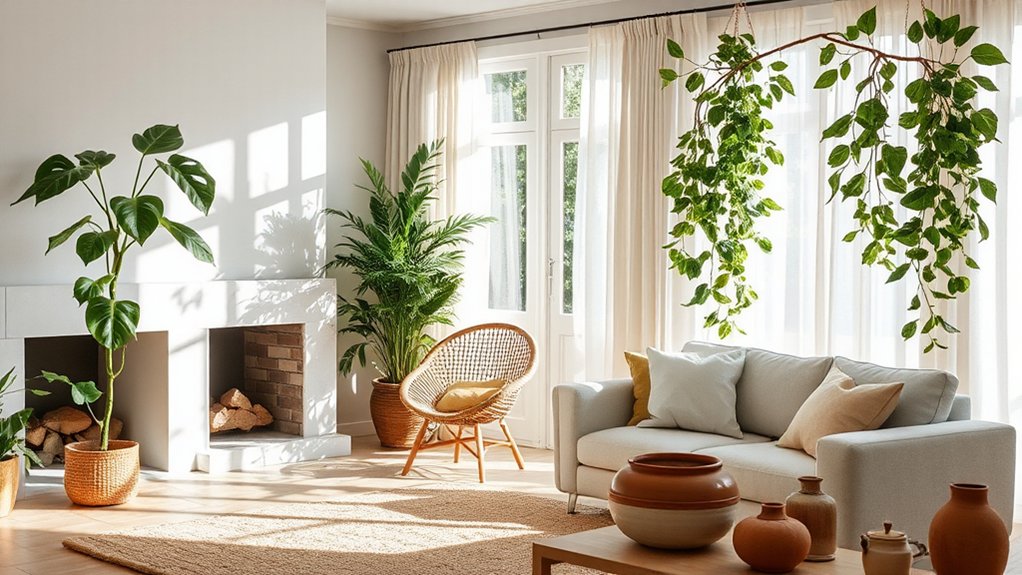
Biophilic design is the practice of incorporating nature-inspired elements into built environments to reconnect people with the natural world. You’ll learn that it isn’t ornamentation alone; it’s a framework.
By aligning spaces with biophilic principles, you create environments that feel calmer, more engaging, and resilient. Evidence shows that exposure to natural cues—organic textures, daylight, ventilation, and views of greenery—reduces stress and enhances attention.
You’ll notice improvements in emotional well-being when rooms invite movement, pattern, and sensory variety without clutter. The approach supports circadian alignment, promotes restorative breaks, and strengthens social connection by fostering shared experiences with nature.
In practice, design choices become intentional, measurable, and adaptable, guiding you toward healthier mood dynamics while preserving visual coherence and functional performance.
Choose Indoor Plants That Fit Your Light and Space
Choosing indoor plants that fit your light and space starts with a practical assessment: know what you’ve got to work with and pick species that thrive there. You’ll map lighting conditions across rooms, noting sunlit corners and low-light niches, then align selections with those realities.
Favor compact varieties for small spaces and longer-trailing options for shelves to maximize visual reach without crowding. Consider weekly routines: water needs, humidity, and seasonal shifts, so you won’t overhire or underperform plants.
Use color and texture to create rhythm, not clutter. In rooms with space limitations, opt for a few well-chosen specimens rather than crowded clusters.
This evidence-based approach helps you sustain health, reduce maintenance, and maintain a cohesive, harmonious biophilic aesthetic.
Use Natural Textures and Materials for Warmth
Natural textures and materials ground a space in warmth, inviting your senses to engage with the environment. You’ll feel calmer and more centered when you choose tactile surfaces that echo nature, from wool to stone.
Evidence supports texture diversity for perceived coziness and acoustic comfort, while warm materials enhance perceived insulation and safety. Use a restrained palette to maintain visual coherence and avoid sensory overload.
- Incorporate textured textiles (wool blankets, linen cushions) to layer warmth without overpowering the room.
- Choose natural surfaces (timber, cork, stone) for furniture and accents that age gracefully with use.
- Balance matte and subtle glossy finishes to reflect light while maintaining tactile depth.
Natural textures and warm materials work together to create inviting, grounded spaces that feel alive.
Maximize Daylight and Sightlines for a Brighter Space
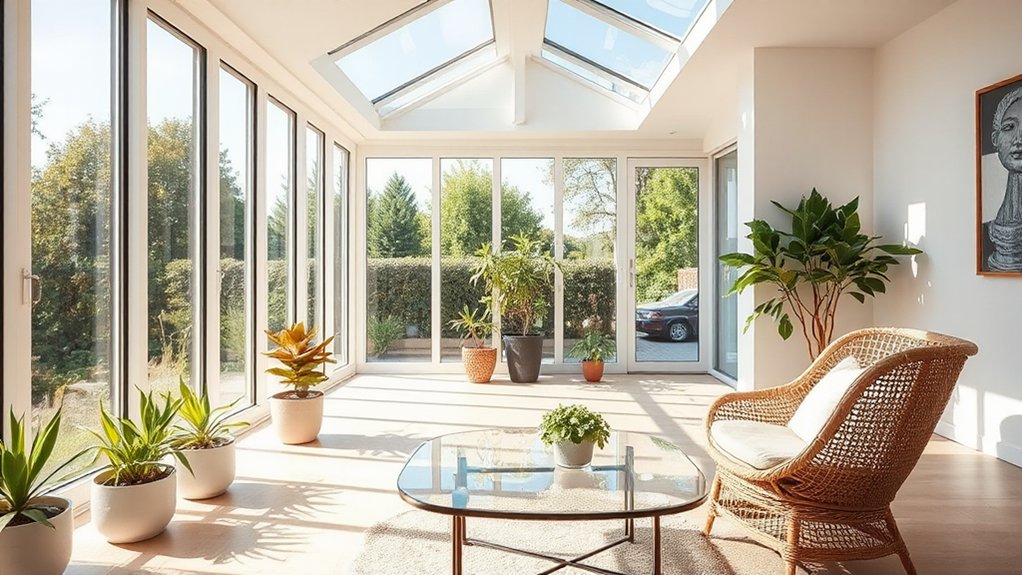
You’ll optimize daylight flow by configuring entrances and interiors to reduce obstructions, guiding natural light deeper into the space.
Clear sightline strategies prioritize unobstructed views from key zones, enabling faster daylight penetration and better visual connection to the outdoors.
Together, these approaches create a brighter environment while supporting energy efficiency and occupant well-being.
Maximize Daylight Flow
Maximizing daylight flow starts with thoughtful placement of openings and transparent barriers that invite natural light deep into the space. You’ll optimize where light enters and how it travels, reducing shadows and glare while preserving privacy. Use shallow glazing and interior partitions that don’t trap brightness, and align windows with activity zones to sustain energy efficiency.
- Select window treatments that control glare without darkening rooms, like light-filtering blinds or sheer panels.
- Prioritize skylight installation where overhead light enhances task areas, balanced by shading devices for seasonal variation.
- Employ reflective surfaces and light-colored finishes to amplify daylight without increasing heat gain.
This approach supports a cohesive, evidence-based brightness strategy, linking daylight to well-being and productivity.
Clear Sightline Strategies
Clear sightlines unite daylight with purpose, guiding occupants through spaces with visual cues and open connections while avoiding obstructions that interrupt flow. You’ll prioritize unobstructed views, minimize clutter, and position key landscape features so they read as milestones along a visual corridor. Natural light radiates deeper when doors remain ajar or glazed partitions replace solid barriers, boosting sightline clarity and mood. Reflective surfaces and light-colored finishes amplify brightness without glare, while window placement aligns with high-contrast focal points. Use furnishings that frame nature views rather than block them, creating cohesive rhythm across rooms. Visual corridor cues support wayfinding, enhancing comfort and safety.
| Element | Function | Outcome |
|---|---|---|
| Light placement | Guides gaze | Brighter spaces |
| Obstruction-free | Maintains flow | Seamless movement |
| Finishes | Reflect light | Enhanced clarity |
Enhance Scent, Sound, and Air Quality for Calm
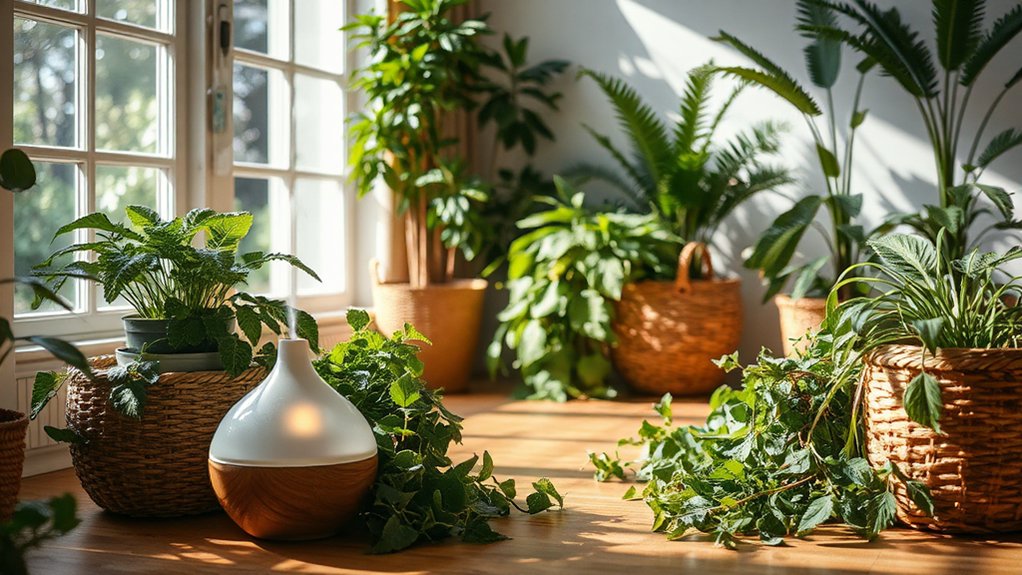
Scent, sound, and air quality can dramatically shape calm within a space, so start by selecting low-emission scents and gentle ambient sounds that support relaxation rather than overstimulation. You’ll create a calmer atmosphere by prioritizing clean air, subtle aromatics, and quiet soundscapes that minimize stress responses.
Focused choices lead to measurable effects, including improved mood and sleep quality, supported by aromatherapy benefits and soundscape creation research. Build a cohesive sensory layer that reinforces nature-influenced tranquility.
- Choose under-encumbered essential oils and avoid synthetic fumes to sustain air quality and comfort.
- Layer soft, natural sounds (water, rustling leaves) for a soothing soundscape without distraction.
- Ventilate regularly and monitor scent intensity to maintain consistent calm levels.
Arrange Spaces for a Nature-Inspired Flow
To create a nature-inspired flow, arrange spaces so that movement mirrors natural rhythms—gentle, intuitive, and uninterrupted. You design pathways that invite exploratory strolls, not abrupt progressions, guiding attention from window views to plant pockets, then to seating vignettes.
Core furniture layout supports sightlines to greenery while preserving usable space, avoiding cluttered chokepoints. Position seating to encourage social connection without disrupting private moments; let soft light and plants define zones, not walls.
Use decorative accents to echo seasons and textures found outdoors—baskets, woven textiles, and wood tones—creating cohesive visual cadence. Maintain rhythm with varied heights and generous negative space, so the eye travels naturally.
Align storage with ease of retrieval to sustain calm, intentional flow, ensuring every element feels purposeful and breathable.
Practical Maintenance Tips to Sustain Your Indoor Nature System
To keep your indoor nature system thriving, start with regular system checks to catch issues before they escalate.
Pair these with routine plant care, including appropriate watering, pruning, and light adjustments, so each element remains balanced and healthy.
This disciplined approach guarantees ongoing ecosystem resilience and a visually cohesive, evidence-based environment.
Regular System Checks
- Inspect irrigation and drainage every week, noting leaks or blockages and testing soil moisture levels to avoid overwatering.
- Evaluate air quality indicators, replace filters, and verify sensor readings for consistent ventilation and humidity control.
- Check garden tools and outdoor furniture integration, ensuring mounts, shelves, and planters stay secure and aesthetically aligned.
Regular system checks reinforce reliability, supporting your garden tools, outdoor furniture, and living wall elements within a unified, evidence-based routine.
Routine Plant Care
How can you keep your indoor nature system thriving with practical plant care that’s both efficient and effective? You’ll establish a simple routine that respects each species’ needs.
Create a consistent watering schedule based on pot size, soil type, and light exposure, then document any changes as seasons shift.
Avoid overwatering by checking moisture at a 2-3 inch depth and adjusting for humidity.
Regularly inspect leaves for signs of stress, pests, or nutrient gaps, and prune dead or leggy growth to improve airflow.
Clean tools and pots to prevent disease, and implement pest prevention by quarantining new plants and using integrated controls if outbreaks arise.
Align care with light patterns, convert observations into predictable actions, and maintain a calm, orderly system.
Frequently Asked Questions
Can Biophilic Design Improve Productivity in Small Spaces?
Yes, biophilic design can boost productivity in small spaces. You’ll benefit from natural light and ergonomic furniture, which reduce glare, stress, and fatigue, while flexible greenery and thoughtful layouts create visually cohesive work zones that support focus and efficiency.
Which Plants Are Best for Low-Humidity Interiors?
For low-humidity interiors, choose drought-tolerant options like snake plant, pothos, and ZZ plant; they thrive with minimal watering. High humidity isn’t required, so your Plant selection focuses on sturdy, adaptable species for consistent indoor air quality.
How Often Should I Rotate Indoor Plants for Growth?
A case study shows you’ll rotate indoor plants every 2–4 weeks during growth spurts. You’ll adjust with a mindful watering schedule and prune tips, keeping foliage evenly lit. This boosts vigor and prevents etiolation.
Do Natural Materials Require Special Cleaning Methods?
Natural materials do require specialized cleaning methods. Follow gentle Cleaning protocols, avoid harsh chemicals, and test first. You’ll protect material durability, maintain appearance, and guarantee long-term performance while preserving biophilic design’s authentic textures.
Can Scent and Sound Enhance Focus Without Being Overpowering?
Yes—you can enhance focus with scent and sound without overpowering you. Aromatherapy benefits include soothing alertness, while Acoustic therapy lowers distraction. You’ll notice clearer thinking, improved concentration, and a visually cohesive, evidence-based workspace that feels balanced.
Conclusion
You’ll feel calmer and more energized once biophilic design clicks into place. Don’t worry if you don’t have a green thumb—the right plants, textures, and light can transform a room fast. If you fear it’ll look messy, remember: intention beats perfection, and regular, simple maintenance keeps the vibe steady. Let nature be your baseline for mood, focus, and flow—the evidence-backed approach that makes spaces feel alive, restorative, and irresistibly inviting.




2 Comments