
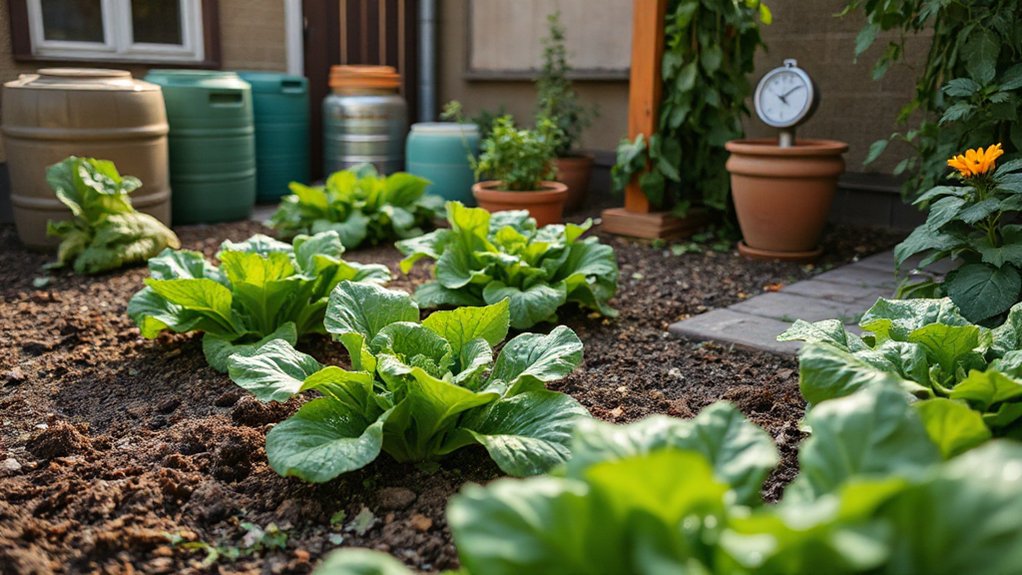

Eco-friendly gardening starts with soil health, water efficiency, native biodiversity, and careful pest management. You’ll minimize synthetic inputs, build soil with compost and organic matter, and use mulches to conserve moisture. Choose native plants to support local wildlife, create layered habitats, and rotate crops to boost resilience. Design for sun, shade, and microclimates to cut waste and reduce irrigation. Track results, fix leaks, and stay away from chemicals. If you keep going, you’ll uncover practical steps to implement these ideas effectively.
Key Takeaways
- Prioritize native plants, biodiversity, and layered habitats to boost resilience, reduce resource use, and support local wildlife.
- Minimize synthetic inputs by using composting, mulching, and preventive, targeted pest management.
- Conserve water with drip irrigation, soil moisture tools, mulches, and appropriate plant grouping by sun exposure.
- Improve soil and microbial health with organic matter, minimal disturbance, cover crops, and diverse plantings.
- Maintain a sustainable mindset through regular monitoring, waste recycling, and incremental, repeatable improvements.
Define Eco-Friendly Gardening: Core Principles You Can Apply

Eco-friendly gardening is about growing with nature rather than against it. You build a system that respects cycles, reduces waste, and supports soil health. Core principles include minimizing synthetic inputs, conserving water, and encouraging biodiversity through layered planting and appropriate maintenance.
You’ll use composting techniques to transform kitchen scraps and yard waste into nutrient-rich soil amendments, boosting structure and microbial life.
Embrace eco-safe pest management, opting for prevention and targeted interventions over broad chemicals. Plan with soil tests and local climate in mind, adjusting practices to seasonal changes.
Native plant selection strengthens resilience and minimizes watering needs, while inviting beneficial insects.
This approach emphasizes evidence-based methods, clear goals, and practical steps you can apply today to foster a healthier garden and environment.
Native Plants for Biodiversity and Resilience
Native plants are the backbone of a resilient, low-maintenance garden because they’re adapted to local conditions, support local wildlife, and require less water and fewer resources.
You’ll boost habitat diversity by selecting a mix of native flora that thrives in your climate and soil. This approach strengthens pollinator networks, provides food webs, and reduces pest outbreaks without chemical inputs.
Prioritize regional species that bloom across seasons, ensuring nectar, pollen, and shelter at different times.
Avoid assuming “native” equals no maintenance; some pruning, deadheading, and weed control keep ecosystems healthy.
Compatibility matters: pair grasses, wildflowers, and shrubs to create layered habitats that resist drought and disease.
Track successes, learn from local volunteers, and adapt plant choices to evolving conditions.
Your garden becomes a benchmark for biodiversity and resilience.
Water-Smart Techniques for a Thrifty Garden
You can start with Water-Wise Irrigation Tools to reduce waste and tailor watering to your plants’ needs.
Mulch and Groundcover Benefits help cut evaporation and suppress weeds.
Dry-Runoff Harvest Techniques capture rainfall for reuse.
Together, these approaches offer evidence-based, practical steps you can implement now to stretch your water budget.
Water-Wise Irrigation Tools
Ever wondered how to stretch every drop of water in your garden without sacrificing growth? You can do this with water-wise irrigation tools designed for efficiency and accuracy.
Start with drip irrigation, which delivers moisture directly to the root zone, reducing evaporation and runoff. Pair it with precise timers and soil moisture sensors to avoid overwatering and adapt to weather shifts.
Rainwater harvesting systems can supply non-potable water for irrigation, lowering municipal use and costs, especially when paired with filters to protect emitters.
Check emitters regularly for clogs and leaks, and place lines to minimize shading and maximize uniform wetting.
Choose durable, UV-resistant tubing and secure connections to endure seasons of use.
These practices support healthy plants while conserving resources.
Mulch and Groundcover Benefits
Mulch and groundcover save water by reducing evaporation, moderating soil temperature, and suppressing weeds, so your garden stays productive with less effort.
When you choose organic mulch, you also add gradual nutrients as it decomposes, supporting soil biology and root health.
Mulch benefits extend to erosion control on slopes and pathways, helping you conserve irrigation across the bed.
Groundcover advantages include living or seeded mats that shade soil and break wind, lowering moisture loss and reducing bare-soil crusting.
Use a layer about 2 to 3 inches thick, avoiding mulch against stems to prevent rot.
Pair groundcovers with smart irrigation timing to maximize efficiency.
These strategies support water-smart practices without sacrificing yield or garden resilience.
Dry-Runoff Harvest Techniques
This approach lowers water bills and supports steady plant growth during droughts, but it requires careful planning to avoid stagnation and mosquitos. Prioritize tight lids, screens, and regular cleaning to keep algae at bay.
Pair rainwater harvesting with soil-aware practices, like compost tea brewing, which can enhance microbial health when you fertilize sparingly. Observe your landscape’s needs, test moisture levels, and adapt storage capacity to seasonal rainfall.
Documentation helps you refine timing and quantities for maximum efficiency.
Build Soil Health for a Living Garden Foundation
Healthy soil is the foundation of a living garden, and you’ll build it by adding organic matter, which feeds roots and boosts resilience.
Cultivate soil biology by fostering beneficial microbes, so nutrients become more available and plants resist stress.
Together, these steps also improve soil structure, making water and air flow more evenly for healthier growth.
Build Organic Matter
Building organic matter is the foundation of a living garden, because richer soil supports stronger plants, better water retention, and thriving soil biology. You’ll boost this foundation by incorporating diverse inputs that feed the soil food web and improve structure.
Start with practical composting methods that fit your space and schedule, turning kitchen scraps and yard waste into valuable humus rather than landfill material. Add well‑decomposed organic amendments to balance nutrients and microbial activity.
Layer materials to improve porosity and drainage, avoiding compaction and runoff. Monitor moisture and avoid excess residue that can tie up nutrients.
Regular additions should be modest but consistent, replacing what plants remove. By prioritizing organic matter, you create resilience against drought, disease, and nutrient fluctuations.
Foster Beneficial Microbes
If you’ve built a foundation with rich organic matter, you’re already setting the stage for a thriving soil microbiome. To foster beneficial microbes, minimize chemical inputs and shadowed competition from aggressive grasses.
Embrace diverse plantings, including cover crops and perennial natives, which feed and shelter the soil microbiome year-round. Rotate crops to prevent disease buildup and keep microbial communities balanced.
Use compost teas or well-aged compost to introduce beneficial microbes without disrupting natural processes. Maintain steady moisture and avoid over-tilling, which can disrupt microbial networks.
Mulch with organic matter to conserve moisture and feed soil life. Monitor soil health with simple measures: color, crumbly texture, and earthy aromas.
When supported, unseen allies multiply, boosting nutrient availability and resilient plant growth.
Improve Soil Structure
Improving soil structure starts with a living foundation: you want a well-aggregated, aerated, and moisture-retentive soil that supports roots and beneficial microbes.
To achieve this, focus on stable organic matter and diverse inputs that boost aggregation. Regularly incorporate composted materials and mindful mulching to feed soil life and improve soil tilth.
Avoid compaction by minimizing heavy traffic and using broad, gentle tools when turning beds. Ground-low disturbance preserves microbial networks indispensable for nutrient cycling.
Monitor soil pH adjustment to keep nutrients accessible; aim for a balanced range suitable for your garden species.
Align practices with evidence: combine cover crops, composting methods, and careful watering to build resilience against drought and disease.
A robust soil foundation translates to healthier plants and sustainable harvests.
Safe, Simple Alternatives to Pesticides and Fertilizers
There are practical, evidence-based ways to manage pests and nourish soil that don’t rely on synthetic chemicals. You can start with healthy soil biology by using compost, mulches, and diverse plantings that support beneficial insects and microbial life.
Opt for compost tea to gently feed roots and soil organisms without harsh residues, but apply it sparingly and at the right dilution. Choose pest resistant varieties when available, and rotate crops to reduce buildup of common pests.
When problems arise, target the issue with mechanical controls, barriers, and hand-picking, rather than broad sprays. If you do use inputs, select products labeled for organic gardening and follow directions carefully.
Maintain plant vigor through proper watering and spacing to minimize stress-related pest susceptibility.
Design With Sun, Shade, and Microclimates for Efficiency
Sun and shade don’t just shape what you plant—they determine how efficiently your garden uses water, energy, and labor. When you design with sun tracking in mind, you map which areas receive peak light and which stay cooler at different times of day. This helps you place sun-loving crops where they’ll thrive and avoid overwatering in intense sun.
Shade management matters too: deliberate shading reduces soil temperature swings, lowers evaporation, and protects delicate greens. Use microclimates created by structures, trees, or walls to extend growing seasons and cut energy needs for irrigation and cooling.
Choose plant varieties suited to each zone, and group demands by sun exposure. A thoughtful layout saves water, reduces inputs, and supports healthier yields.
Maintenance Mindset: Small Habits, Big Environmental Impact
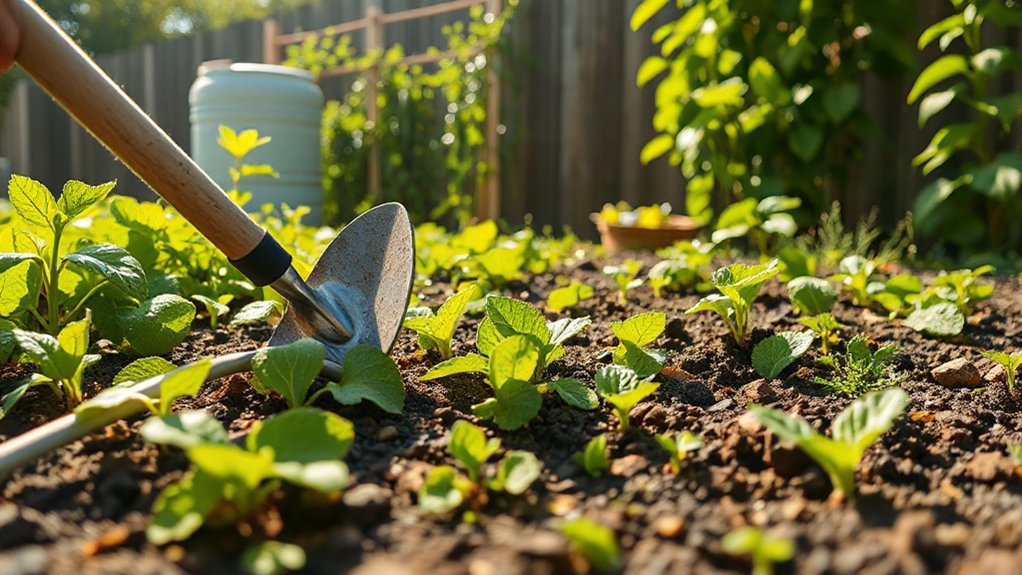
Maintenance mindset means the small daily choices add up to big environmental benefits. You can lower your garden’s footprint by adopting simple, repeatable habits that scale over time.
Start with recycling habits: separate and reuse materials, recycle garden plastic, and buy recycled-content products to close loops.
Practice composting practices by turning kitchen scraps and yard waste into nutrient-rich soil amendments, reducing landfill waste and fertilizer needs.
Plan plantings to minimize water use, mulch to retain moisture, and group irrigation zones to prevent runoff.
Track results, note what works, and adjust.
Small actions—fixing leaks, choosing native species, and avoiding chemical shortcuts—build credibility and consistency.
Your ongoing attention compounds, proving sustainable gardening isn’t a trend but a dependable mindset.
Frequently Asked Questions
What Are the Best Composting Methods for Beginners?
Start with a simple system: use compost bin types that suit you, and monitor composting temperature; keep it between 120–160°F for active breakdown, turning weekly, balancing greens and browns, and avoiding odors to stay engaged and informed.
How Do I Choose Low-Maintenance Edible Plants?
You’ll love low-maintenance edible picks, right—yet you’ll still plan with companion planting and pest control to keep things simple. You’ll choose drought-tolerant herbs, garlic, beans; you’ll monitor, mulch, and rotate to protect yields with evidence. Irony, noted.
Can Upcycled Materials Replace Garden Beds Effectively?
Yes, you can; upcycled materials work, but assess durability and safety. Use recycled materials as temporary garden bed alternatives, monitor soil health, avoid toxic coatings, and prioritize sturdy options to minimize replacement and support long-term performance.
What Irrigation Systems Maximize Water Savings?
Yes—rainwater harvesting and drip irrigation maximize water savings. You’ll collect rain, filter it, and deliver it directly to roots, reducing runoff. This evidence-based approach lowers costs, conserves resources, and keeps your garden healthy and resilient.
How Often Should I Test Soil pH Levels?
Test soil pH about twice a year for accuracy, adjusting as needed. Regular pH testing protects soil health, helps you tailor amendments, and keeps your garden more resilient. Stay evidence-based, approachable, and proactive in monitoring.
Conclusion
Gardening this way isn’t “extra” effort; it’s everyday care for your own patch of Earth. When you mulch, compost, and choose natives, you’re voting with your hands for biodiversity and drought resilience. Last summer, a small rain barrel kept a thirsty bed lush while neighbors wilted—data backs it: water-wise gardens use less, perform better in heat. Start with one native plant, one soil tweak, one pesticide-free week. Small, steady steps compound into a thriving, safer garden.