


Before winter, run a safety-focused autumn check to protect your UK home. Start with pre-season heating readiness: inspect your boiler for leaks, verify pressure, test the thermostat, bleed radiators, and service the burner if needed. Improve insulation and draft-proofing: seal gaps around doors and windows, boost loft insulation, and protect exposed pipes. Tidy gutters, check the roof and downpipes, and ensure chimneys and vents are clear. Finally, verify smoke and CO alarms and consider professional help for persistent faults—more practical tips await.
Key Takeaways
- Perform pre-season heating checks: inspect boiler, test thermostat, bleed radiators, and ensure burner efficiency and safe pressure.
- Inspect and improve insulation and draft-proofing: seal gaps around doors/windows, insulate attic, and install door sweeps or chimney caps as needed.
- Clean and protect external systems: clear gutters, check roof tiles, and secure downpipes; insulate external pipes and cover exposed ones.
- Check safety alarms and electricals: test smoke/CO alarms, inspect visible cabling, and test RCDs; unplug nonessential devices during storms.
- Plan professional help for persistent issues: schedule roof/structural assessments, chimney inspections, and larger energy upgrades when needed.
Pre-Season Heating Readiness: 8 Essential Checks for UK Homes

As autumn approaches, start with seven practical checks to guarantee your heating system is ready for peak-season use.
Before firing up, inspect the boiler for corrosion, leaks, and secure connections. Verify the pressure remains within the manufacturer’s specification.
Test the thermostat and set-point accuracy, ensuring responsive control across rooms.
Inspect radiators for cold spots, bleeding any trapped air to restore efficient heat transfer.
Replace the boiler filter if accessible, or arrange service to confirm burner efficiency and emissions.
Check ventilation paths to sustain indoor air quality, and clear exhaust ducts of obstruction.
Review seasonal decorating plans, ensuring decorations don’t obstruct vents or outlets.
Confirm carbon monoxide detectors function and replace batteries as needed, safeguarding occupant safety throughout late autumn and winter.
Insulation and Draft-Proofing: 7 Quick UK-Home Wins
Insulation and draft-proofing deliver immediate, tangible savings with seven quick UK-home wins. You can reduce heat loss by improving attic insulation, sealing exposed ducts, and addressing gaps around doors.
Prioritise chimney and fireplace maintenance to prevent radiant cooling from unused flues, and guarantee proper flue sealing when not in use.
Revisit window sealing, applying weatherstripping or caulk to storm-proof sides and frames, then verify glazing tightness in all living spaces.
Draft-proof doors with thresholds and door sweeps, and install chimney caps where appropriate to deter draughts and moisture ingress.
Consider radiator reflector panels behind walls and reposition furnishings to avoid blocking heat flow.
These steps collectively lower energy demand, enhance comfort, and support overall efficiency without extensive renovations.
Boiler Readiness: Servicing Steps to Stay Warm This Winter
With the focus on keeping cold snaps at bay after improving insulation and sealing, turning attention to your boiler readiness becomes the next practical step. You should schedule an annual boiler service before peak demand, performed by a Gas Safe engineer.
This servicing ensures best boiler efficiency and detects issues that could interrupt heating during winter. The process typically includes checking controls, pressure, and safety devices, inspecting for leaks, and testing venting, combustion, and flue integrity.
Confirm that your heating system maintenance plan includes bleed radiators, descale reversible components if needed, and replace filters if applicable.
Document service findings and follow recommended actions to prevent breakdowns. Prepared, proactive maintenance preserves reliability, safety, and energy performance throughout the season.
Windows and Doors: Block Cold Air Leaks This Season

Draft airtight windows and doors now to prevent cold air leaks this season. You must assess seals, glazing, and hardware to maintain energy efficiency and comfort.
1) Inspect window seals for gaps and replace worn weatherstripping to prevent window condensation and drafts.
2) Check door bottoms and frames; fit astragals or door sweeps to reduce air intrusion while preserving door security.
3) Test all locks, hinges, and latches; repair or replace faulty components to uphold door security and safe operation.
4) Consider secondary glazing or draft-proofing where necessary, ensuring unobstructed ventilation to avoid condensation buildup without compromising heat retention.
These steps deliver precise, practical results, minimize heat loss, and support overall home comfort during winter months.
Gutters and Roof: Clear Debris and Spot Roof Issues Early
Clear gutters and a sound roof form the backbone of winter readiness, preventing water intrusion and hidden damage that can undermine comfort and safety. You should inspect gutters for leaf buildup, removing debris to maintain unobstructed flow. Make certain downpipes are clear and secure, guiding water away from walls and foundations.
On the roof, look for damaged or displaced tiles or slates, and note any warped flashing. Address loose fixings and deteriorating sealant promptly to mitigate further roof damage.
Use a sturdy ladder with a helper and avoid leaning on the gutters themselves. After clearing, test water drainage from gutters during a light rain or with a hose.
Seek professional assessment if you detect persistent leaks, extensive damage, or structural movement beyond simple debris removal. Regular checks now reduce winter risks.
Chimneys and Vents: Easy Safety Checks for Autumn
Chimneys and vents demand quick autumn checks to guarantee safe, efficient operation before colder weather sets in. You should approach this matter with precision, prioritising safety and compliance.
For the season ahead, focus on two critical tasks: chimney inspection and vent cleaning, both essential to prevent hazards and maintain performance.
- Inspect the chimney structure for cracks, creosote buildup, or obstructions, documenting findings for action.
- Schedule a professional chimney inspection if you notice any smoke-back or unusual odors during use.
- Clear accessible vent paths from debris, ensuring doors and flues operate smoothly.
- Verify that external vents are unobstructed by vegetation, snow, or debris to maintain proper airflow.
Test Your Smoke and CO Alarms: A Simple Guide
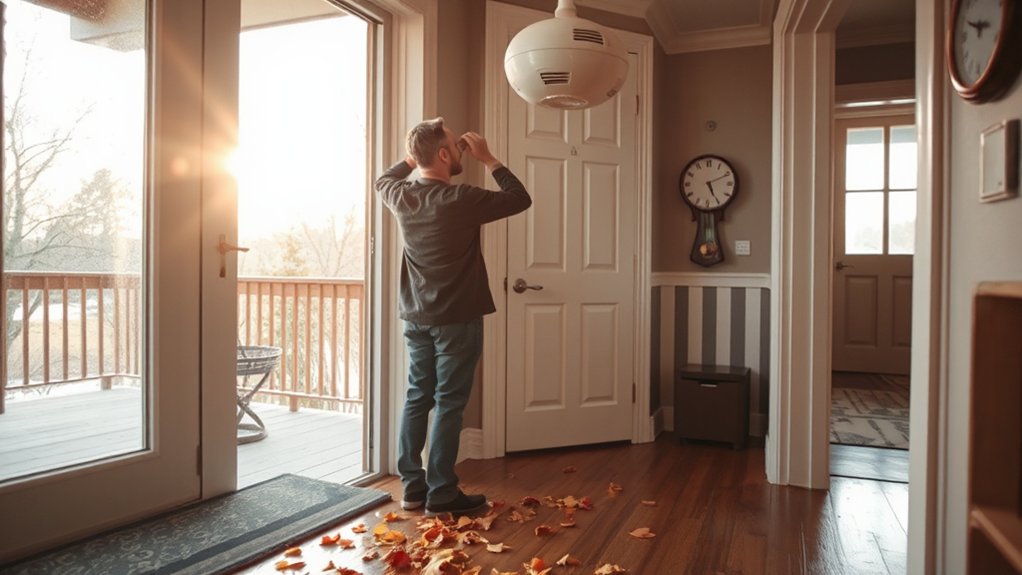
After inspecting chimneys and vents, you’ll want to confirm you’re alerted to danger without delays: test your smoke and carbon monoxide alarms now.
First, verify each device is within its expiry date and that the unit is properly mounted on the ceiling or wall per manufacturer guidance. Use the test button to confirm a clear audible signal, and replace batteries if the tone weakens or you hear intermittent chirps. Record the date of testing and battery replacement for compliance.
Make sure there’s at least one fire alarm on every living floor and a dedicated carbon monoxide detector near sleeping areas or fuel-burning appliances.
If alarms fail, replace the unit promptly and seek professional inspection to guarantee reliable protection. Regular testing sustains accurate alerts and occupant safety.
Freeze Prevention for UK Homes: Protecting Pipes This Winter
Your pipes are vulnerable to freezing as winter approaches, so understanding Pipe Freeze Risks helps you prioritise prevention.
We’ll cover practical Winterisation Tips to minimise burst risk and protect your home’s plumbing efficiency.
Pipe Freeze Risks
Are you prepared for the risk of frozen pipes this winter? Pipe freeze risks demand proactive assessment and disciplined action. Cold spells threaten pipework, increasing the likelihood of bursts, leaks, and disruption.
Understanding exposure, insulation gaps, and drainage efficiency enables targeted prevention. Implement robust measures now to maintain supply integrity and avert costly damage.
Key steps focus on maintaining predictable temperatures, ensuring accessibility for shutoff valves, and reducing heat loss along vulnerable routes. Adhering to best practices minimizes disruption and supports rapid restoration if freezing occurs.
Practical, evidence-based actions provide resilience.
- Inspect exposed pipes for gaps and insulation failures
- Ensure uniform indoor temperatures, especially in unheated zones
- Apply or upgrade Pipe insulation where heat transfer is high
- Verify freeze prevention systems and quick shutoff readiness
Winterisation Tips
Winterisation tips for UK homes build on the groundwork of identifying pipe exposure and insulation gaps, then translate that insight into concrete, proactive measures. You should first seal vulnerable joints and use insulated sleeves on outdoor taps, ensuring any gaps behind cabinets or walls are filled with suitable foam or sealant.
Maintain consistent indoor temperatures, especially in areas housing plumbing, and allow taps to drip slowly during extreme cold if you anticipate power interruptions. Insulate exposed pipes in garages, basements, and attics, and protect external pipes with purpose-built covers.
Drain exterior water lines where feasible. Clear garden foliage and relocate outdoor furniture to reduce risk of damage or obstruction during freezes. Regularly inspect for leaks after storms, and store hoses and equipment, including garden hoses, properly.
Electrical Safety After Summer: Key Checks You Can Do
As summer ends, conduct a quick yet thorough electrical safety check to reduce hazards before heating season begins. You’ll focus on preventing Electrical hazards and addressing any summer surge effects that could compromise circuits or appliances.
- Inspect visible cabling for wear, bare insulation, or signs of overheating.
- Test RCDs in all sockets and extension leads; replace any that trip or feel warm.
- Unplug nonessential devices during storms or heavy rainfall to minimise surge risk.
- Check the consumer unit for scorch marks, corrosion, or loose connections; call a qualified electrician if uncertain.
Regular maintenance reduces risk and supports safer winter usage.
If you notice persistent flickering lights or breaker trips, seek professional assessment promptly.
Energy Efficiency Upgrades That Pay Back This Winter
Smart energy upgrades can dramatically cut heating costs this winter, and many pay for themselves within months through lower bills. You should prioritise high-impact changes that deliver measurable savings.
Smart thermostats offer precise scheduling, adaptive learning, and remote control, guaranteeing you heat spaces only when occupied and at comfortable levels. They integrate with existing systems, reducing wasted energy without sacrificing comfort.
Solar panel upgrades can extend generation capacity, increasing self-consumption of daytime electricity and lowering net bills during peak rates. Assess your roof orientation, shading, and inverter compatibility to quantify gains and ensure payback periods align with your budget.
Combine both upgrades with proper insulation checks for best performance, improving warmth retention and overall efficiency across the forthcoming winter.
Your Do-It-Yourself Seasonal Maintenance Checklist

As you shore up your home this autumn, your DIY maintenance checklist focuses on practical tasks that protect comfort and efficiency. Start with a gutter cleaning checklist to prevent water ingress and ice damming.
Then assess insulation and drafts to seal any gaps before winter. By tackling these steps now, you reduce future repairs and improve energy performance throughout the season.
Gutter Cleaning Checklist
Have you checked your gutters lately for leaves, twigs, and debris that can cause blockages? Regular gutter maintenance protects your roofline, foundation, and drainage efficiency, reducing risk to garden landscaping and outdoor lighting installations.
- Clear debris from gutters and downpipes, removing knots of leaves to restore unobstructed flow.
- Inspect brackets and fasteners; tighten those loosening from autumn winds to preserve alignment.
- Flush gutters with water to identify leaks, resections, or sagging sections needing repair.
- Apply gutter guards or mesh where appropriate, ensuring ventilation remains intact and water moves freely.
This concise check supports overall home integrity, enabling safe, reliable performance through winter.
Insulation and Drafts Check
To determine your home’s warmth efficiency, start with a careful insulation and drafts check. Begin by inspecting loft and cavity insulation for gaps, compressions, or settling signs.
Then assess doors and windows for drafts with a lighted candle or incense. Seal conspicuous gaps using appropriate draught excluders or foam, ensuring plasterwork remains intact.
Examine external walls for moisture ingress around foundations and note any winter air leaks that could raise heating demand.
Verify that vents and soffits maintain adequate airflow without heat loss, and test your boiler’s efficiency, scheduling a service if needed.
Consider garden landscaping and pest control implications, ensuring weatherproofed boundaries keep rodents and pests from exploiting gaps.
Document findings and prioritise improvements by impact on energy bills.
When to Call a Pro for Autumn–Winter Essentials

One clear signal to call in a professional is when safety or compliance is at stake: if you’re unsure whether a fault could pose a fire, gas, or electrical hazard, don’t delay.
- Schedule urgent gas-top and boiler servicing to prevent carbon monoxide risks during colder months.
- Hire a licensed electrician for any rewiring, faulty outlets, or panel concerns that could compromise safety or compliance.
- Engage a qualified roofer or tradesperson for persistent leaks, damp, or structural concerns affecting interior decor and garden landscaping.
- Commission a professional pest control assessment if infestations threaten insulation, wiring, or stored autumn items.
In these cases, you protect property, peace of mind, and the home’s seasonal shift.
Garden landscaping and interior decor depend on sound fundamentals.
Frequently Asked Questions
Do I Need Professional Help for Boiler Servicing?
Yes, you should arrange boiler maintenance with a professional inspection. Regular service guarantees efficiency, safety, and reliability, catching issues early and meeting manufacturer warranties. You benefit from expert assessment, accurate diagnostics, and compliant, high-quality boiler upkeep.
How Often Should I Test Smoke Alarms?
You should test smoke alarms monthly to confirm reliability, countering doubts about frequency. Regular fire alarm maintenance matters, and a safety inspection is prudent; maintain alarms, verify batteries, and promptly replace faulty units to guarantee ideal protection.
Can Draft-Proofing Be DIY or Professional-Only?
Draft-proofing can be DIY or professional, depending on your skills and goals. If you tackle DIY insulation, make certain proper sealing and ventilation. For complex cases, seek Professional window repairs to guarantee effectiveness and compliance.
What Aggregated Costs Are Typical for Autumn Checks?
Cost estimation for autumn checks varies, but you should budget roughly £150–£300 for standard inspections, with higher totals for extensive safety upgrades. You’ll want precise seasonal budgeting, considering labor, materials, and potential unforeseen fixes, aligning expectations accordingly.
When Should I Call a Pro for Roof Issues?
Call a pro when you notice leaks, persistent damp, missing shingles, or significant structural damage; roof maintenance should be professionally inspected, and chimney inspection completed, to prevent fires, improve safety, and guarantee proper ventilation before winter.
Conclusion
As you dutifully tick off these autumn tasks, you’ll doubtless marvel at your own foresight. After all, who wouldn’t want the cozy myth of endless warmth to vanish into a chilly, leaky reality? You’ll enjoy the irony of winter’s approach while patting yourself on the back for a flawless home. So proceed, confident you’ve averted catastrophe—and promptly discover the first frost has already RSVP’d. Welcome to the joys of proactive maintenance, or so you were told.