


If your home feels too busy, start with a minimalist makeover that clears surfaces, defines essential zones, and reduces decision fatigue. Focus on a restrained palette, soft neutrals, and natural textures, then use multi‑use pieces to maximize space. Keep decor intentional, limit focal points to one per room, and tuck clutter into hidden storage. Reassess layout for flow, set simple routines for weekly resets, and layer lighting to control mood. Want more practical steps to transform your space?
Key Takeaways
- Clear zones and a restrained palette reduce visual clutter, creating a cohesive flow from living to working areas.
- Prioritize multi-use, modular furniture to minimize surface clutter and maximize flexible space.
- Establish simple routines (daily resets, weekly purges) to sustain a calm, low-decision environment.
- Limit focal pieces and textures; use soft neutrals and natural materials for quiet depth.
- Use hidden storage and strategically placed lighting to maintain openness and reduce glare.
What a Minimalist Makeover Really Is

A minimalist makeover isn’t about stripping life down to bare walls; it’s about clearing clutter to reveal what truly matters. You focus on function first, then form, ensuring every item earns its place.
A successful makeover reduces decisions, not experiences. You identify essential zones—storage, seating, work—and align them with how you live.
Decorative accessories stay, but they’re intentional: a single statement piece, a few textures, restrained color. Personalization elements appear as small, meaningful cues that don’t compete with the space’s calm.
You test layouts, prefer clean lines, and prefer quality over quantity. Budget wisely, source durable basics, and drop nonessential items before you buy.
The result is a cohesive environment that feels larger, calmer, and more purposeful, with room to breathe and a clear sense of belonging.
Quick Wins to Silence Clutter and Refresh the Space
Start by clearing surfaces to create instant calm and a clearer mind. Then add hidden storage solutions so clutter stays out of sight.
Finish with fresh color accents to reset the room’s feel. You’ll see the space breathe when consistency in what you display and store aligns with what you truly use.
Clear Surfaces, Calm Mind
Clear surfaces don’t just look neater; they calm your mind and sharpen your focus.
- Prioritize daily wipes and a quick reglance sweep to keep desks and counters clear
- Establish short mindfulness exercises to observe clutter patterns without judgment
- Create simple decluttering routines: 5-minute reset before bed or after work
- Designate a single tray or basket for incoming items to prevent spillover
Maintaining clear surfaces isn’t about perfection; it’s about momentum. Use minimal tools and routines that fit your day, not rewrite it. When you notice surface chaos, pause, breathe, and act: remove, return, and reset.
This habit reduces decision fatigue, boosts efficiency, and sustains calm. Apply these quick wins consistently, and your space will feel refreshed, focused, and ready for real life.
Mindfulness exercises support you; decluttering routines keep you moving.
Hidden Storage Solutions
Hidden storage can dramatically quiet clutter without shrinking your space. You’ll gain order by using clever spots that disappear into the room’s lines. Start with hidden compartments in coffee tables and beds—lift lids or sliding inserts keep essentials tucked away yet reachable.
Consider concealed cabinetry behind baseboard panels or under stairs to store seasonal items without crowding walls. In kitchens, opt for toe-kick drawers and appliance garages that reclaim counter real estate while preserving a clean surface.
Use vertical niches with doors that blend with the wall, reducing visual weight. Prioritize consistency: choose hardware and finishes that echo the room’s palette. The result is calm, functional space where every item has a place, and no clutter yells for attention.
Fresh Color Accents
- Bold accent walls
- Statement lighting
- Monochrome balance
- Reversible swaps
Color and Texture Edits That Calm a Room
Calming color palettes set a serene base, so you choose soft neutrals or muted tones that harmonize with your furnishings.
Texture-wise, opt for visual quieting—smooth surfaces, gentle weaves, and restrained contrast—to reduce visual noise.
Start by pairing a cohesive color story with restrained textures to create an instantly calmer, more focused room.
Calming Color Palettes
To create a tranquil room, start with a calming color palette and texture edits that reduce visual noise. You’ll choose soft neutrals and gentle earth tones as the base, then layer with restrained contrast to maintain harmony. Integrate subtle variations in tone rather than high saturation, and keep surfaces matte or satin to minimize glare.
Add depth with textiles and occasional natural textures that stay quiet under light. Include neon accents and bold patterns sparingly, ensuring they don’t dominate; use them as focal cues rather than decorative fireworks.
Maintain consistency by repeating color families and finish levels across rooms. Prioritize balance, not decoration, so every element feels intentional.
- Use soft neutrals as your base
- Choose subtle tonal differences
- Apply restrained accents sparingly
- Align finishes and textures across surfaces
Texture-Wise Visual Quieting
Texture choices quietly steer the mood, so pick surfaces and fabrics that soften glare and steady rhythm. You’ll reduce noise by prioritizing tactile harmony over busy patterns. Seek textural contrast that remains subtle: a matte wall, a soft wool throw, a smooth stone surface.
Avoid competing textures that create sensory overload; let each element breathe. Use low-sheen finishes and restrained palettes to keep light even and spaces calm. Layer neutral tones in varied textures to add depth without visual busyness.
Introduce natural materials—linen, cotton, wood, terracotta—with deliberate rhythm across rooms. Limit small, high-contrast motifs, and favor larger, simplified forms. This approach maintains coherence, lowers distraction, and preserves a sense of quiet, focused purpose throughout your home.
Multi-Use Pieces That Do More With Less Space
Smart, multi-use pieces are the backbone of a compact home; they let you simplify without sacrificing function. You’ll choose furniture that serves dual roles, like a coffee table with hidden storage or a sofa bed that still feels inviting.
Prioritize clean lines and modular forms so you can reconfigure spaces on the fly. Measurements matter, so pick pieces that fit your footprints precisely and avoid excess bulk.
Integrate vintage accents and statement lighting to add character without clutter. Keep surfaces clear, and let built-ins carry the load for organization.
- Choose a coffee table with storage
- Opt for a sofa bed with a slim profile
- Use modular seating for flexibility
- Integrate statement lighting without bulk
Room-by-Room Layout: Creating a Sense of Spaciousness
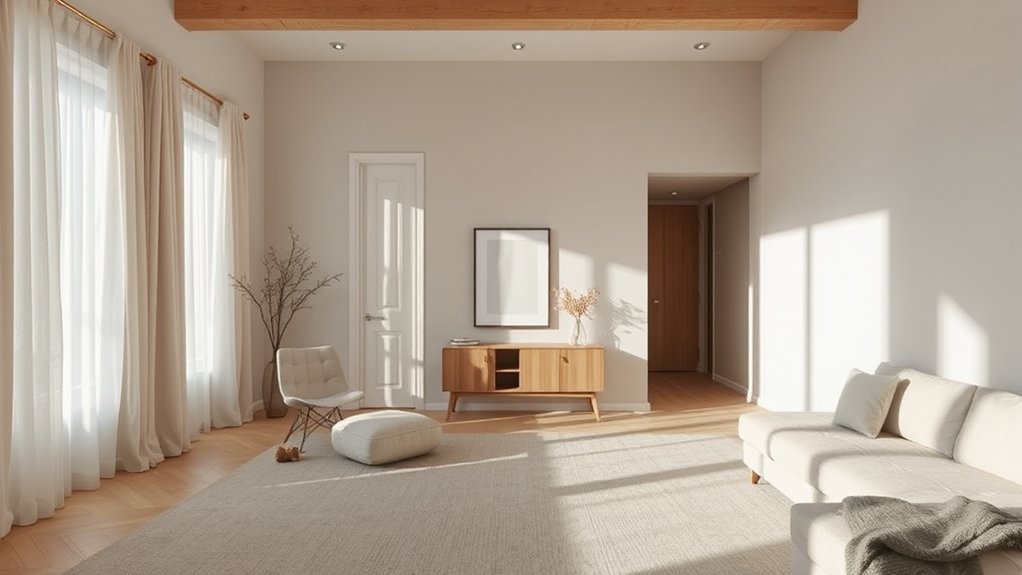
You can instantly expand a room’s feel by thoughtful, room-by-room layout that prioritizes flow, sightlines, and function. Start with clear zones: living, dining, and work areas should read as a single, cohesive loop, not isolated islands.
Guarantee traffic paths stay open, with furniture angled to guide movement rather than obstruct it. Use low-profile pieces to maintain sightlines and maximize perceived space.
Choose a restrained palette and repeat a small number of materials to unify the space. Place primary lighting to balance shadows, and keep decorative accents minimal but intentional.
Integrate artistic expressions at eye level for focal impact without clutter. Every item earns its place; selective art, rugs, and textiles reinforce calm, rather than compete with the room’s breathing room.
Simple Maintenance Habits for Lasting Minimalism
Maintaining a minimalist look isn’t a one-and-done task; it hinges on simple, repeatable habits that keep clutter at bay. You’ll keep consistency by establishing quick routines that protect space and form.
Focus on garden planning ideas that prevent overgrowth near living areas and reduce maintenance time. As you tidy, reassess furniture arrangement to preserve flow and sightlines, avoiding crowding.
Treat every item as essential or not, and store or remove accordingly. Commit to regular resets: a weekly 10-minute scan, a monthly purge, and seasonal tweaks to adapt to life changes. These small, deliberate actions compound into lasting calm and function.
- Schedule a weekly reset
- Reevaluate garden planning boundaries
- Reassess furniture arrangement for flow
- Purge non-essentials promptly
Common Busy-Home Pitfalls and How to Fix Them
Even when you’re aiming for simplicity, busy homes invite common pitfalls that derail minimalism. First, you overload surfaces with decorative accents, creating visual noise. Pare back to a single focal piece per room and choose muted tones that recede rather than shout.
Next, mismatched storage turns clutter into a feature, so implement cohesive organizers and labeled bins that hide daily chaos. Lighting strategies matter: replace multiple lamps with a single, well-placed fixture and a dimmer to control mood, reducing glare and creating space.
Avoid synthetic decor that looks cheap; opt for meaningful items with a function or story. Finally, resist frequent redecoration cycles—let edits be deliberate, not impulsive, and maintain a quiet, usable flow.
Frequently Asked Questions
How Do I Start a Minimalist Makeover With a Small Budget?
Start small with a realistic decorating budget, prioritizing essentials you actually use. Decluttering strategies first—remove excess, keep only favorites. Then repurpose pieces, thrift smart, and invest in versatile basics to create calm, functional spaces without clutter.
Can I Keep Sentimental Items While Staying Minimal?
Yes, you can keep sentimental items while staying minimal. Tackle sentimental clutter by choosing pieces that spark emotional attachment but serve daily function, curate thoughtfully, and store smartly, so memories stay close without overwhelming space or clutter.
What Are Practical Storage Tricks for Tiny Spaces?
Yes—opt for vertical storage and under-bed drawers to maximize every inch. Use decor organization tricks like labeled bins. Choose space-saving furniture with hidden compartments, wall-mounted desks, and modular units to keep surfaces clear and rooms feeling open.
How Often Should I Reassess My Minimalist Setup?
You should reassess quarterly, and you’ll stay aligned with your goals. Keep Decor decluttering and Style simplification in check as you adjust, reassess, and prune. You’ll maintain clarity, efficiency, and calm in your minimalist setup.
Do Color Choices Affect Mood as Much as Function?
Yes, color choices affect mood as much as function. Color psychology guides calming or energizing effects, so you’ll influence mood incrementally. Use neutral bases, then strategic accents for mood enhancement, focusing on how you feel in each space.
Conclusion
You step into calmer air, where space breathes between clean surfaces and soft light. Let each deliberate choice—color, texture, and multi-use pieces—quiet the room like a steady heartbeat. Edit ruthlessly, maintain with simple habits, and your home becomes a still lake, reflections clear and unbroken. When clutter tries to creep back, answer with a deliberate, minimal move: remove, retain only what supports your calm. The more you let go, the more room you have to live.