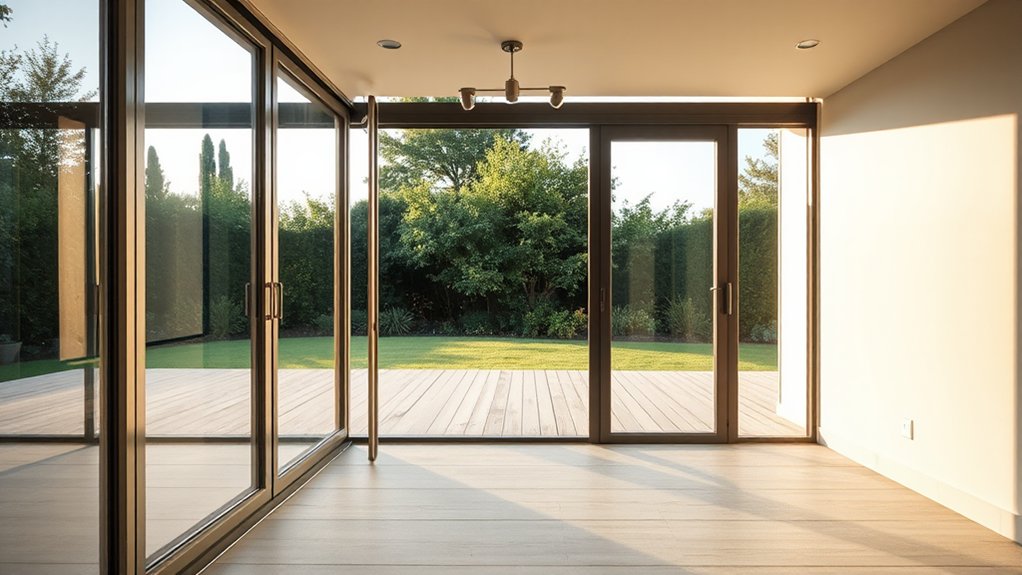

Bi-fold doors give you expansive, open-plan access and dramatic indoor–outdoor flow, ideal for sunny, high-traffic extensions. Sliding patio doors offer reliable weather sealing, simpler operation, and slim profiles when space is tight. Choose bi-folds for maximum openness and flexible layouts; opt for sliders when you need consistent weather performance and easier maintenance. Consider climate, noise, and daily use to balance openness with energy efficiency. Want a precise comparison, tailored to your site? More insights follow.
Key Takeaways
- Bi-folds maximize unobstructed width and flexibility for large openings, ideal for open-plan extensions and expansive outdoor connections.
- Sliding doors offer superior weather sealing, ease of operation, and simple maintenance in constrained or compact extension footprints.
- Consider thermal performance: multi-pane glazing, low-E coating, and proper seals to minimize heat loss in either system.
- Hardware, track cleanliness, and hinges affect reliability; bi-folds require more routine maintenance than slide-patio doors.
- Budget, space, and future flexibility: bi-folds suit expansive designs; sliders fit tighter spaces with steady daylight and ventilation.
Bi-fold vs Sliding: Critical Decision Criteria for Your Extension
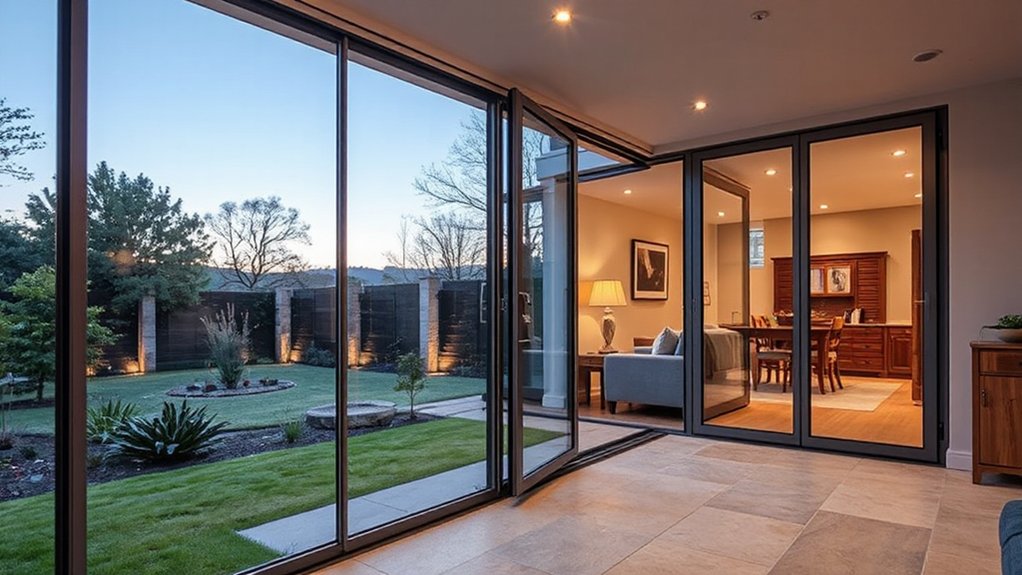
Bi-fold and sliding patio doors each have distinct performance profiles, so your decision should hinge on how you plan to use the space and what you value most.
In extension projects, evaluate opening width, airflow, and security implications, then map these against installation constraints and maintenance needs.
Bi-folds excel at wide, unobstructed access and versatile configurations, while sliders offer simple operation and superior weather sealing in constrained frames.
Consider color options to match exterior and interior aesthetics, and evaluate warranty coverage to protect long‑term performance.
Durability, hardware quality, and track cleanliness influence long-term reliability; assess these with your site conditions.
Prioritize ease of use, traffic patterns, and future adaptability to ensure the system aligns with your extension’s functional goals.
How Natural Light Differs Between Bi-Fold and Sliding Doors
Natural light is shaped differently by bi-fold and sliding doors due to panel geometry and seal design. You’ll notice bi-fold configurations distribute light more evenly when panels stack, reducing glare along the glazing line and smoothing progressions between interior and exterior spaces.
Sliding doors, by contrast, create large, uninterrupted light planes, but may introduce frame interruptions that segment views. Frame depth and alignment influence daylight penetration, while glazing units affect solar gain and diffusion.
In terms of design aesthetics, bi-fold doors can deliver a dynamic light pattern with moving panes, whereas sliding doors emphasize a broad, stable light field.
Cost considerations hinge on hardware complexity, sealing efficiency, and the number of operable panels, impacting long-term performance and energy savings.
Opening Width and Floor-Plan Flow: What Each Door Type Delivers
Opening widths and floor-plan flow differ markedly between bi-fold and sliding doors. With bi-folds, you gain near-maximum opening width, creating seamless indoor-outdoor transitions. However, the opening can be variable as panels fold back.
Sliding doors offer a steadier, partial opening along a fixed track, maintaining wall alignment and simpler furniture layout.
In both cases, consider how the door span influences garden privacy and sightlines from interior seating. Larger openings invite more natural circulation and visual connection, but you must manage privacy and wind exposure.
Energy efficiency tends to align with framing quality and seal integrity, not door type per se.
- Consider how each option impacts garden privacy and line-of-sight when open
- Plan for furniture placement and traffic flow around the doorway
- Assess sealing and threshold design to optimize energy efficiency
Thermal Performance: Insulation, Energy Use, and Comfort
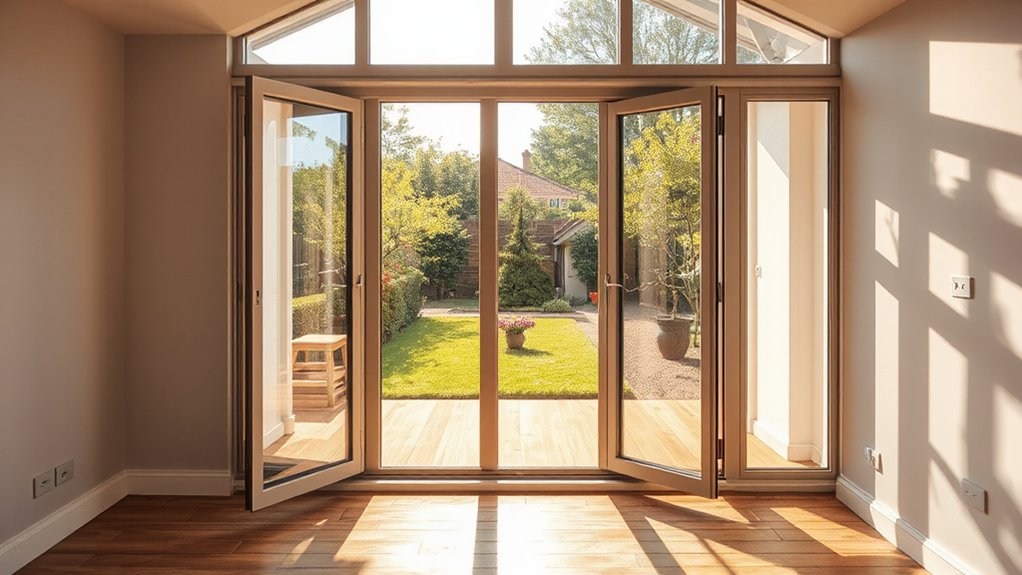
Insulation and air sealing are the core drivers of thermal performance for both bi-fold and sliding patio doors. You evaluate frame material, glazing specs, and gasket quality to minimize heat transfer and drafts.
Higher-performance multi-pane units with low-E coatings and inert gas fills reduce heat loss and solar gain, supporting steady indoor temperatures. You’ll encounter U-values and solar heat gain coefficients as practical benchmarks, not marketing figures.
A well-sealed installation matters as much as component quality, since gaps undermine any thermal gains. Expect improved comfort adjacent to doors, with fewer cold snaps and less reliance on heating or cooling.
Consider interior decor and outdoor integration: visually expansive openings can influence perception of warmth, influencing how you design finishes and shading for year-round comfort.
Weatherproofing in Real Homes: Rain, Wind, and Durability
Weatherproofing in real homes hinges on how doors resist rain, wind, and moisture ingress over time. You’ll assess frame joints, seals, and drainage paths, prioritizing durable gaskets and continuous weatherstripping. Tests focus on wind-driven rain resistance, ponding, and joint movement under temperature shifts, ensuring long-term performance.
Color options and design versatility shouldn’t compromise seal integrity or installation tolerances. Proper flashing, threshold design, and weep grooves minimize water ingress and salt exposure. Consider hardware corrosion resistance and UV-stable finishes to sustain color without cracking.
Venting and drainage must channel moisture away from living spaces, reducing condensation risk. Your choice impacts energy performance, exterior aesthetics, and maintenance load when seasons change.
- Color options and design versatility influence aesthetics without sacrificing seals.
- Prioritize wind-driven rain tests, flashing, and drainage for durability.
- Choose corrosion-resistant hardware and UV-stable finishes for longevity.
Maintenance You’ll Actually Perform: Care Routines by Door Type
Maintenance you’ll actually perform matters because how you care for doors varies by type.
For bi-folds, you’ll focus on track cleanliness, roller inspection, and hinge lubrication on a quarterly cycle. Wipe hardware with a non-abrasive cleaner to prevent corrosion, and test smooth operation after each season change.
For sliding patio doors, you’ll prioritize weather-stripping checks, track debris removal, and pulley or roller adjustment when stiffness appears. Use manufacturer-recommended lubricants and avoid silicone on vinyl components.
Document color options and any observed fading to plan touch-ups or replacements within your maintenance window.
When budgeting, consider pricing strategies that balance routine service costs with long-term performance.
Schedule annual professional inspections to verify alignment, seal integrity, and drainage efficiency without compromising aesthetics or operation.
Security and Safety: Locks, Glazing, and Child-Friendly Features
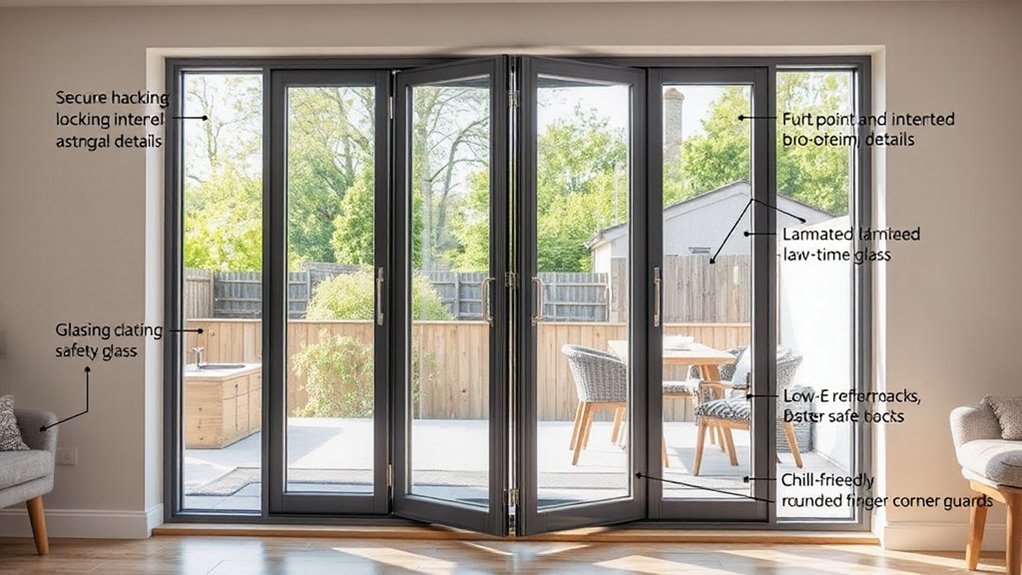
Security and safety start with robust locking hardware, tamper-resistant glazing, and clearly communicated child-friendly features. You’ll want high-security multipoint locks, reinforced door rails, and anti-lift mechanisms on bi-fold and patio doors.
Glazing should meet e.g., laminated or toughened standards with appropriate spacer systems to resist impact. Confirm child safety through compliant handle designs, yarded stop devices, and clear instructions for safe operation.
Regular inspection of seals, hinges, and track alignment reduces gaps and improves weather and security performance. When selecting, prioritize security enhancements that minimize leverage opportunities and glazing that resists forced entry, while maintaining clear daily use for households.
- High-security multipoint locks with anti-slam and anti-lift features
- Laminated or toughened glazing with appropriate reinforcing
- Clear, visible operating instructions and child-friendly handles
Aesthetic Impact: Frames, Finishes, and Architectural Fit
Frames, finishes, and architectural fit shape the visual integration of bi-fold and patio doors with the surrounding structure. You assess frame profiles for sightlines, proportional balance, and load performance, ensuring the opening remains aesthetically coherent with your façade.
Finishes must resist weathering, maintain uniform hue, and align with interior tones to avoid jarring contrasts. Consider color coordination across door sheets, trims, and adjacent cabinetry to achieve a seamless progression from indoors to outdoors.
Material choice impacts glare, depth perception, and perceived scale, so you’ll compare anodized aluminum, powder-coated steel, and timber with care.
Hardware options influence both function and style; select handles, hinges, and operators that complement the chosen finish and architectural language while preserving ease of operation and maintenance.
Costs That Matter: Purchase, Installation, and Long-Term Value
Costs that matter for bi-fold and patio doors center on upfront purchase, professional installation, and long-term value. You assess total cost by comparing base prices, hardware upgrades, and sealant requirements, then project maintenance over decades.
Installation quality directly affects energy performance, weather resistance, and warranty validity, so you benchmark installers with certifications and past outcomes.
Consider design trends and color options as they influence resale and satisfaction, not just aesthetics. Choose finishes that resist fading and wear.
Long-term value hinges on durability, replacement part availability, and energy savings, which justify premium materials when properly installed.
- Upfront price versus long-term savings, including energy efficiency and warranty terms
- Material durability, maintenance needs, and part availability
- Design trends and color options as value drivers beyond look
Space Planning for Small vs Large Extensions: Configurations That Work
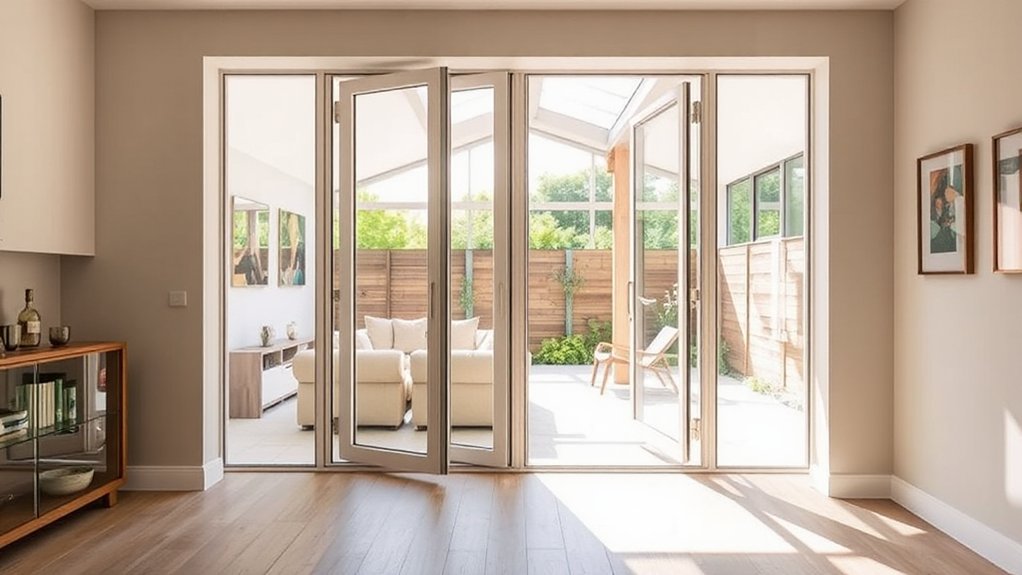
When planning space for small versus large extensions, choose configurations that optimize flow, function, and future flexibility. You’ll prioritize layouts that minimize wasted space and maximize sequence of use, with clear zones for living, dining, and circulation.
For small extensions, favor linear or L-shaped plans that preserve sightlines and natural light. While large extensions benefit from open-plan or stepped configurations that accommodate furniture, tech, and storage without crowding.
Consider door placement, furniture footprint, and traffic patterns to avoid bottlenecks. Color options and hardware choices influence perceived space and durability, so match finishes to room scale and climate control needs.
Align window and door grids to structural bays for efficiency, and document scalable options for future renovations. Guarantee your plan supports daylight, ventilation, and access.
Daily Use and Operation: Ease, Weight, and Accessibility
You’ll notice how easy weight handling is on both options, with smooth, predictable opening action.
Accessibility is prioritized through balanced hardware and simple operation, so daily use stays effortless for all users.
This discussion will compare how easy it’s to operate, the force required, and the consistent performance over time.
Easy Weight Handling
For easy weight handling, prioritize hardware and design features that minimize effort during daily use. You’ll want low-friction running gear, balanced pivots, and high-grade rollers configured to reduce force without compromising durability. Consider door leaves with optimized weight distribution, internal counterbalances, and sturdy, recessed tracks that resist jamming and sagging.
Material choice matters: lighter-alloy frames paired with robust seals can lower force requirements while maintaining energy efficiency and color stability. When evaluating options, note color options and energy ratings; these impact perception of weight through accessories and insulation performance, not just aesthetics.
Proper alignment and periodic lubrication are essential to sustain effortless operation over time. Select systems that preserve ease under varied loads and weather conditions.
- Low-friction hardware aids smooth operation
- Palletized weight distribution minimizes push/pull effort
- Clear labeling for color options and energy ratings
Smooth Opening Action
Keep friction low by ensuring clean guides and smooth pivots, and verify that the frame sits square to the opening. Smooth operation isn’t just about ease; it prevents wear and noise over time, preserving seal integrity and energy performance.
Test both folding and sliding motions, then fine-tune tension on the hardware to eliminate binding without backlash.
Consider color options to match trim and hardware aesthetics, and evaluate hardware styles for long-term durability and serviceability.
In practice, consistent maintenance, periodic lubrication, and professional alignment checks sustain reliable, repeatable action.
Accessible Operation Ease
- Maintain low-effort rollers and guides for repeatable, quiet operation
- Optimize handle placement, grip texture, and reach for diverse users
- Balance privacy needs with clear sightlines and seamless integration into interior decor
Noise and Ventilation: How Doors Influence Calm and Air Flow
Are noise and ventilation considerably shaped by your door choice? Yes. Your selection directly affects sound insulation and air circulation within the extension.
Bi-fold doors, when fully opened, minimize obstruction to airflow, promoting natural ventilation, but may transmit street noise if seals and glazing are thin.
Sliding patio doors offer consistent seals and larger glass areas, enhancing weather-tight performance and reducing noise ingress, yet can restrict cross-ventilation if kept closed.
Consider glazing thickness, frame material, and gasket quality, as these determine acoustic performance and air movement.
For calm interiors, prioritize doors with multilayer glazing and low-emissivity coatings, coupled with airtight seals and adjustable vent options.
Balance openness with insulation needs to optimize comfort, energy efficiency, and audible serenity throughout the living space.
Myths vs Realities: Common Misunderstandings About Bi-Folds and Sliders
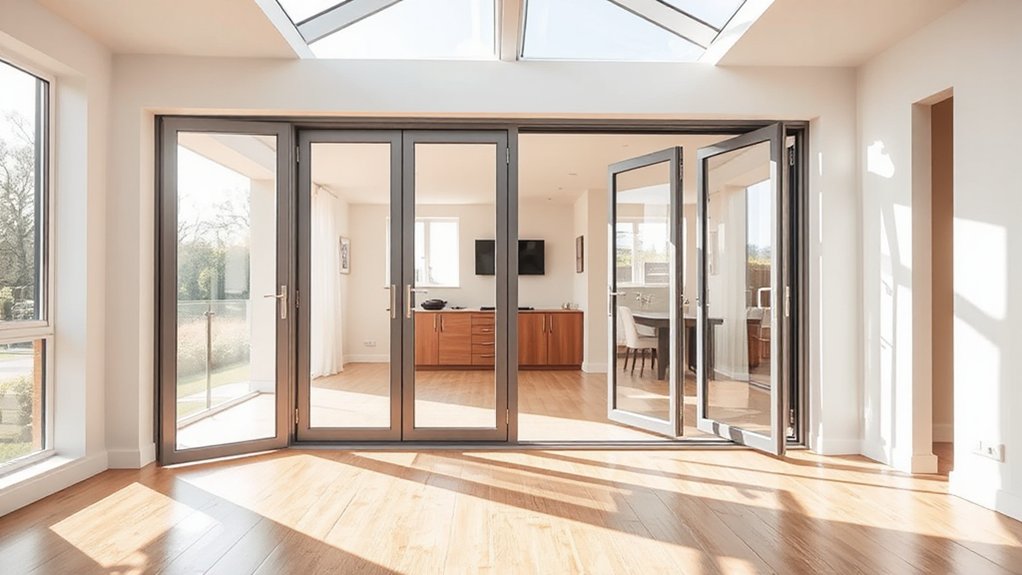
Bi-Fold Space Myths often misjudge how door hardware and framing impact usable room, so you’ll want clear expectations about clearance, stacking, and opening width.
Slider Use Realities show that track cleanliness, hardware quality, and weatherstripping govern long-term performance, not nominal design alone.
Durability and Maintenance depend on material choices, hinge and roller design, and routine upkeep to prevent sag, sticking, or leaks.
Bi-Fold Space Myths
Bi-fold doors and sliding patio doors often spark myths about space, but the reality is straightforward: layout and hardware choices determine usable area, not the door type itself. You don’t gain or lose square footage based on a bi-fold versus a slider; you gain flexibility through frame plan, clearances, and operating mechanisms.
Myth Busting begins when you separate halved space from door swing, and you assess practical pockets for furniture, traffic, and access. Focus on proportion, not prestige, and align with Design Aesthetics that support function as well as form.
- Door operation and clearance impact usable space more than door type
- Proper recesses and tracks optimize room flow
- Hardware choices influence movement efficiency and perceived space size
Slider Use Realities
Slider use reality is less about the door type and more about how you pair hardware, track placement, and clearances with your room layout. When you optimize hinging, capping, and pocket access, both bi-folds and sliders perform predictably.
Misconceptions persist that sliders are inherently sluggish or leaky; reality shows performance hinges on installation precision and compatible hardware. You should assess span length, sash weight, and travel friction to choose appropriate rollers and tracks.
Color options influence visible frame width and finish durability, not function alone, while energy ratings reflect overall insulation performance across configurations.
In practice, you’ll compare glazing, seals, and weatherstripping, then align these with your room’s ventilation needs. Clearances, operation zones, and spacer details determine routine usability more than door style alone.
Durability And Maintenance
- Color options and UV resistance influence appearance, not core durability.
- Regular cleaning and lubrication extend hinge life and seal integrity.
- Warranty coverage details prevent unexpected repair costs.
Materials That Matter: Frames and Performance (uPVC, Aluminum, Timber)
Choosing the right frame material—uPVC, aluminum, or timber—defines both performance and long-term value for doors. Your selection affects thermal efficiency, weather resistance, and operational smoothness across folding or sliding systems.
uPVC offers high frame stiffness, excellent insulation, and cost efficiency, with durable finishes and low maintenance. It’s ideal where glazing options are varied and frequent.
Aluminum delivers superior strength with slender profiles, enabling expansive glazing without compromising integrity. However, it can transfer heat and demand careful detailing.
Timber provides natural thermal mass and aesthetic flexibility, yet requires ongoing treatment and moisture control.
Consider frame materials in tandem with glazing options to optimize U-values, weather seals, and sash alignment.
Balance budget, climate, and maintenance expectations to maximize performance and value over time.
The Decision Framework: A Step-by-Step Checklist to Decide
To decide between bi-fold doors and sliding patio doors, start with a clear framework that grounds every choice in function, climate, and budget. A step-by-step checklist keeps you objective, helping weigh daily use, traffic flow, and maintenance needs against upfront cost and long-term value.
Consider color options and design flexibility as decision filters that influence perceived space and cohesion with existing interiors. Verify performance specs, warranty terms, and installation timelines before finalizing any commitment.
- Function first: match door movement and ventilation to room use and climate.
- Design constraints: color options, trim, and glazing to maintain harmony with architecture.
- Risk and value: assess long-term costs, durability, and service support.
This framework prioritizes clarity, precision, and actionable criteria for a confident choice.
Frequently Asked Questions
Are Bi-Folds Better for Light Than Sliders?
Bi-folds let more light in than sliders due to larger glazed areas and stackable panels, enhancing door aesthetics. You’ll gain opening flexibility and a brighter interior, while maintaining precise control over shading and energy performance.
Which Door Saves More Energy in Practice?
You’ll save more energy with insulated sliding doors in practice, thanks to tighter seals and lower-friction movement. Consider decorative options for aesthetics and note maintenance requirements to keep efficiency consistent over time.
Do Sliders Seal Better in Rain and Wind?
Yes, sliders seal better in rain and wind when properly installed; guarantee tight gaskets and frame alignment. Consider security features and maintenance requirements, since consistent upkeep preserves sealing performance and reduces wear from weather exposure.
Can Both Types Be Child-Safe and Secure?
You can, indeed, have both types be child-safe and secure. Don’t fear complexity—you’ll rely on robust locks and reinforced frames as key security features, plus adjustable anti-lift devices, latches, and compliant hardware for reliable child safety.
Which Is Easier to Install in a Small Extension?
For a small extension, sliding patio doors are easier to install. You’ll face fewer alignment issues, saving time. Color options and cost differences vary by product; standard aluminum is affordable, while uPVC offers more finish choices and durability.
Conclusion
In a second-person, active voice with contractions, here’s your concise takeaway:
Ultimately, your choice hinges on your space and goals. Bi-folds maximize openness and light, while sliding doors emphasize simplicity and cost. Consider thermal performance, wind and rain resilience, and floor-plan flow. If you crave an expansive, theater-like opening, bi-folds win; for steady, everyday access with fewer moving parts, sliders prevail. Think of it as choosing between a dynamic panorama and a dependable doorway—both doors, one clear decision.